“For now the fun is over.”

From The American Lawyer:

Who’s the hottest young woman lawyer at Skadden, Arps, Slate, Meagher & Flom? Last week that question sent the New York firm into a bit of a tizzy. On February 4, Skadden Insider, a blog written by two anonymous firm employees and dedicated, unofficially, to all things Skadden, announced the winner of its weeklong poll to decide the firm’s”Hottest Female Associate.”The contest was hardly Skadden Gone Wild:most of the photos of the eight contestants were relatively innocuous head shots. The winner, a blond litigator, drew 400 votes from Skadden cognoscenti.

But the firm was not amused. On February 7 Skadden of counsel Henry”Hank”Baer, the firm’s employment advisor, sent an e-mail to all Skadden lawyers in the United States, chastising the blog.

“Numerous attorneys at the firm have expressed their concern and, in some cases, embarrassment at such contests,”wrote Baer, who said the competition was”inappropriate”and inconsistent with Skadden’s”values and standards of behavior.”

Baer, the onetime head of Skadden’s labor and employment practice, told The American Lawyer that he sent the e-mail after hearing about the contest from other lawyers at the firm.

“Most of what [Skadden Insider] has on there is not objectionable and we had no problem with it,”says Baer, who adds that the firm is not trying to shut down the blog.”I just think they crossed the line when they put these women’s names and pictures on the blog without their permission.”(The eight finalists declined to comment.)

The two employees who write Skadden Insider did not respond to an e-mail request for comment. But the bloggers did post a response to Baer’s e-mail, noting that pictures of the contestants were culled from Skadden’s Web site, Facebook, Inc., MySpace.com, and other publicly available sources. When one finalist asked that a photo submitted by a friend be removed, the bloggers complied.”The contest, although sophomoric, was done all in good fun,”the Skadden bloggers wrote.

For now, the fun is over: Skadden Insider announced that nominations for”Hottest Male Associate,”which was to have followed the women’s contest, have been suspended.

How lucky that Skadden caught this in the nick of time, after eight female attorneys had been objectified “for fun”, and all other women lawyers regulated to “not one of the firm hotties” status, but before any men were negatively affected.

–Ann Bartow, via Tracy McGaugh

Share
Posted in Feminism and Law, Legal Profession | Comments Off on “For now the fun is over.”

Objections

(To those of you reading this on Feminist Law Profs, I’m cross-posting there from my own blog.   The links and internal references are to that blog.   So, for example, you can find “my last post” by scrolling down on this page or by clicking on the link, which will take you to my blog.)

There are a number of possible objections to the suggestion in my last post. (Put briefly, I suggested that we not consider men who participate in one-night-stands to be fathers of resulting children. This is part of a longer thread that you can pick up here.) I tried to anticipate and respond to the most obvious objections in a couple of earlier posts. I stand by what I said there so may want to go read that now. It will help put the rest of this in context.

In addition to those points, I’m sure some will argue that declaring that these one-night-stand men are not fathers will encourage men to engage in sex irresponsibly. The rationale goes something like this: When a man is considering whether to engage in the one-night-stand he makes a cost/benefit analysis. On the benefit side is whatever immediate gratification results and perhaps some possibility of a longer term relationship. On the cost side are risks of disease, perhaps of assorted social consequences and, as it stands now, of inadvertently becoming a father. My proposal diminishes the last cost and by doing that, diminishes the overall cost. When you diminish the cost of a behavior it will have the effect, all other things being equal, of increasing the occurrence of the behavior. Put slightly differently, the possibility of parenthood is a deterrent and I propose to remove that deterrent.

I doubt there’s much hard evidence about the magnitude of the deterrent here, but I don’t actually know what is out there. However, as I said in my earlier post about objections, saying the man is not a father does not necessarily mean he is free of all financial obligations. That’s a different question, one which I am deferring. So to the extent the expense of supporting a child is a deterrent that could possibly remain. And if one is serious about deterrence, one might even institute a system of fines for contributing to unintended pregnancies.

Even with all that, there likely is still some deterrent value to possible parenthood and you’d lose that. But still, I’m not convinced that we ought to deploy parenthood as a deterrent. (I’d be happier with the fine.)

From a purely pragmatic perspective, parenthood is very hard to imagine before you actually experience it. Thus, it’s unlikely the rational actor imagined above will properly assess it.

More crucially, parenthood as deterrent takes no account of what might be best to the child, if there is a child. We’re thinking here about presumptively irresponsible individuals here. It’s hard to see why they’d suddenly become wonderful responsible parents.

Thus, I am prepared to forgo whatever added deterrent value there is.

I think at bottom the strongest resistance to my suggestion arises from the impulse is to say that pregnancy is simply the logical and natural consequence of the action and people should be held accountable for logical and natural consequences of their actions. And to this I have two responses.

First, while pregnancy may be a logical and natural consequence, parenthood is not. Being a parent means having particular social and legal obligations. We’ve already seen instances–with sperm donors and with the presumption that the husband is the father–where we assign those obligations to people apart from those who provide genetic material. So we are free here to define the man as a parent or not.

Second, as I’ve said before, you can hold a man accountable without making him a parent. And indeed, we might all be happier in the long run if we do just that. Parental status ought not to be a punishment inflicted on a person. It’s too important for that.

One thing I know I have not addressed is the burden all of this places on women. It’s obvious to me that the consequences of an unplanned pregnancy are not distributed equally between men and women. If I in some way lessen the obligations on men, do I increase those on women? I will consider this next.

by Julie Shapiro (cross-posted to Related Topics)

Share
Posted in Feminism and Law | Comments Off on Objections

What If? Meme

Feminist Law Prof Kathy Bergin is playing the”what if”game over at The Faculty Lounge, and she has tagged me. The question that she has asked is:”So what would it be? What if money were no object? What if your kids, your partner, your loved ones would follow you? If you weren’t a law prof:what’s the next best thing?”

When I was on our Appointments Committee a few years ago, we played the”what if”game at dinner one night after a long day of interviewing at the meat market. My answer then is the same as it is now:and, unfortunately, it’s not nearly as selfless as Kathy’s choice of Doctors Without Borders. At the risk of sounding too stereotypically gay, my dream job would be working as a pastry chef. I love to cook, and I particularly love to bake. If I had the time, I would really like to learn how to turn food into art, which is how I see working with pastry and making desserts. It might not save anyone’s lives, but it certainly can brighten up someone’s day!

In the spirit of the game, I tag Feminist Law Profs Bridget Crawford and Ann Bartow as well as Tax Prof Paul Caron. What are your dream jobs?

-Anthony C. Infanti

Share
Posted in Bloggenpheffer | Comments Off on What If? Meme

Text of Gene Nichol’s e-mail to faculty and staff upon his dismissal as President of William & Mary

I don’t know anything about the merits of this situation, but the contents of the e-mail are stunning, and not in a good way. Via the Daily Press, by way of my friend and colleague Josie Brown.

Dear Members of the William & Mary Community:

I was informed by the Rector on Sunday, after our Charter Day celebrations, that my contract will not be renewed in July. Appropriately, serving the College in the wake of such a decision is beyond my imagining. Accordingly, I have advised the Rector, and announce today, effective immediately, my resignation as president of the College of William & Mary. I return to the faculty of the school of law to resume teaching and writing.

I have made four decisions, or sets of decisions, during my tenure that have stirred ample controversy.

First, as is widely known, I altered the way a Christian cross was displayed in a public facility, on a public university campus, in a chapel used regularly for secular College events — both voluntary and mandatory — in order to help Jewish, Muslim, Hindu, and other religious minorities feel more meaningfully included as members of our broad community. The decision was likely required by any effective notion of separation of church and state. And it was certainly motivated by the desire to extend the College’s welcome more generously to all. We are charged, as state actors, to respect and accommodate all religions, and to endorse none. The decision did no more.

Second, I have refused, now on two occasions, to ban from the campus a program funded by our student-fee-based, and student-governed, speaker series. To stop the production because I found it offensive, or unappealing, would have violated both the First Amendment and the traditions of openness and inquiry that sustain great universities. It would have been a knowing, intentional denial of the constitutional rights of our students. It is perhaps worth recalling that my very first act as president of the College was to swear on oath not to do so.

Third, in my early months here, recognizing that we likely had fewer poor, or Pell eligible, students than any public university in America, and that our record was getting worse, I introduced an aggressive Gateway scholarship program for Virginians demonstrating the strongest financial need. Under its terms, resident students from families earning $40,000 a year or less have 100% of their need met, without loans. Gateway has increased our Pell eligible students by 20% in the past two years.

Fourth, from the outset of my presidency, I have made it clear that if the College is to reach its aspirations of leadership, it is essential that it become a more diverse, less homogeneous institution. In the past two and half years we have proceeded, with surprising success, to assure that is so. Our last two entering classes have been, by good measure, the most diverse in the College’s history. We have, in the past two and a half years, more than doubled our number of faculty members of color. And we have more effectively integrated the administrative leadership of William & Mary. It is no longer the case, as it was when I arrived, that we could host a leadership retreat inviting the 35 senior administrators of the College and see, around the table, no persons of color.

As the result of these decisions, the last sixteen months have been challenging ones for me and my family. A committed, relentless, frequently untruthful and vicious campaign — on the internet and in the press — has been waged against me, my wife and my daughters. It has been joined, occasionally, by members of the Virginia House of Delegates — including last week’s steps by the Privileges and Elections Committee to effectively threaten Board appointees if I were not fired over decisions concerning the Wren Cross and the Sex Workers’ Art Show. That campaign has now been rendered successful. And those same voices will no doubt claim victory today.

It is fair to say that, over the course of the past year, I have, more than once, considered either resigning my post or abandoning the positions I have taken on these matters — which I believe crucial to the College’s future. But as I did so, I thought of other persons as well.

I thought of those students, staff, faculty, and alumni, not of the religious majority, who have told me of the power of even small steps, like the decision over display of the Wren Cross, to recognize that they, too, are full members of this inspiring community.

I have thought of those students, faculty, and staff who, in the past three years, have joined us with explicit hopes and assurances that the College could become more effectively opened to those of different races, backgrounds, and economic circumstances — and I have thought of my own unwillingness to voluntarily abandon their efforts, and their prospects, in mid-stream.

I have thought of faculty and staff members here who have, for decades, believed that the College has, unlike many of its competitors, failed to place the challenge of becoming an effectively diverse institution center stage — and who, as a result, have been strongly encouraged by the progress of the last two years.

I have thought of the students who define and personify the College’s belief in community, in service, in openness, in idealism — those who make William & Mary a unique repository of the American promise. And I have believed it unworthy, regardless of burden, to break our bonds of partnership.

And I have thought, perhaps most acutely, of my wife and three remarkable daughters. I’ve believed it vital to understand, with them, that though defeat may at times come, it is crucial not to surrender to the loud and the vitriolic and the angry — just because they are loud and vitriolic and angry. Recalling the old Methodist hymn that commands us “not to be afraid to defend the weak because of the anger of the strong,” nor “afraid to defend the poor because of the anger of the rich.” So I have sought not to yield. The Board’s decision, of course, changes that.

To my faculty colleagues, who have here created a distinctive culture of engaged, student-centered teaching and research, I will remember your strong and steadfast support until the end of my days.

To those staff members and alumni of this accomplished and heartening community, who have struggled to make the William & Mary of the future worthy of its distinctive past, I regret that I will no longer be part of that uplifting cause. But I have little doubt where the course of history lies.

And, finally, to the life-changing and soul-inspiring students of the College, the largest surprise of my professional life, those who have created in me a surpassing faith not only in an institution, but in a generation, I have not words to touch my affections. My belief in your promise has been the central and defining focus of my presidency. The too-quick ending of our work together is among the most profound and wrenching disappointments in my life. Your support, particularly of the past few weeks and days, will remain the strongest balm I’ve known. I am confident of the triumphs and contributions the future holds for women and men of such power and commitment.

I add only that, on Sunday, the Board of Visitors offered both my wife and me substantial economic incentives if we would agree “not to characterize [the non-renewal decision] as based on ideological grounds” or make any other statement about my departure without their approval. Some members may have intended this as a gesture of generosity to ease my transition. But the stipulation of censorship made it seem like something else entirely. We, of course, rejected the offer. It would have required that I make statements I believe to be untrue and that I believe most would find non-credible. I’ve said before that the values of the College are not for sale. Neither are ours.

Mine, to be sure, has not been a perfect presidency. I have sometimes moved too swiftly, and perhaps paid insufficient attention to the processes and practices of a strong and complex university. A wiser leader would likely have done otherwise. But I have believed, and attempted to explain, from even before my arrival on the campus, that an emboldened future for the College of William & Mary requires wider horizons, more fully opened doors, a broader membership, and a more engaging clash of perspectives than the sometimes narrowed gauges of the past have allowed. I step down today believing it still.

I have also hoped that this noble College might one day claim not only Thomas Jefferson’s pedigree, but his political philosophy as well. It was Jefferson who argued for a “wall of separation between church and state” — putting all religious sects “on an equal footing.” He expressly rejected the claim that speech should be suppressed because “it might influence others to do evil,” insisting instead that “we have nothing to fear from the demoralizing reasonings of some if others are left free to demonstrate their errors.” And he averred powerfully that “worth and genius” should “be sought from every condition” of society.

The College of William & Mary is a singular place of invention, rigor, commitment, character, and heart. I have been proud that even in a short term we have engaged a marvelous new Chancellor, successfully concluded a hugely-promising capital campaign, secured surprising support for a cutting-edge school of education and other essential physical facilities, seen the most vibrant applicant pools in our history, fostered path-breaking achievements in undergraduate research, more potently internationalized our programs and opportunities, led the nation in an explosion of civic engagement, invigorated the fruitful marriage of athletics and academics, lifted the salaries of our lowest-paid employees, and even hosted a queen. None of this compares, though, to the magic and the inspiration of the people — young and older — who Glenn and I have come to know here. You will remain always and forever at the center of our hearts.

Go Tribe. And hark upon the gale.

Gene Nichol

Update: The W&M Board of Visitors responds here.

Share
Posted in Academia, Feminism and Culture | Comments Off on Text of Gene Nichol’s e-mail to faculty and staff upon his dismissal as President of William & Mary

“Hillary Sexism Watch”

At Shakesville. 62 posts and counting. Melissa McEwan deserves some sort of award for this.

Share
Posted in Feminism and Politics, Feminist Blogs Of Interest, Sexism in the Media | Comments Off on “Hillary Sexism Watch”

Women’s Bioethics Blog!

Dear Fellow Feminist Law Professors,

I warmly invite you to visit the women’s bioethics blog which is part of the women’s bioethics project and is a group effort of law professors, bioethicists, health care professionals and health policy experts who view news about health care and medical research from the perspective of its implications for women. The blog is administered by Prof. Linda MacDonald Glenn, who is a women’s bioethics project scholar and currently transitioning from the faculty of the University of Vermont to the Alden March Bioethics Institute at the Albany Medical College of New York.

With best wishes,

Jennifer Bard

Share
Posted in Feminism and Politics, Feminist Blogs Of Interest, Feminists in Academia, Women's Health | Comments Off on Women’s Bioethics Blog!

Unenthusiastic in Pennsylvania

With the race for the Democratic nomination for President still so tight, I now regularly hear news reports that Pennsylvania’s primary might actually count for something this year. Our primary is scheduled for April 22nd, and, until recently, most people thought that the race for the nomination would be decided long before that. Yet, notwithstanding the potential importance of this vote, I just can’t seem to get excited about either of the candidates running on the Democratic ticket in the same way that so many others have.

Both Hillary Clinton and Barack Obama generally say the right things when it comes to LBGT rights (which is not the only issue that I consider when voting:but, as a gay man, it is naturally a very important one for me). For example, they both support the Employment Non-discrimination Act, the expansion of bias crimes laws to include sexual orientation and gender identity, and the repeal of”Don’t Ask, Don’t Tell.”(It is worth noting that their stances on same-sex marriage are the huge exception to this generalization:they both support creating a second-class, civil union status for same-sex couples.)

Despite the positive tone of their rhetoric on LGBT rights, I continue to be bothered by what I see as the potential for a significant disconnect between these words and their actions once they get into office.

With regard to Obama, the San Francisco Chronicle recently reported that, in 2004,

current Democratic presidential candidate Barack Obama is said to have declined to have his picture taken in San Francisco with [Mayor Gavin] Newsom, who was then at the center of a national uproar over his decision to allow same-sex marriage in San Francisco.

“I gave a fundraiser, at his (Obama’s) request at the Waterfront restaurant,”said former San Francisco Mayor Willie Brown.”And he said to me, he would really appreciate it if he didn’t get his photo taken with my mayor. He said he would really not like to have his picture taken with Gavin.”

Although Obama’s people have called this story”ridiculous,”the reporter did mention that a number of people clearly recollect these events. For me, this raises a serious question: If Obama had no qualms about making it clear that he didn’t want his photo taken with Newsom:who had done fundraisers for Obama:because Obama might be tainted by Newsom’s stance on same-sex marriage, what’s to say that Obama might not abandon his support of LGBT rights when it appears to be to his political advantage to put some space between himself and the LGBT community, whose support he is now courting?

With regard to Clinton, my problem is with how she associates herself with her husband’s administration. Bill Clinton was supposed to be a friend of the LGBT community. But, as President, Clinton abandoned his LGBT supporters when he signed the Defense of Marriage Act (DOMA) into law in order to blunt a potential issue in his 1996 re-election campaign. Compounding the damage, Clinton then used his support for DOMA, which his own spokesman had earlier labeled”gay baiting,”in an advertisement that was designed to garner votes from religious conservatives in that election. Later, when John Kerry was running for president, it was reported that Bill Clinton advised Kerry to announce his support for constitutional bans on same-sex marriage because it would help him to get elected. Given this history, I just wonder whether we might not see more of the same in a second Clinton Administration.

These concerns about the Clinton and Obama candidacies are really just part of a larger concern that I have that the Democrats have come to take the support of the LGBT community for granted. The big question for me is what, if anything, to do about these concerns. As I muddle through my concerns from now until April 22nd, I would be really interested in others’ thoughts about this.

-Anthony C. Infanti

Share
Posted in Feminism and Politics, LGBT Rights | Comments Off on Unenthusiastic in Pennsylvania

“Should women wear pants?”

The BBC reports that women of all tribes in Kenya are being attacked, stripped, and beaten for wearing trousers in public. It has published some questions for debate that readers from around the globe have responded to.

Who should decide what indecent dressing is? Should governments dictate what you wear? Should women dress more formally to feel safe? Send us your views.

The responses on the site are interesting. In particular, it’s heartbreaking that the physical violence is a secondary concern:

Sierra Leone is one of the countries that is seriously affected. There is no code of dressing here.Women especially young girls almost walk in our streets naked in the name of fashion or imitating what is happening in the western world.This is a disgrace to our women folks and must be address urgently by our leaders or am afraid what our next generation is going to be like.

–Tracy McGaugh

Share
Posted in Feminism and Politics, Sisters In Other Nations | Comments Off on “Should women wear pants?”

Reader Poll: What Are You Doing For Valentine’s Day?

Because we’re not humorless (at least not all of the time), we’re curious to know, FeministLawProf reader, how you’ll be spending Valentine’s Day this year.
What are you doing this Valentine’s Day?
Attending yet another production of the Vagina Monologues
Having dinner with significant other
Having dinner with single friends
Resenting significant other for not paying enough attention to Valentine’s Day, even though you told S.O. it’s a silly, made-up holiday
Prepping for class. This is law school, after all. Duh.
Playing the Iseley Brothers on continuous loop
Loving the Haagen-Dasz
When is it?
Baking cupcakes for my kid’s school party
pollcode.com free polls

Results to be published on February 14.

-Bridget Crawford

Share
Posted in Bloggenpheffer | Comments Off on Reader Poll: What Are You Doing For Valentine’s Day?

Natural Fathers?

Having once again been interrupted by current events, I return to my earlier topic–can we separate parentage from genetic linkage. I’ve gone at this in steps, starting by considering a sperm donor and working my way to a one-night-stand guy.

In that last post I was exploring the differences between a sperm donor and the one night stand guy. It’s easy for me to say with confidence that it is better that the donor not be a father. I’m considering arguments for treating the one night stand guy differently. They are both genetically related, so no grounds for distinction there. And curiously, as to the intent of the man, the donor actually does intend to create a child and the one-night-stand guy almost assuredly does not. While that’s a difference, it’s one that hardly seems to leave to treating the one-night-stand guy as a father when you don’t treat the donor as a father.

That lead me to think about another difference–the woman’s intent. A woman using a sperm donor intends to be a parent. A woman in a one-night-stand usually doesn’t. The last post noted the oddity of having his status as a parent turn on her intent, but there’s more to be said, so I’m returning to this.

I want to focus, somewhat cautiously, on the importance of being able to choose to become a parent or, perhaps more saliently, to choose not to become a parent. I take it as a given that women should have the right to control their reproductive destiny. For me that means that women must have meaningful access to birth control and to abortion. (I realize, of course, that this hardly describes reality, but I will nonetheless reason from this position.) Meaningful access to abortion means a woman can choose not to become a parent even when she has become pregnant.

What about the corresponding freedom for men? A man has no right to insist that a woman have an abortion, even where it is quite clear that he is the source of the sperm. (To be clear, I think that’s as it should be.)

I know various explanations for this asymmetry. Often when we discuss this in class my students focus on the man’s opportunity to choose whether or not to engage in sex. And while it is true that a man can always ensure non-parenthood by not engaging in procreative sex, that’s not an entirely satisfying answer. For the woman can choose to engage in procreative sex and can, as a result, become pregnant, and can still avoid becoming a parent by electing to have an abortion. For a man, once he chooses to engage in sex, the rest of the chain of events is out of his control. So while this “he already chose” argument is not without some validity, it’s also not totally satisfying.

Suppose instead we accept my proposal that the man is not a father to any child that results from that one-night-stand? Then it seems more reasonable that he would have no say in whether a child is born or not for the woman’s decision to have (or not have) an abortion does not determine his parenthood. To put it a differently, he has less interest (at least legally speaking) in the outcome of her pregnancy and so he has a much weaker claim to a voice in the decision-making.

I think this suggests a larger point, though it hardly establishes it: Assigning paternity to a man by virtue of his genetic connection alone supports men’s control over women. It gives men a powerful claim to an interest in children and therefore in the lives of women who are raising children that they do not have to earn. We think of this as a natural state of affairs even as we think of the man as a “natural father”. I think it is time to more closely examine this particular state of nature.

Julie Shapiro (cross posted to Related Topics)

Share
Posted in Feminism and Law | Comments Off on Natural Fathers?

Self Standing Umbrellas Would Sell In This State

From Popgadget:

I don’t use an umbrella because 1) I live in Southern California and it generally only rains 3 days a year, 2) I might poke someone’s eye out, and 3) Where do you store the thing when it’s wet?

Hironao Tsuboi, a creative designer, solved the third problem by creating an umbrella that stands on its own. That wasn’t as easy as it sounds; apparently he had to determine the center of gravity by a complex process by casting aluminum into different clay molds. Further series of tests were carried out to determine the optimal spread of the three legs.

Made of ABS synthetic resin (plastic), the umbrella remains steady but also handy when you need it, say if a spontaneous water pistol fight breaks out or in case you’re unlucky enough to live somewhere where it rains all the time. …

It doesn’t rain all the time in South Carolina. It was in the 60s and very sunny here today, matter of fact. But when it does rain, yeesh, better keep a towel and full change of clothes in the office. And a second full set wouldn’t be amiss in the car, either.

–Ann Bartow

Share
Posted in Bloggenpheffer, South Carolina | Comments Off on Self Standing Umbrellas Would Sell In This State

In Florida you can advertise your law firm with panthers and lions, but not with space aliens, pit bulls, sharks, wolves, crocodiles, or piranhas.

So says this WSJ article, which also notes:

… Searcy Denney is well aware of the Florida bar’s reach. In 2005, the personal-injury firm produced a series of TV spots with scenes including children running and lawyers at work in their offices. In 2006, the bar struck down the ads on the grounds that they contained improper content, including the sound of children bouncing a ball. Other impermissible sounds, according to the bar: a computer turning off, a light switch turning off, and footsteps. The Florida bar has proposed amending its rules to permit some background sound.

This school of toothy fish cannot represent you in a court of law, at least not in Florida.

This reminds me of something interesting. If you wanted to name two men who sort of personified non-violence and peace, would you come up with Mohandas Gandhi and Nelson Mandela? And if so, do you know what they did for a living? Lawyers! Both of them! But I admit I don’t think they advertised using crocodiles or shark imagery.

–Ann Bartow

Share
Posted in Legal Profession | Comments Off on In Florida you can advertise your law firm with panthers and lions, but not with space aliens, pit bulls, sharks, wolves, crocodiles, or piranhas.

“There’s a lot at stake for our country in this election. Surely, you can do your jobs as journalists and commentators and still keep the discourse civil and appropriate.”

From here (via here):

Sen. Clinton’s letter to Steve Capus, president of NBC News, pretty much says it all:

Dear Mr. Capus,

Thank you for your call yesterday. I wanted to send you this note to convey the depth of my feeling about David Shuster’s comments.

I know that I am a public figure and that my daughter is playing a public role in my campaign. I am accustomed to criticism, certainly from MSNBC. I know that it goes with the territory.

However, I became Chelsea’s mother long before I ran for any office and I will always be a mom first and a public official second.

Nothing justifies the kind of debasing language that David Shuster used and no temporary suspension or half-hearted apology is sufficient.

I would urge you to look at the pattern of behavior on your network that seems to repeatedly lead to this sort of degrading language.

There’s a lot at stake for our country in this election. Surely, you can do your jobs as journalists and commentators and still keep the discourse civil and appropriate.

Sincerely,

Hillary Rodham Clinton

Taylor Marsh has an account of the e-mail exchange between Shuster and a Clinton campaign exec. Shuster’s position is apparently that because he disagrees with the fact that she “calls Superdelegates,” saying that Chelsea was being “pimped out” was perfectly fine. Hey, she was asking for it! Or something. See also.

Share
Posted in Sexism in the Media | Comments Off on “There’s a lot at stake for our country in this election. Surely, you can do your jobs as journalists and commentators and still keep the discourse civil and appropriate.”

House Passes the “College Opportunity and Affordability Act”

Earlier this week, the House passed the “College Opportunity and Affordability Act” (a copy of the bill is here). House Speaker Nancy Pelosi issued a press release (available here) in which she predicted the bill’s impact:

Making college more affordable is essential to building a strong middle class, ensuring America’s competitiveness by investing in a new generation of innovators, and creating good paying jobs here at home. The New Direction Congress is building on last year’s historic investments in college affordability today by helping hold down rising tuition costs, simplifying the financial aid application process, and reforming unscrupulous student lending practices.

From what I can tell so far, this doesn’t even come close to the G.I. bill. Students will be able to borrow more (but with a simpler form) and universities will continue to raise their tuitions. Lenders will still lend, but maybe make a few more disclosures in 6 point font on the reverse of a triplicate form. I’m not impressed by this bill. All students, and law students in particular, will still be swimming in debt; therefore many will not have economic flexibility to pursue public interest, government or advocacy work.

I’d love to see the results of a law school experiment a la Harvard College. If legal education were free, how would that alter graduates’ career choices? How would that destabilize the traditional hierarchies of legal education (U.S. News, etc.)? How would that alter our profession? How would that alter our views of ourselves and the possibilities for our communities?

-Bridget Crawford

Share
Posted in Academia, Law Schools | Comments Off on House Passes the “College Opportunity and Affordability Act”

I Like Turtles

And goofy parodies.

Share
Posted in Bloggenpheffer | Comments Off on I Like Turtles

The Super Tuesday Gender Gap

From the Feminist Daily News:

In most of the 16 Super Tuesday states the gender gap– or the differences in women’s and men’s votes– was a dominating factor. In the democratic state primaries, women comprised, on the average, 58% of the vote while men were 42% for a whopping 16% gender gap. In the Republican primaries, men were the majority of voters, on the average 53%, women 47%, for a 6% gender gap. However, overall gender gaps were small for candidates in Republican primaries.

Senator Hillary Clinton won nine of the 16 Democratic state primaries. In every state Clinton won with a majority of women voters. The gender gaps in voting for Clinton ranged from 14% in both Massachusetts (62% women/48% men) and California (59% women/45% men) to essentially no gender gap in Oklahoma, where she carried a majority of women and men.

Senator Barack Obama won six state Democratic primaries with a majority of men voting for him in all but Missouri, where he barely defeated Clinton 49% to 48%. In three primaries (Alabama, Georgia, and Illinois) Obama received a majority of women’s votes also. In two state primaries Clinton a majority of men’s votes (Arkansas and Oklahoma).

Share
Posted in Feminism and Politics | Comments Off on The Super Tuesday Gender Gap

Rate My Law Professor: Presidential Candidate Division

The WSJ Blog is soliciting comments about Prof. Obama’s classroom performance here. Prof. Clinton has been out of the classroom since 1980 (the “career highlights” section notes her stint that U of Arkansas, Little Rock) so her teaching evals are probably consigned to history. Obviously if they can teach law school, both these folks can handle the Presidency!

–Ann Bartow

Share
Posted in Academia, Bloggenpheffer, Law Schools, Law Teaching | Comments Off on Rate My Law Professor: Presidential Candidate Division

Two Posts You Should Read

Both at Diary of an Anxious Black Woman:

Saartjie Baartman: The “Hottentot Venus”

and

Speaking of the “Hottentot Venus,” Is This Supposed to Be Positive?

Share
Posted in Feminist Blogs Of Interest, Race and Racism, Sexism in the Media | Comments Off on Two Posts You Should Read

“Doesn’t it seem as if Chelsea is sort of being pimped out in some weird sort of way?”

That’s what MSNBC correspondent David Shuster asked while interviewing two guests about Chelsea Clinton’s role in her mother’s campaign, according to the WaPo.com (actual clip is here, and see also.) There aren’t enough hours in the day to blog every example of the sexist garbage being thrown at Hillary Clinton these days, but this post at Shakesville gives a useful if depressing overview.

–Ann Bartow

Update here.  

Share
Posted in Feminism and Politics, Sexism in the Media, Sociolinguistics | Comments Off on “Doesn’t it seem as if Chelsea is sort of being pimped out in some weird sort of way?”

“This Valentine’s Day say it with Beef”

So says the Pig!

scan0001.jpg

Above is a scan of an advertisement from the print version of my local newspaper today, and beneath it a higher resolution version found on the Internets. I can only imagine what life is like outside the bible belt.

–Ann Bartow

Share
Posted in Feminism and Culture, Sexism in the Media, Sociolinguistics, South Carolina | Comments Off on “This Valentine’s Day say it with Beef”

Crime Prevention Tip Theater

A friend forwarded me an e-mail that university “safety officers” distributed after a man was observed by a number of students publicly masturbating on campus:

CRIME PREVENTION TIPS:

1. QUICKLY walk away from an individual exposing his genitals and do not engage in conversation with the suspect.

2. DO NOT travel on foot after dark, if possible use a taxi or the shuttle. IF you must travel on foot, do so in groups on well lit, busy streets.

3. REMEMBER excessive alcohol consumption can make you a target to become a crime victim.

4. REPORT suspicious people on campus to [redacted phone number].

5. REQUEST an escort if traveling on campus late at night.  

6. BE AWARE of your surroundings at all times.

Feel safer now? The sheer idiocy of the first suggestion is mind boggling.   But what’s really incredible is that none of these “crime prevention tips” would have prevented the actual crime that occasioned its distribution: A man dropped his pants and began flagrantly wanking off in front of A GROUP of women on campus in BROAD DAYLIGHT who had NOT BEEN DRINKING, and they noticed him because they were AWARE OF THEIR SURROUNDINGS.

–Ann Bartow

Share
Posted in Academia, Acts of Violence, Feminists in Academia | Comments Off on Crime Prevention Tip Theater

If Muppets Were Running For President…

Classic!

Share
Posted in Bloggenpheffer | Comments Off on If Muppets Were Running For President…

Violence Against Law Profs

SSRN’s LSN Legal Educator e-mail notice from today included an abstract for a new article by Carol Parker of U. of Tennessee-Knoxville College of Law, nursing professor Sandra Thomas (also of UTK), and Dr. Helen Smith of violentkids.com. This article is “Anger and Violence on Campus: Recommendations for Legal Educators.” It describes predictors of violent behavior in students and urges university administrations to enact violence prevention strategies. It touches on the almost-taboo topic of junior faculty members who have to choose whether they will press administration to take measures to keep professors safe or whether they will keep quiet so they don’t get labeled as a trouble-maker and hurt their chances of promotion. Choosing between livelihood and life is probably not a choice any of us thought we’d have to make.

I read the article this morning and, as I’ve reflected on it, I realized that every female law professor I know relatively well — except for one — has had a frightening experience with an unstable student. About half of the instances I’ve heard about involved administrations who seemed to have little, if any, knowledge of how to handle potentially volatile situations. This leaves law professors to their own devices in handling a situation that requires far more psychological expertise than most of us have, adding isolation to an already dicey situation. Sites like “AutoAdmit” only add to the concern: is the student with inappropriate boundaries the same one who discusses a gun fetish online?

Kudos to Professors Parker and Thomas and Dr. Smith for writing the article. I hope it stimulates conversation on law school faculties about how to meaningfully intervene before students in crisis take irrevocable action.

–Tracy McGaugh

Share
Posted in Academia, Acts of Violence, Feminism and Culture, Feminism and Law, Feminists in Academia, Law Schools, Law Teaching | Comments Off on Violence Against Law Profs

Another Great New Blog: “Tsalagi Think Tank”

Hosted by Feminist Law Prof Stacy Leeds!

Share
Posted in Academia, Feminist Blogs Of Interest, Race and Racism | Comments Off on Another Great New Blog: “Tsalagi Think Tank”

And Yet Another Way to Procrastinate Scholarship

Another law professor blog is added to the blogosphere.   Welcome to The Faculty Lounge.   Feminist Law Professors Kathleen Bergin, Laura Appleman, and Kevin Noble Maillard have joined my colleague Dan Filler and others.   It’ll be worth visiting frequently, I’m sure.

– David S. Cohen

Share
Posted in Uncategorized | Comments Off on And Yet Another Way to Procrastinate Scholarship

CAUCUSING IN MINNESOTA

As a recent transplant from California, I attended my first caucus in Minnesota on Tuesday night and walked away from the experience with mixed feelings. On one hand, there is something charming about the idea of getting together with neighbors to pick a Presidential candidate and to discuss issues of concern. On the other hand, there is something very strange and uncomfortable about the informality of the process. If it were not for my own honesty, I could have stated my preference numerous times and no one would have noticed.   No one checked my identification or my party affiliation. Although I arrived early and obtained an”official”ballot, the people handing out and collecting the ballots changed throughout the evening, so there was no way for them to know if I had voted more than once. Plus, I could have simply walked into another room and cast my preference in another precinct. Ultimately, when the supply of pre-printed ballots ran out, the people in charge started to distribute pieces of scrap paper on which we could hand-write a candidate’s name. Thus, I could have used my own supply of scrap paper to cast multiple votes.

In the aftermath of the Minnesota caucuses, I have heard various commentators and party operatives speak of the value of the caucus process. Generally, they argue that although the caucus system was overwhelmed on Tuesday, it normally works well. But it normally works well because not many people participate. Thus, we have a system that is premised on the ideals of civic participation and engagement that only works when there is little civic participation and engagement. More importantly, we have a system that may dictate the outcome of the Presidential nomination process that, in my opinion, lacks credibility and veracity.

–Sharon Sandeen

Share
Posted in Feminism and Politics | Comments Off on CAUCUSING IN MINNESOTA

“Clean Up All The Wiener Poopie If You Want Jesus Returned Unharmed”

Never imagined giving a blog post quite that title, but it fits!

Share
Posted in Bloggenpheffer | Comments Off on “Clean Up All The Wiener Poopie If You Want Jesus Returned Unharmed”

Victim Victorious: Does Change of Face Mean Change of Pace in the American Presidential Race?

FeministLawProf Lolita Buckner Inniss (Cleveland State) asks that question at her blog, racelawinniss. On the Democratic candidates, Professor Inniss points out that regardless of who wins,

Either will owe a large part of his or her success to the fact that he or she has”street cred”of a whole other kind:Wall Street cred, the type of credibility that buoys not just American spirits but American markets. Regardless of the extent to which they may represent communities who have suffered and who continue to suffer hard times, both Barack and Hillary are still, at the end of the day, members of the most august governing body in the United States and Ivy League educated lawyers married to Ivy League educated lawyer spouses. After all, the presidency is no job for the too outcast or the too outraged. A cynical take on this would be to see it all as an elaborate iterative process that fosters regression towards the political mean.

Does this mean that we shouldn’t celebrate the ascension of Hillary and Barack? Of course not. But we do need to keep in mind that while the victor of this contest may take the spoils they are little likely, at least at first, to roil:too much change could be hazardous to their political health.

Professor Inniss’ full post is here.

-Bridget Crawford

Share
Posted in Feminism and Politics | Comments Off on Victim Victorious: Does Change of Face Mean Change of Pace in the American Presidential Race?

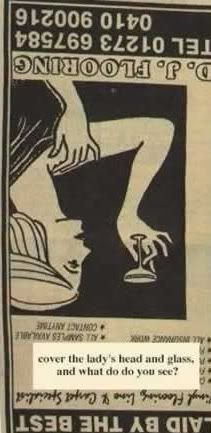
You are the Best

From oddee.com, this (somewhat) well-known old U.K. ad:

Funny things happen when you view the ad upside down:

Upside Down Ad

-Bridget Crawford

Share
Posted in Bloggenpheffer | Comments Off on You are the Best

Oral Argument Set for California Same-Sex Marriage Case

I received a notification today that the California Supreme Court has set In re Marriage Cases (Case No. S14799) for oral argument. The argument will be held on Tuesday, March 4, 2008, at 9 a.m. in San Francisco—maybe we’ll be lucky and even get a live broadcast of the argument, as they did with three arguments yesterday. It will be interesting to see how the argument goes in this constitutional challenge to California’s ban on same-sex marriage. In particular, I will be interested to see whether the California Supreme Court gives any hint as to whether it intends to follow the lead of courts in New Jersey and Connecticut that have expressed doubt that the failure to extend the right to marry to same-sex couples rises to the level of a constitutional violation when an alternative status (e.g., a civil union in New Jersey and Connecticut and a domestic partnership in California) affords them substantially all of the rights and obligations of marriage. That the California Supreme Court might go in this direction is indicated by its June 20, 2007 order directing all parties in the case to submit supplemental briefs addressing the following questions:

1. What differences in legal rights or benefits and legal obligations or duties exist under current California law affecting those couples who are registered domestic partners as compared to those couples who are legally married spouses? Please list all of the current differences of which you are aware.

2. What, if any, are the minimum, constitutionally-guaranteed substantive attributes or rights that are embodied within the fundamental constitutional “right to marry” that is referred to in cases such as Perez v. Sharp (1948) 32 Cal.2d 711, 713-714? In other words, what set of substantive rights and/or obligations, if any, does a married couple possess that, because of their constitutionally protected status under the state Constitution, may not (in the absence of a compelling interest) be eliminated or abrogated by the Legislature, or by the people through the initiative process, without amending the California Constitution?

3. Do the terms “marriage” or “marry” themselves have constitutional significance under the California Constitution? Could the Legislature, consistent with the California Constitution, change the name of the legal relationship of “marriage” to some other name, assuming the legislation preserved all of the rights and obligations that are now associated with marriage?

4. Should Family Code section 308.5 – which provides that “[o]nly marriage between a man and a woman is valid or recognized in California” – be interpreted to prohibit only the recognition in California of same-sex marriages that are entered into in another state or country or does the provision also apply to and prohibit same-sex marriages entered into within California? Under the Full Faith and Credit Clause and the Privileges and Immunities Clause of the federal Constitution (U.S. Const., art. IV, secs. 1, 2, cl.1), could California recognize same-sex marriages that are entered into within California but deny such recognition to same-sex marriages that are entered into in another state? Do these federal constitutional provisions affect how Family Code section 308.5 should be interpreted?

-Anthony C. Infanti

Share
Posted in LGBT Rights | Comments Off on Oral Argument Set for California Same-Sex Marriage Case

News in Brief–Three Biological Parents

I’ve written about how to attachment to genetics as the primary basis for parenthood binds us to a view of two and only two parents. Increasing use of assisted reproductive technology is, however, spurring us to at least loosen that connection which does encourage me.

Now here’s a development that pushes the envelope in some ways–three people genetically linked to the same embryo. One woman contributes mitochondrial DNA while the other two (one male and one female) each contribute nuclear DNA. The media seems to readily accept this as a three-parent embryo. While I’m hardly enthusiastic about the unreflective assumption that the genetics makes all people parents, at least it gets us past the “two and only two” point.

But the continuing attachment to DNA does create a potential irony out there in our future. What you end up with if you do this is an embryo. (That’s as far as they’ve gone for now.) To go further you’d need to implant the embryo in a woman’s uterus, who would then eventually give birth to a child. It’s striking to me that the press seems to be quite ready to call the donor of mitochondrial DNA a parent while the status of the woman who carries the developing embryo for nine months and ultimately gives birth is not so clear–many would call her a surrogate. That, of course, is a measure of our investment in the DNA is parentage model and our accompanying willingness to devalue the unique labor of women.

Oh well. I can’t wait till they figure out parthenogenesis.

Julie Shapiro (cross posted to Related Topics)

Share
Posted in Feminism and Law, Feminism and Technology | Comments Off on News in Brief–Three Biological Parents

“Attorney General Reverses Curbs On Gay Group at Justice Department”

From the WaPo:

Five years after a gay advocacy group was told that it could no longer use the e-mail, bulletin boards and meeting rooms at the Justice Department, Attorney General Michael B. Mukasey has reversed that decision and issued a revised equal-employment-opportunity policy barring discrimination against any group.

Mukasey informed leaders of DOJ Pride last week that the department would give it the same rights as all other DOJ employee organizations, said the group’s president, Chris Hook. In a statement, Mukasey said the department will “foster an environment in which diversity is valued, understood and sought” and maintain “an environment that’s free of discrimination.”

The article notes that this reverses the discriminatory policies of AGs John Ashcroft and Alberto Gonzales.

–Ann Bartow

Share
Posted in Feminism and Law, Legal Profession, LGBT Rights | Comments Off on “Attorney General Reverses Curbs On Gay Group at Justice Department”

Susan Faludi, “Hillary and the Feminine Gaze, Up Close and Personal”

In this essay, Faludi reviews, “THIRTY WAYS OF LOOKING AT HILLARY: REFLECTIONS BY WOMEN WRITERS,” edited by Susan Morrison. It starts out:

Let’s imagine this book’s concept:30 well-known women writers talk about how they”feel”about Hillary Clinton:applied to 30 male writers and a male presidential candidate. Adjusting for gender, the essay titles would now read:”Barack’s Underpants,”“Elect Brother Frigidaire,”“Mephistopheles for President,”“The Road to Codpiece-Gate,”and so on. Inside, we would find ruminations on the male candidate’s doggy looks and flabby pectorals; musings on such”revealing”traits as the candidate’s lack of interest in backyard grilling, industrial arts and pets; and mocking remarks about his lack of popularity with the cool boys on the playground (i.e., the writers and their”friends”). We would hear a great deal of speculation about whether the candidate was really manly or just”faking it.”We would hear a great deal about how the candidate made them feel about themselves as men and whether they could see their manhood reflected in the politician’s testosterone displays. … And we would hear virtually nothing about the candidate’s stand on political issues.

Later Faludi writes:

THE VERY PREMISE of Thirty Ways invites us to disparage Hillary Clinton as a political candidate and induct her instead into a reality show pageant. More often than not, the contributors take the bait, passing judgment on Clinton’s femininity (“unnatural”and”contrived”), looks (“passably attractive”) and sensuality (“it is difficult for me to imagine her in an embrace, motherly or otherwise,”Susanna Moore writes). Reading through these pages, I wished for a companion volume, Thirty Ways of Looking at Women Looking at Hillary, which answered this question: Why do so many of these women writers:who have shown themselves to be graceful essayists and well-reasoned analysts in other contexts:resort to unfactual and illogical thinking and, in many cases, downright 13-year-old cattiness when the topic is Hillary?

I don’t agree with everything Faludi says but I think she’s mostly correct, and so is Historiann (even though the Heathers reference made me flinch – sorry, Historiann!). See also the related post by Amanda Marcotte, who noted:

I’m not endorsing Clinton in the primary, but should she win, I’m behind her, and the sexist abuse of her has made me like her more, not less, because she prevails under it. To me, she’s a role model. Her willingness to stand by an adulterer is not something I hope to emulate, but it’s understandable, and in the grand scheme of her accomplishments, it strikes me as both a small thing and none of my business. It seems so straightforward, and yet Faludi reports that the dominant tone of the book is something like,”I just don’t like her, and I can’t explain it, probably because to do so would reveal how much misogyny I’ve internalized.”Faludi explains that this sort of opinion arises in a culture where young women can gain some semblance of power by becoming ciphers for the anti-female opinions of sexist men.

–Ann Bartow

Update: Have to quote one of Amanda’s comments in the discussion to her post, because it is so perfect:

I think a lot of why Clinton is tone-deaf is the same reason that women can’t either not have sex (frigid) or have sex (slut). Is there a way she could be right? I think part of her choice to be policy-oriented is that it’s the least offensive. I see this a lot with female politicians, choosing the least offensive path instead of going the charismatic route available to men.

That of course is another way of describing the double bind all women face.   Men are the standard and women are always wrong, because we are always Not Men.

Share
Posted in Feminism and Politics, Feminist Blogs Of Interest, Sociolinguistics | Comments Off on Susan Faludi, “Hillary and the Feminine Gaze, Up Close and Personal”

Language and Sexism

In the most recent volume of the Columbia Journal of Gender & the Law, Pat K. Chew (Professor of Law, University of Pittsburgh School) and Lauren K. Kelley-Chew (B.S. Candidate, Stanford University) have published their article, Subtly Sexist Language.   They make the case that “gender-neutral” language is sexist language.   Here is an excerpt from the introduction:

Language can be a potent vehicle for subtle sexism. As lawyers, we understand the power of words. What we say and how we say it can   perpetuate gender stereotypes and status differences between women and men. In contrast, language also can be used as a constructive tool for reinforcing equality.

Sometimes, sexist language is blatant and universally shunned. Other times, it is more subtle and even socially acceptable. For instance, social science research has considered the use of male-gendered generics (the use of such words as he, man, chairman, or mankind to represent both women and men) rather than gender-neutral alternatives (such as she or he, human, chairperson, or humankind). As we will discuss, this research concludes that male-gendered generics are exclusionary of women and tend to reinforce gender stereotypes. However, these words may not be recognized as discriminatory, because their use is perceived as normative and therefore not unusual. In addition, those who use these words may not intend to cause harm. Complaining about their use may even be criticized as a trivial activity or an overly sensitive reaction.

Sexism and sexist language get an unintentional boost from people who say,”Gee, I haven’t noticed it,”and thus conclude that using male-gendered generics must not be a problem. Of that small group of people who are aware that language has the potential to be sexist, it is an even smaller group that understands the scope of sexist language’s pervasiveness–from newspapers and textbooks, to classroom, boardroom, and courtroom presentations, to the inscriptions engraved on prized monuments, statues, and memorials.

Substantial interdisciplinary research and commentary have underscored the use of male-gendered pronouns and nouns as a form of subtle sexism in various settings. Yet, there is a surprising absence of discussion on the use and effect of these words among lawyers, law faculty, law students, and judges.   Given the declarations of law schools, law firms, and courts on their commitment to nonsexist and diverse environments, one might expect that legal professionals would no longer use male-gendered generics since alternative gender-neutral options are available. Given the persistent signs of gender discrimination and the lack of gender parity in the profession, one might question whether a causal relationship exists between sexist language used in the legal community and sexism more broadly in these settings.

Chew & Kelley-Chew, Subtly Sexist Language, 6 Colum. J. Gender & L. 643, 643-645 (2008) (citations omitted).

In my view, law schools and other institutions of higher education have a special responsibility to have gender-neutral policies, procedures and communications.    Unless our language is gender-neutral, our non-discrimination policies  are hollow.  

Thanks to reader C for the inspiration.

-Bridget Crawford

Share
Posted in Feminist Legal Scholarship, Sociolinguistics | Comments Off on Language and Sexism

“What Title IX Means to Us”

Read this multi-authored essay at Womenstake in honor of National Girls and Women in Sports Day.

Share
Posted in Feminism and Law, Feminist Blogs Of Interest | Comments Off on “What Title IX Means to Us”

“racism”

That’s the title of this provocative essay at Scribble Pad.   The subtitle is: for the ignorant white person who comes to india (aka: why i’m wary of white criticism, aka: how you give other white people a bad name)

Share
Posted in Feminism and Culture, Sisters In Other Nations | Comments Off on “racism”

More on Stanley Fish’s NYT column about “Hillary Hating”

Read this excellent post at Feminist Philosophers.

Share
Posted in Feminism and Politics, Feminist Blogs Of Interest | Comments Off on More on Stanley Fish’s NYT column about “Hillary Hating”

A Day of “Voter Protection” In Augusta, Georgia

Exhausting (up at 4:30 am and in place when the polls opened) but interesting, and fun being in the company of two extraordinary, wonderful friends all day. Only got kicked out of one polling place! Hope your Tuesday was Super too.

–Ann Bartow

Share
Posted in Feminism and Politics | Comments Off on A Day of “Voter Protection” In Augusta, Georgia

Tainted Blood

I came across an interesting story in the San Jose Mercury News yesterday about how the President of San Jose State University has suspended all blood drives on campus because the FDA’s lifetime ban on blood donations from gay men conflicts with the university’s nondiscrimination policy.

This is apparently the first time that a university president has taken such a dramatic step to protest the ban. Unsurprisingly, the story reported highly negative reactions from blood banks.

I found the story interesting because this ban has always bothered me:despite my pathological fear of needles and propensity to nearly pass out whenever I have blood drawn. Moreover, I don’t think that many people are really aware of the existence of the ban or, if they are, of its apparent breadth.

According to the FDA’s web site,”[m]en who have had sex with other men, at any time since 1977 (the beginning of the AIDS epidemic in the United States) are currently deferred as blood donors.”It’s worth taking a few moments to pull this sentence apart:

First, I find the choice to use the word”deferred”rather than”banned”(or even the oxymoron”permanently deferred”that I found on some blood bank web sites) rather interesting. It makes a lifetime ban that began in 1983 sound as if it were only temporary (like the 12-month deferral for someone who has gotten a tattoo, had sex with a prostitute, or in the case of a woman, who has had sex with a man who has had sex with a man since 1977, all as mentioned here). Indeed, the FDA reconsidered this temporary-sounding”deferral”in May 2007 and decided to leave it in place.

Second, the phrase”men who have had sex with other men”invites questions about how broad the term”sex”is for this purpose: Does it cover anal sex, oral sex, mutual masturbation, etc.? Obviously, not all same-sex sexual practices involve the same risk of transmitting HIV. Nonetheless, I didn’t encounter any sort of definition on the FDA’s web site dealing with this issue.

Third, the words”at any time since 1977″should prevent a man who has had even a single sexual encounter with another man in the past 30 years from donating blood.

Given these last two points:that is, the apparent breadth of the ban and the lack of a definition of”sex”: I wonder how many straight men who neither identify as gay or bisexual:but who have had at least one same-sex sexual experience, whether in high school, college, or later:would answer this question”yes”when they go to donate blood. I suspect that very few, if any, would.

But even beyond the questionable practicability of the standard, I wonder why it is that the FDA feels the need to stereotype and taint an entire community when it could couple screening blood for HIV with an individualized assessment of risk factors. To me, the FDA’s assertion that”to date, no donor eligibility questions have been shown to reliably identify a subset of [men who have sex with men] (e.g., based on monogamy or safe sexual practices) who do not still have a substantially increased rate of HIV infection compared to the general population or currently accepted blood donors”rings quite hollow. This seems especially true when you realize that heterosexuals who have had sex with multiple partners are permitted to donate blood so long as they are not themselves prostitutes or have had sex with a prostitute during the past year.

-Anthony C. Infanti

Share
Posted in Feminism and Law, LGBT Rights, Women's Health | Comments Off on Tainted Blood

How to Ask Professors for Job-Hunt Help: Gentle Hints

Earlier this week Ann linked to this funny post from The Little Professor on “How to ask questions on academic listservs: gentle hints.” The 1L job-hunting season inspires me to write a few words of advice for students. What is the best way to ask professors for assistance in your quest for summer employment? My thoughts organize around two basic facts. First, common advice to job-seekers is to let others know that you are looking. Second, most people who go to law school want some law-related employment experience. Unfortunately some students mix these two facts into a hefty dose of unprofessionalism. Consider, for example, this e-mail, sent by a fictive student to a fictive professor.

I am a first year here at Big Law School and I’ve never met you [subtextual interpretation by professor: the student is too lazy to actually come to my office and introduce himself or herself.] I am very interested in the ____ [fill in type of law] field. I was told that you are the person at Big Law School that I should contact. I am trying to find internships for the summer that have ____ [fill in type of law] practices so that I can get experience and find out if that is really the area of law that I want to focus on. [subtextual interpretation by professor: this student can’t focus a sentence, let alone a job search]. I was wondering if you had any suggestions for me pertaining to what if any firms you could suggest that I send my resume, etc. to [sotto voce mumble by professor: ummm…isn’t it a no-no to end a sentence in a preposition? I’d better not introduce someone with such poor grammar to anyone I know]. I would greatly appreciate the information [What information? Am I supposed to e-mail you back everything I know on the general subject of this area of law practice?] and if you have time I would love to meet with you to discuss my job search. Thanks so much for your time.

Here are my gentle hints to this fictive student, with a nod to The Little Professor’s sense of humor:

1. If you have not yet done any research on employment opportunities, stop now. Do not e-mail the Career Services Center at your school. Do not e-mail your professors. Do not e-mail anyone. Get out of your chair and go to Career Services Center ASAP.

2. Spend some time in the Career Services Center looking at any available reference materials. Even the most financially-constrained schools will have access to directories of legal employers, basic job-hunt manuals, notices of job fairs and maybe even job listings. Your school may offer workshops on resume preparation, writing cover letters, how to find summer internships in particular fields, etc. See what the Career Services Center has to offer and avail yourself of the opportunities and resources.

3. Once you have some basic sense of the type of employment or opportunity you seek, ask someone in the Career Services office for suggestions on where to look beyond where you have looked already. Meet with a career counselor, if that’s an available option. It’s ok that you don’t know exactly what type of law you want to practice. If you have a general idea of what issues interest you or what part of the country you want to target, that is a way of starting to focus one’s search.

4. If you think you want to work in a law firm, you must at the very minimum do a Martindale search to generate a list of firms that have lawyers doing the type of work to which you seek exposure. Identify any alumni of your school who are at those firms. Identify the hiring partner or the head of the Legal Personnel department. Put all of this information in a list or database.

5. You may be feeling the urge to e-mail family members, friends, professional contacts, your professors. Does your e-mail look like the one above? If so, you are not ready to e-mail anyone. Try to articulate what you are looking for, why it may be of interest to you and what steps you have taken already to educate yourself about employment options. Only when you can do that are you ready to e-mail.

6. Once you’ve accomplished #5, start spreading the word that you are looking for a certain type of job in a certain field or a certain part of the country.

7. Some professors are very glad to help students with career questions and advice. I sure am. But don’t let e-mail substitute for an old-fashioned knock on the door: “Hi Professor X. I’m Sue from your Contracts class. I wanted to introduce myself and see if you might be willing to chat with me at some point about job opportunities in the [fill in type of law] field.” Even if you don’t have a class with the professor you want to approach, go ahead and knock. I’ll be glad you did.

8. It’s much easier to help someone who has already helped herself or himself. Once you meet with the professor, let the professor know what research you have done. Demonstrate that you have followed Steps 1-6 above. Bring a copy of your resume. Bring the list of firms/judges/organizations that you may want to target. Don’t ask the professor, “Where should I send my resume?” Ask if the professor knows of particular employers whose needs might match your own. Ask the professor if she or he thinks you have overlooked anything in your search. Ask your professor how similarly-situated students have gotten jobs in the [fill in type of law] field. Don’t ask the professor for contacts; the professor has to offer them.

9. After you have met with the professor, make sure to follow up, or at least thank him or her. E-mail is ok, but a note is nice, too. My whole family loves a good thank you note. Especially if your prof gave you one or more contacts, make sure you follow up with the contact and with the professor. From the prof’s perspective, he or she is spending professional capital in asking a colleague to speak with the student. If the student never calls the contact, it looks bad for the prof (and the student, for sure, but the prof is the one who spent the capital).

10. Keep in touch. Once you decide on a summer job, let your prof know what you decided. You may know what you’re doing, and all your friends may know what you are doing, but your profs don’t necessarily know. Think of that knock on the door or short note as adding one more person to an analog, old-school Facebook.

-Bridget Crawford

Share
Posted in Academia | Comments Off on How to Ask Professors for Job-Hunt Help: Gentle Hints

Have Your Say

-Bridget Crawford

Share
Posted in Feminism and Politics | Comments Off on Have Your Say

Afghanistan

The Independent, UK has launched a campaign to secure the freedom of Sayed Pervez Kambaksh. On Tuesday, a provincial court in Afghanistan sentenced the 23 year old journalism student to death for downloading a report that is said to defend women’s rights against misinterpretations of the Koran and teachings of the prophet Mohammed. The Afghan Senate, before reportedly reversing its position, initially approved the sentence in a motion on Wednesday and urged Hamid Karzai to resist international pressure to intervene.

CNN, Fox News, MSNBC and others reported the case, but none came as close as The Independent in rightly placing blame for this atrocity on Karzai’s failed leadership – and the west’s support of him. Both the UN and President Bush praised the loya jirga in 2004 when it adopted a Constitution the US Commission on International Religious Freedom described as “Taliban-lite.” Article 130 specifically makes fundamentalist religious law an official source of legal authority. Kambaksh’s sentence might be extreme, but could have been expected.

Nor did the bulk of western news reports place Kambaksh’s conviction within the larger context of human rights abuses occurring in Afghanistan, which ranks 142nd on Reporters Without Borders’ 2007 world press index. In fact, not CNN, not MSNBC, not Fox News, not The New York Times, not The Washington Post, nor any other major US media outlet (that I have seen), has reprinted Malalai Joya’s post from the The Independent on Thursday demanding Kambaksh’s release, an end to the inexcusable oppression of women and, more fundamentally, a complete purge of the corrupt Afghan government:

After six years in control, this government has proved itself to be as bad as the Taliban – in fact, it is little more than a photocopy of the Taliban. The situation in Afghanistan is getting progressively worse – and not just for women, but for all Afghans.

Our country is being run by a mafia, and while it is in power there is no hope for freedom for the people of Afghanistan. How can anyone, man or woman, enjoy basic freedoms when living under the shadow of warlords? The government was not democratically elected, and it is now trying to use the country’s Islamic law as a tool with which to limit women’s rights.

In 2007 more women killed themselves in Afghanistan than ever before – that shows that the situation hasn’t got any better. The murder of women in Afghanistan is like the killing of birds, because this government is anti-women. Women are vulnerable – recently a 22-year-old woman was raped in front of her children by 15 local commanders of a fundamentalist party, closely connected to the government. The commanders then urinated in the face of the children. These things happen frequently.

I utterly condemn this undemocratic act of those in power against Sayed Pervez Kambaksh. This situation has exposed the corruption of the government, which is inherently undemocratic, which does not believe in women’s rights and which is willing to go to extreme lengths to prevent freedom of speech. Mr Kambaksh has not broken any law, but he is a “real” journalist, one who is not afraid to write articles exposing the corruption of the fundamentalists in power. This has been a bloody year for journalists in Afghanistan, and they are now in a lot of danger.

If Mr Kambaksh is killed for his “crime”, then tomorrow it will be someone else. The situation that the press is faced with gives you a clear indication of the level of freedom and democracy in the country as a whole.

Malalai Joya you might recall was elected to the National Assembly in 2005 and booted in 2007 after standing up to “warlords” in Parliament. She is also a vocal critic of western involvement in Afghanistan, which perhaps explains why the US government has not demanded that she be reinstated.

Freedom of speech, women’s equality and democratic legitimacy were promised to the people of Afghanistan at the dawn of the invasion in 2001. Six years gone, and Sayed Kambaksh’s persecution shows the promise has been broken. But Kambaksh is not the only one on trial here. So is Karzai’s government. And so is the west.

-Kathleen A. Bergin

(cross post:  First Amendment Law Prof Blog)

Share
Posted in Acts of Violence, Feminism and Law, Feminism and Politics, Feminism and Religion, Sisters In Other Nations | Comments Off on Afghanistan

Stanley Fish On “Hillary Hating”

In the NYT.

Share
Posted in Feminism and Politics, Sexism in the Media | Comments Off on Stanley Fish On “Hillary Hating”

Upcoming Conference: Family Responsibilities Discrimination: Lessons for the Use of Stereotyping Evidence and Implicit Bias in Employment Cases

Friday, February 8, 2008
8:30 a.m. – 5:00 p.m.
U.C. Hastings College of the Law – San Francisco, CA

The rise of “family responsibilities discrimination” (FRD) is being hailed as the most important recent development in employment discrimination law. FRD is discrimination against employees based on their family caregiving responsibilities for children, elderly parents, or ill or disabled family members. The Center for WorkLife Law at U.C. Hastings College of the Law has played a central role in tracking this trend. In May 2007, the U.S. Equal Employment Opportunity Commission issued Enforcement Guidance on caregiver discrimination that addresses how unconscious (or implicit) bias factors into such discrimination.

Come learn more about FRD, including the role of stereotyping evidence and implicit bias in employment discrimination, from a distinguished panel of experts. The Symposium will feature presentations by practicing attorneys, law professors, and social scientists on the current law of FRD, research on the”maternal wall,”the use social science in the courtroom, and the”new institutionalism.”

Click here to see the complete program.

Click here to register for the symposium!

Share
Posted in Feminism and Law, Upcoming Conferences, Women and Economics | Comments Off on Upcoming Conference: Family Responsibilities Discrimination: Lessons for the Use of Stereotyping Evidence and Implicit Bias in Employment Cases

“The anti-feminist politics behind the pornography that ’empowers’ women”

Article with this title by Gail Dines and Robert Jensen here.

Share
Posted in Feminism and Culture, Feminists in Academia, Sexism in the Media | Comments Off on “The anti-feminist politics behind the pornography that ’empowers’ women”

“How to ask questions on academic listservs: gentle hints”

Read good advice here. Read hilarious parody of bad approaches here.

Share
Posted in Academia | Comments Off on “How to ask questions on academic listservs: gentle hints”

A Great Post About Pets

Here, at Redneck Mother.

Share
Posted in Bloggenpheffer | Comments Off on A Great Post About Pets

For the Obama Supporters

YES WE CAN. Made my hair stand on end.

–Ann Bartow

Share
Posted in Feminism and Politics, Race and Racism | Comments Off on For the Obama Supporters

Post removed by author

I’m persuaded I overrreacted to something. Apologies to Rick Garnett.

–Ann Bartow

Share
Posted in Academia, Law Teaching, Sociolinguistics | Comments Off on Post removed by author

“Ladies Only” Transportation in Mexico

 The Seattle Times reports here that Mexico City has implemented multiple “ladies’ only” bus routes after complaints from women of sexual harassment by fellow bus-riders.

Ummm…why is the solution to put women on different buses, instead of implementing serious anti-harassment measures that punish the harassers?   This is gender segregation in the name of “protection,” but who is it protecting?

-Bridget Crawford

Share
Posted in Feminism and Law | Comments Off on “Ladies Only” Transportation in Mexico