Where’s the Outrage Over McCain?

The outrage over MSNBC’s David Shuster’s remarks about Chelsea Clinton got him suspended and MSNBC threatened by the Clinton camp. Isn’t what John McCain said about Chelsea in 1998, when she was only 18, much worse? Apparently, the news media generally refused to print the “joke” that McCain told as part of prepared remarks before a Republican audience: “Why is Chelsea Clinton so ugly? Because her father is Janet Reno.”

Even trying to think as a sexist homophobe, I’m not 100% sure I get the joke, but that’s besides the point. McCain wasn’t ad-libbing here; he was giving a prepared speech that he, presumably, thought through beforehand. Is this kind of “humor” about an innocent 18 year old acceptable from the man who is going to be the Republican’s nominee for President? If “pimping out” Chelsea is out of bounds in ad-libbed comments, isn’t this much worse?

– David S. Cohen

Share
Posted in Feminism and Politics | Comments Off on Where’s the Outrage Over McCain?

Traveling

Spent the day in the car, as I’m very tired of airports and planes. It was nice to bring large bottles of shampoo and water along, and as much luggage as I liked. Somehow, though, while I remembered to pack a toothbrush and floss, rather than toothpaste I accidentally substituted a small tube of something that would have been very disgusting on the tongue, had I not caught the error in time. Luckily, at least for toothpaste procuring purposes, there seems to be a Walgreens in every town in America. And they all play the same mind control music, and smell like stale vitamins.

–Ann Bartow

Share
Posted in Bloggenpheffer | Comments Off on Traveling

Because there is always a women to blame.

From the Chicago Sun-Times article that is subtitled:

While investigators search for a motive behind Stephen Kazmierczak’s bloody rampage, questions are raised about a history of mental illness, medications and a recently failed relationship

Stephen Phillip Kazmierczak, the gunman who killed five students and himself at Northern Illinois University on Thursday, was dumped by his live-in girlfriend at the end of last year and had recently stopped taking his medications, friends and police said.

“He said all of a sudden she decided she wanted somebody else,” his godfather, Richard Grafer, told the Chicago Sun-Times on Friday. “She told him it was enough. She’d had it. She walked out on him.”

Still, Grafer said, Kazmierczak didn’t seem all that upset about the breakup when they spoke last month. In fact, Kazmierczak, who had transferred from NIU to the University of Illinois at Urbana-Champaign, said he had a new girlfriend — at NIU.

But he stopped taking his meds and had been acting “somewhat erratic” in the last two weeks, police said. Sources said the medications may have been anti-depressants.

Kazmierczak left the Champaign apartment he still shared with his ex-girlfriend, and Wednesday night, the 27-year-old stayed at a DeKalb motel, a source said.

On Thursday, dressed in black, he parked his white Honda in an NIU lot, removed the keys from the ignition, left them in the car and locked the doors, a source said.

Carrying a shotgun in a guitar case and three handguns and ammo in his belt, he kicked open the door of a lecture hall in NIU’s Cole Hall and unleashed a rampage in the crowded geology class that left five students dead, more than 20 injured and dozens more scrambling for exits. He then shot himself dead on the lecture hall stage.

NIU Police Chief Don Grady said 48 shell casings and six spent shotgun shells were found in the hall. Kazmierczak reloaded his shotgun during his onslaught.

What hasn’t been found is a suicide note, leaving investigators to struggle with what could have set off a man considered intelligent and friendly. “We have found no notes at this time, so we have no idea what the motive was,” Grady said.

Investigators trying to piece together Kazmierczak’s final days sent a bomb squad to the DeKalb motel Friday, a source said. And his Champaign apartment was also searched. Police there found “what appeared to be a shotgun,” Champaign Police Chief R.T. Finney said. It was not loaded.

Authorities are looking to talk with a woman they think may have been Kazmierczak’s girlfriend. FBI spokesman Ross Rice said, ”I know that we’re looking for a roommate, but I don’t know whether it is a girlfriend or not.” …

I hope the women referenced are still alive, and understand that what happened is not their fault.

–Ann Bartow

Share
Posted in Acts of Violence, Sexism in the Media | Comments Off on Because there is always a women to blame.

“It’s More Than a Living”

At Center of Gravitas, GayProf has a post up about why he likes teaching history. A recent reminder at another blog about how lucky we law profs are made me especially happy to read it. Below is a short excerpt that made me laugh:

5. I get to provide students with numerous anecdotes for their future cocktail parties. As I mentioned in number one, people are usually interested in the past (even if they are scarred off from the actual discipline). Interesting vignettes from history make excellent small talk for parties. Taking my class with undoubtedly improve students’ future social standing.

Did you know, for instance, that the nineteenth-century inventor of the Graham Cracker, Sylvester Graham, was obsessed with ending masturbation in young boys? Graham believed that one’s carnal desires were directly related to the food one consumed. Indeed, his cracker was imagined as part of a homeopathic system to”cure”all sorts of sexual vice. Think of that next time you make s’mores.

I love teaching too. As grumpy as I sometimes get about under-prepared or over-entitled students, most of mine are great, at least most of the time, and having them in my classroom is an honor and a pleasure. I’m bookmarking this post so I remember to go back and re-read it the next time I start to lose perspective over some minor annoyance.

–Ann Bartow

Share
Posted in Academia, Law Schools, Law Teaching | Comments Off on “It’s More Than a Living”

Remembering Belva!

On February 15, 1879, President Rutherford B. Hayes signed legislation allowing women to be admitted to practice before the Supreme Court. Belva Lockwood became the first woman admitted to practice under the new law. Jill Norgren published her biography of Belva Lockwood (subtitled “The Woman Who Would Be President”) last year.

-Bridget Crawford

Share
Posted in Feminist Legal History, Firsts | Comments Off on Remembering Belva!

Ask Female Lawyers Under 40

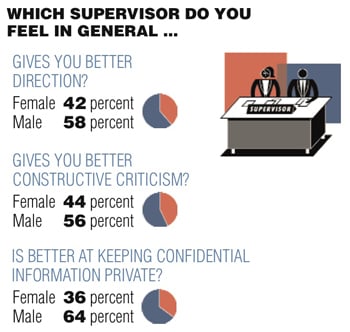
image

The February 2008 issue of ABA Journal reports these stats on the perceptions of women under 40.

I’ve heard female lawyers who went to law school in the 1990’s and afterwards say that they find their senior female colleagues “more demanding” than male counterparts and that senior female attorneys lack a certain spirit of sisterhood. Conventional wisdom blames these attitudes on the all-male environments that senior female attorneys pioneered, and their likely sense of, “My success was judged by male standards and so yours should be, too.”

I am curious about the perceptions reported by the ABA Journal. Do women in fact give worse directions or less helpful feedback than men do? Or are we perceived as doing so because women in positions of responsibility make many people – women and men alike – uncomfortable? Or are their other (or multiple) explanations?

-Bridget Crawford

Share
Posted in Legal Profession | Comments Off on Ask Female Lawyers Under 40

Jane Fonda Did Not Use the Word as an Invective

I didn’t see it live, but I have seen the video of Jane Fonda on the Today Show. She stated the name of the monologue that producers of the ubiquitous Eve Ensler play initially asked her to recite. Fonda said that she didn’t want to take that part, because it had the same name as a vulgar term for a woman’s genitals. Host Meredith Viera later expressed apologies on behalf of Fonda and the Today Show for Fonda’s utterance.

Whatever. I heard worse yesterday standing in line at the grocery store, when someone hurled the invective (plus a few others) at the cashier. Now that’s offensive. Even if Jane Fonda’s utterance of the name of the monologue is not to my liking, she didn’t call anyone that name. Enough already.

-Bridget Crawford

Share
Posted in Feminism and Culture, Sociolinguistics | Comments Off on Jane Fonda Did Not Use the Word as an Invective

The Seattle Times refused to run an ad for the Vagina Monologues because the artwork looked too much like a vagina.

This happened in the Pacific Northwest, not South Carolina! From the Seattle Weekly:

On February 24, in honor of “V-Day,” the National Council of Jewish Women’s Seattle office is co-sponsoring two performances of the Eve Ensler’s Vagina Monologues at the Museum of History and Industry. To publicize the event, the group produced a print ad for placement in the Seattle Times, among other publications. But, much to the group’s chagrin, the Times declined to run it unless the sponsors altered the artwork (pictured above) : which they refused to do. “The artwork was something we didn’t feel was appropriate for our audience,” says the Times’ VP of advertising, Mei-Mei Chan.

I don’t know, could be the clitoris : but that didn’t stop publications like the Weekly or, tamer yet, the JT News (another of the event’s sponsors) from running the ad. Nor did it stop Temple B’nai Torah and several area synagogues from prominently displaying a poster with the artwork in question in their places of worship.

“The artwork was created by a member of my congregation,” says Rabbi Yohanna Kinberg of B’nai Torah, which is located in Bellevue. “We have it hanging in several places in our Temple. I was just very disappointed that the Times didn’t share our appreciation for what I consider to be tasteful and beautiful artwork. It’s okay for a house of worship : I know it’s hanging in many other synagogues and Jewish institutions. I have a lot of respect for the Seattle Times, so it was really surprising.”

–Ann Bartow

Share
Posted in Feminism and Culture, Sexism in the Media | Comments Off on The Seattle Times refused to run an ad for the Vagina Monologues because the artwork looked too much like a vagina.

Parenthood and Power

Time for an observation here. This fits with my ongoing discussion on the parenthood of the man from the one-night-stand. (It’s a rather long thread and I’ve linked to an early part of it. I’m not going to repeat the main points here.)

Being recognized as a parent gives you power. I don’t just mean the obvious power over a child, though it does that of course. Or even just the power to exclude others from a child’s life.

A parent can insist on being involved in a child’s life and in the decisions regarding the child. That means that a parent has the power to constrain, or at least to challenge, the actions of another parent. A parent can claim that it is her or his right to be engaged in this way. That claim of right is one that carries great weight in our culture. We readily recognize (indeed, we naturalize) the rights of parents. When someone says “I’m a parent and I have the right….” it counts for something.

Though I’ve stated it somewhat dramatically, I don’t mean to raise any general objection to the idea of parental rights or to the idea that one parent can constrain the liberty of another. Each parent has similar authority.

But that’s after we’ve decided the person is a parent. Deciding that a particular person is a grant of this power. What I’m concerned with is how we decide which people are parents, which people have access to these claims of authority.

I’m thinking about this now because when we make the one-night-stand guy a father, we give him the power I’ve described above. Not absolute power. But enough power to interfere with the mother’s choices. If, for example, the mother wants to move with the child to another city, he can take her to court and challenge her right to relocate with the child. (And that same claim of right could support a man’s argument that he be consulted before the woman elects to have an abortion.)

Remember, too, that for now I am confining myself to instances where there is no pre-existing relationship between the man and the woman. Thus, we contemplate leaving the woman not only unexpectedly pregnant but also potentially subject to the demands of a stranger.

I do not mean to suggest that concerns about power alone justify declaring that the man is not a father. But I think the “is he a parent question” is one worth asking, one that warrants careful consideration. All these recent posts have attempted to examine that question from differing angles. Particularly if one is trying to work from a feminist perspective, the power dynamic is worthy of note.

-Julie Shapiro (cross posted to Related Topics)

Share
Posted in Feminism and Law | Comments Off on Parenthood and Power

Some Blatant Self Promotion: Single Sex Education and Masculinity

Please forgive me if this self-promotion is beyond the standards of decency. But, if anyone is interested, I’ve posted the most recent draft of an article I’m working on and would love any feedback people might have if they are inclined to look at it. The abstract is below, and the link to the page where it can be downloaded is here. Thanks!

In late 2006, the Department of Education changed the Title IX regulations to broaden the permissibility of single-sex education in primary and secondary schools. The changes took place in the context of a growing concern over the performance and well-being of boys in American schools. This article describes, dissects, and critically analyzes the narrative about boys, masculinity, and single-sex education that surrounded these changes.

The public narrative about the need for single-sex education focused, in substantial part, on what I call the essentialist myth of masculinity. This article catalogs the important components of this myth: heteronormativity, aggression, activity, sports-obsession, competitiveness, stoicism, and not being girls. The article then shows, using education and gender theory, that this conception of masculinity is harmful to both girls and boys. Instead of pushing this form of masculinity, the law and schools should make room for multiple and varied masculinities for boys (and girls).

The article argues that the Title IX regulatory change that allows for the expansion of single-sex schooling can actually work to further empower and entrench the essentialist myth of masculinity, thus violating its own prohibition on sex stereotyping. By adopting strong interpretations of already-existing jurisprudence about gender stereotyping from both constitutional law and Title IX, the article shows how de-essentializing masculinity is possible and preferable in the law. The article concludes that schools that implement single-sex education must do so for reasons other than promoting an essentialized notion of masculinity and that the law must be vigilant in ensuring that schools’ implementation not further reify dominant conceptions of what it means to be a boy.

– David S. Cohen

Share
Posted in Feminism and Culture, Feminist Legal Scholarship | Comments Off on Some Blatant Self Promotion: Single Sex Education and Masculinity

Come Together: Healing Tensions Among Women Working for Equality ~ A Women’s History Month Blog Carnival

A Women’s History Month  Blog Carnival
Come Together: Healing Tensions among Women Working for Equality

What Tami Said and Women’s Space are partnering to host a blog carnival to encourage a dialogue between all women committed to gender equality.

Dates: March 1 through March 31
Theme:
Come Together–Healing Tensions Among Women
Working for Equality

We are accepting essays, poetry, photographic essays, art, You Tube presentations, short fiction and other creative expressions designed to strengthen the bonds among women and heal rifts caused by historic and current conflicts, as well as by differences in race, age and sexual orientation.

Additional details here.

Share
Posted in Call for Papers or Participation, Carnival time! | Comments Off on Come Together: Healing Tensions Among Women Working for Equality ~ A Women’s History Month Blog Carnival

“Healthy SC Challenge”

DJ Snacks versus MC Vegetable made me want to throw my computer out the window. Is that really supposed to reach and persuade schoolchildren? Yeesh.

–Ann Bartow

Share
Posted in South Carolina | Comments Off on “Healthy SC Challenge”

Here We Go Again – Prosecuting Pregnant Women Who Use Drugs

This time it’s Alabama.   A new state law written to protect children from the fumes associated with methamphetamine manufacturing is being used to prosecute women who use drugs during pregnancy.   Of course, the theory of the prosecutions is that a fetus is a person/child, so drug use during pregnancy harms a child.

We’ve been here before.   A lot.   South Carolina is the only state in the country that has given judicial approval to these types of prosecutions; every other state court system to address it has found that these prosecutions are unconstitutional or beyond statutory authority.

The policy reasons to oppose these prosecutions are legion.   They deter women from getting drug treatment; they restrict reproductive freedom by incentivizing abortion; they are inevitably selectively enforced against the poor and minority; they remove the focus from the very real problem of lack of prenatal care for poor pregnant women; they take the attention off proven risks to fetuses such as fetal alcohol syndrome and tobacco use during pregnancy; they put hospitals and medical care providers in an adversarial relationship with their patients; they lead to absurd results, such as prosecuting women for not getting prenatal care or having a miscarriage; and so forth.

The medical, social work, legal, and advocacy communities have rallied to fight these laws in the past.   Let’s hope the same happens quickly in Alabama.

– David S. Cohen

Share
Posted in Reproductive Rights, Women's Health | Comments Off on Here We Go Again – Prosecuting Pregnant Women Who Use Drugs

The Scholar & Feminist Conference XXXIII – The State of Democracy: Gender and Political Participation

Keynote Address by Lani Guinier

Saturday, 3/1, 9:00 am
Barnard Hall Lobby
Pre-registration is recommended

Visit the conference website to register.

… In the last Presidential election, only 55.27% of the voting-age American population cast their ballots. Amazingly, a participation rate of less than two-thirds is still the highest turnout since 1968. Our representational political system represents few, particularly when we acknowledge the lines of race, class, and gender. While the number of women elected to Congress and elective executive offices is indeed increasing, the statistics are still staggeringly low. Of the 435 members of the House of Representatives in the current US Congress, 86 are women. Of those 86 women, 11 are African American, 7 are Latina, and 2 are Asian Pacific Islander. There remains only one woman of color ever to be elected to the US Senate in its 220 year history.

Share
Posted in Feminism and Politics, Upcoming Conferences | Comments Off on The Scholar & Feminist Conference XXXIII – The State of Democracy: Gender and Political Participation

South Dakota, Too, Allows Pharmacists to Turn Women Away

The South Dakota Senate has rejected this bill that would have required pharmacies to dispense contraceptives, despite pharmacists’ religious objections. Unfortunately, the legislature voted to allow South Dakota pharmacists to turn away women who are seeking birth control. More background on the bill is here.

I think South Dakota needs a new monument. I suggest a granite, hillside sculpture of the Pill, a diaphragm, a condom and a contraceptive sponge. Let pharmacists know that birth control and our ability to plan and control our futures are at least as important, if not more important, than the past.

-Bridget Crawford

Share
Posted in Reproductive Rights | Comments Off on South Dakota, Too, Allows Pharmacists to Turn Women Away

Time magazine’s senior political analyst and editor at large Mark Halperin opines that John Edwards “kinda thinks Obama is….he thinks Obama is kind of a pussy …”

Media coverage here, here and here.

Share
Posted in Sexism in the Media, Sociolinguistics | Comments Off on Time magazine’s senior political analyst and editor at large Mark Halperin opines that John Edwards “kinda thinks Obama is….he thinks Obama is kind of a pussy …”

“Ms. Kineston is among a number of American women who have reported that they were sexually assaulted by co-workers while working as contractors in Iraq but now find themselves in legal limbo, unable to seek justice or even significant compensation.”

That’s a sentence from this NYT article. Here’s another excerpt:

… Many of the same legal and logistical obstacles that have impeded other types of investigations involving contractors in Iraq, like shootings involving security guards for Blackwater Worldwide, have made it difficult for the United States government to pursue charges related to sexual offenses. The military justice system does not apply to them, and the reach of other American laws on contractors working in foreign war zones remains unclear five years after the United States invasion of Iraq.

KBR and other companies, meanwhile, have required Iraq-bound employees to agree to take personnel disputes to private arbitration rather than sue the companies in American courts. The companies have repeatedly challenged arbitration claims of sexual assault or harassment brought by women who served in Iraq, raising fears among some women about going public with their claims. …

The article notes that “[c]omprehensive statistics on sexual assaults in Iraq are unavailable because no one in the government or the contracting industry is tracking them.” It also reports that “KBR, by far the largest military contractor in Iraq, says that it now has 2,383 women there, of a total work force of 54,170.” So while the proportion of women working as contractors is comparatively small, the number of sexual assaults against them may be high, but no one knows because no one is willing to track them, and companies like KBR refuses to say how many of its employees have reported crimes against them.

It should also be noted that the entire focus of the article is on sexual assaults against American women. One can only imagine how little recourse Iraqi women have if they are victims of crimes committed by U.S. contractors.

–Ann Bartow, via Josie Brown

Share
Posted in Acts of Violence, Sisters In Other Nations | Comments Off on “Ms. Kineston is among a number of American women who have reported that they were sexually assaulted by co-workers while working as contractors in Iraq but now find themselves in legal limbo, unable to seek justice or even significant compensation.”

Switching Views

(To those of you reading this on Feminist Law Profs, I’m cross-posting there from my own blog. The links and internal references are to that blog. Also, I’m about to be traveling for a bit so after tomorrow’s post I may not be able to get in to cross-post for a week or so.   But I’ll be back.)
So far I’ve been considering what I’ll call the one-night-stand problem entirely from the point of view of the man. Today I want to switch focus and begin thinking about this from the woman’s point of view.

I’ll start with the obvious. Men and women are not similarly situated with regard to pregnancy. While both men and women contribute genetic material to create a fertilized egg, only the woman actually becomes pregnant. Thus, if a woman becomes pregnant after a one-night-stand, the man can (physically) simply walk away from the pregnancy.   The woman cannot.

As the law currently stands, however, the man will be the father of any child that is born as the result of that pregnancy. I’ve suggested we re-examine that assumption, stating instead that the man is not the father. This might seem to leave the woman more likely to be on her own and thus in a far worse position. Given that I am a feminist, that would be quite problematic. A more detailed examination of my suggestion from the woman’s perspective might help to ease this concern.

Initially, the woman must decide whether or not to continue the pregnancy. This must be her decision. In some instances she will choose to terminate her pregnancy. In others she may choose to carry the child to term. I will consider these two categories of cases separately.

If she decides to terminate the pregnancy (and I’m going to indulge in the academic assumption that she has meaningful access to safe and legal means to do this) she should be able to do so without interference. If anything, removing the designation of “father” from the man makes this more straightforward. His strongest argument for a voice in or a veto over her decision is that as a father he has a right to input into the fate of “his” child. So in those instances where the woman does choose to terminate her pregnancy the refusal to label him a father is not disadvantageous to her.

What about those instances where the woman chooses to carry the pregnancy to term? Is she better off with the man as father or not? Keep in mind that for the moment I am thinking only about one-night-stand cases–that is, instances where pregnancy results from an isolated encounter with a man with whom she has no pre-existing relationship.

Once again, I want to divide the cases into two categories–those in which the man wishes further involvement and those in which he does not.

In the event that the man would like to be involved and the woman would also like him to be involved, nothing in my proposal stands in their way. He may not begin with a claim to be the father, but that doesn’t preclude his involvement.

In the event he would like to be involved but she would prefer he not be, she has the ability to close the door on him. He cannot gain entry by asserting he is the father of the child. This would seem to support her autonomy and hence, is consistent with my feminist principles.

Suppose he does not want to be involved? Again, the easy case is where their interests are aligned. If he does not want to be further involved and she does not want him to be further involved, then it would seem unproblematic, at least from a feminist perspective, to say he should not be involved. Current law does demand a different result–legally he is the father of the child. But it’s not clear to me that it serves the woman’s interest to insist on that in these particular circumstances. Neither am I sure that the command of the law changes the actual outcome in the real world.

The last permutation is that he does not wish further involvement and she wishes him to be involved. Current law might appear to support her–it recognizes him as the father of the child. But I’m very doubtful this actually makes him a ready partner in the enterprise of raising a child. I suppose more generally, I am skeptical that the law can make someone effectively enact the role of parent simply by labeling that person as such.

This consideration makes leads me to conclude, at least tentatively, that it isn’t necessarily bad for the woman involved in the one-night-stand if the man is not considered the father of any child that results. That’s only one small piece of the puzzle, but at least it is a start.

by Julie Shapiro (cross-posted to Related Topics)

Share
Posted in Feminism and Law | Comments Off on Switching Views

Wine Sorbet

My sole New Year’s resolution was to eat dessert more often. So far I have not had any trouble keeping it, but it’s nice to know frozen wine is out there just in case I need it.

–Ann Bartow

Share
Posted in Bloggenpheffer | Comments Off on Wine Sorbet

Twisty Asks: How Cheap Is Your Love?

Here.

Share
Posted in Feminism and Culture, Feminist Blogs Of Interest, Sociolinguistics | Comments Off on Twisty Asks: How Cheap Is Your Love?

Reader Poll Results: What You Are Doing For Valentine’s Day

We asked. You told. Here are the results of our Reader Poll.

What are you doing this Valentine’s Day?  
Selection  
Attending yet another production of the Vagina Monologues r 5%
Having dinner with significant other 27%
Having dinner with single friends 5%
Resenting significant other for not paying enough attention to Valentine’s Day, even though you told 5%
Prepping for class. This is law school, after all. Duh. 19%
Playing the Iseley Brothers on continuous loop 0%
Loving the Haagen-Dasz 6%
When is it? 29%
Baking cupcakes for my kid’s school party 5%

What conclusions can we draw, if any? (C’mon, it’s just for fun. We know it is not a statistically meaningful sample, etc.)

If 29% of our respondents don’t know (or care) when Valentine’s Day is, perhaps women are not the emotionally-attached, chocolate-and-diamond-seeking creatures that the media would make us out to be around February 14. 27% of us are out for dinner with a significant other, but at the same time (or after dinner or before), 19% are getting ready for school tomorrow. We go to community-oriented events in proportionately small numbers (5% attending yet another production of the Vagina Monologues), but we’re the ones making the events happen, too (5% baking cupcakes for the school party).

-Bridget Crawford

Share
Posted in Bloggenpheffer | Comments Off on Reader Poll Results: What You Are Doing For Valentine’s Day

“Socially responsible sweethearts”

The political economy of Valentine flowers is discussed here.

Share
Posted in Feminism and Politics, Feminism and the Environment | Comments Off on “Socially responsible sweethearts”

Crazy Little Thing Called Rape

I generally like the writing at The Situationist blog a lot, but how can the clip of a “Pepe Le Pew” cartoon at the end of this post represent anything except extremely coercive, unwanted sexual contact? Pepe Le Pew cartoons aren’t even subtle. Rape isn’t funny, and it certainly isn’t “love.” From the official Looney Tunes site:

Pepé Le Pew has all the qualities of a great lover. He is a born romantic. His enthusiasm knows no bounds. His ego is as big as the Eiffel Tower. He showers les femmes with flowery come-ons, champagne, and gifts. He purrs. He coos. He cajoles… All in that entrancing French accent.

But like all great heroes, he has a flaw: his natural, er, “perfume.” That skunk stench has been known to make flowers wilt as he walks by. Buildings clear out the moment the amorous Pepé enters. Marble statues:which have survived hundreds of years of rain and wind:melt in his presence. But worst of all, that stench makes the ladies run away from Pepé in horror. Love may be blind, but its ability to smell is A-OK. But luckily for our olfactory-challenged lover, he has one other abiding quality, perhaps his best: He won’t take no for an answer.

Perhaps Pepé Le Pew would have less trouble with the lovely ladies if he stuck to his own species. Pepé has an unfortunate habit of falling not for skunks, but for discolored black cats with white stripes painted down their backs….

… In Past Perfumance, a movie director needs an “odorless skunk” for his picture. He needs it so desperately that the casting director paints a passing black cat. The result for our Romeo is the same: Pepé falls for the hapless cat. When Pepé strokes the fur of his love gently and tells her, “You are my peanut. I am your brittle,” his love runs away, slams a door, and bolts it shut. As usual, he thinks she is just playing hard to get. Hilariously, our star-struck lover never catches on that he’s chasing a mis-colored cat who’s running for dear life. …

There are episodes in which the cat actually tries to kill herself to avoid sex with Pepe. Those cartoons made me uneasy as a child, and now I find them truly sickening.


–Ann Bartow

UPDATE: Props to the folks at The Situationist for reacting to this with decency rather than defensiveness. If everyone was as open to re-thinking assumptions the world, and certainly the blogosphere, would be a better place.

Also, read this great post situating Pepe Le Pew in rape culture.

Share
Posted in Acts of Violence, Feminism and Culture, Sexism in the Media, Sociolinguistics | Comments Off on Crazy Little Thing Called Rape

Via Heart.

Share
Posted in Feminism and Politics | Comments Off on

Via Heart.

Share
Posted in Feminism and Politics | Comments Off on

Via Heart.

Share
Posted in Feminism and Politics | Comments Off on

Via Heart.

Share
Posted in Feminism and Politics | Comments Off on

Via Heart.

Share
Posted in Feminism and Politics | Comments Off on

Via Heart.

Share
Posted in Feminism and Politics | Comments Off on

Via Heart.

Share
Posted in Feminism and Politics | Comments Off on

Via Heart.

Share
Posted in Feminism and Politics | Comments Off on

Via Heart.

Share
Posted in Feminism and Politics | Comments Off on

Via Heart.

Share
Posted in Feminism and Politics | Comments Off on

Via Heart.

Share
Posted in Feminism and Politics | Comments Off on

Via Heart.

Share
Posted in Feminism and Politics | Comments Off on

Via Heart.

Share
Posted in Feminism and Politics | Comments Off on

Via Heart.

Share
Posted in Feminism and Politics | Comments Off on

Via Heart.

Share
Posted in Feminism and Politics | Comments Off on

Via Heart.

Share
Posted in Feminism and Politics | Comments Off on

Via Heart.

Share
Posted in Feminism and Politics | Comments Off on

Via Heart.

Share
Posted in Feminism and Politics | Comments Off on

Via Heart.

Share
Posted in Feminism and Politics | Comments Off on

Via Heart.

Share
Posted in Feminism and Politics | Comments Off on

Via Heart.

Share
Posted in Feminism and Politics | Comments Off on

Via Heart.

Share
Posted in Feminism and Politics | Comments Off on

Via Heart.

Share
Posted in Feminism and Politics | Comments Off on

Via Heart.

Share
Posted in Feminism and Politics | Comments Off on

“Millennial Law Prof”

Awesome Feminist Law Prof Tracy McGaugh has started her own blog! Read the introductory post here.

Share
Posted in Academia, Feminist Blogs Of Interest | Comments Off on “Millennial Law Prof”

Women and Unemployment Benefits

This article from Women’s E-News analyzes why women are less likely than men to receive unemployment benefits. It’s a relatively straight-forward article that explains some of the complicated factors that go into a benefits program designed with a (heterosexual) male worker in mind.

-Bridget Crawford

Share
Posted in Women and Economics | Comments Off on Women and Unemployment Benefits

“Court strikes down Texas ban on sex toys”

From here:

A federal appeals court has struck down a seldom-enforced Texas law making it a crime to promote or sell sex toys.

The 5th U.S. Circuit Court of Appeals, ruling in a case originally filed in federal court in Austin, found that the ban in the Texas penal code on selling or promoting obscene devices violates the right to privacy under the 14th Amendment of the U.S. Constitution.

“Whatever one might think or believe about the use of these devices, government interference with their personal and private use violates the Constitution,” said the opinion in the case considered by a three-judge panel of the New Orleans-based court.

The opinion relied heavily on the U.S. Supreme Court’s 2003 decision in Lawrence and Garner v. Texas, which struck down a Texas law prohibiting private consensual sex among members of the same sex. That case established a broad constitutional right to sexual privacy.

The sex toys lawsuit arose in 2004 when Reliable Consultants Inc., which operates four retail stores in Texas under the names Dreamer’s and Le Rouge Boutique, sued Travis County District Attorney Ronnie Earle challenging his right to prosecute under the law, a state jail felony punishable by up to two years in jail. PHE Inc., doing business as Adam and Eve, Inc., intervened on behalf of the plaintiffs and the State of Texas, represented by Attorney General Greg Abbott, entered the suit as a defendant.

U.S. District Judge Lee Yeakel dismissed the suit after finding that there is no constitutionally protected right to publicly promote obscene devices. The plaintiffs then appealed.

The Texas statute criminalizes the selling, advertising, giving or lending of a device designed or marked for sexual stimulation, according to the opinion. In addition to Texas, three other states have a similar obscene-devices statute :Mississippi, Alabama and Virginia. Obscene-devices statutes in Louisiana, Kansas, Colorado and Georgia have been struck down by courts.

The case is Reliable Consultants v. Earle and the opinion is available here.

–Ann Bartow

Share
Posted in Feminism and Law | Comments Off on “Court strikes down Texas ban on sex toys”