The New Supreme Court – A Feminist (and Progressive) Nigthmare?

Early indications are that this Court, with Roberts and Alito replacing Rehnquist and O’Connor, is what we have feared for a long time.   It’s obviously still very early, but the first year is not encouraging at all.   Read this important recap from the SCOTUSblog for more details.
– David S. Cohen

Share
Posted in Feminism and Law | Comments Off on The New Supreme Court – A Feminist (and Progressive) Nigthmare?

Harriette A. Page, “Female Blogging: Issues of Identity, Relations and Play”

Really interesting paper with lots of data and links accessible here.

Share
Posted in Academia, Feminism and Technology, Feminists in Academia, Sociolinguistics | Comments Off on Harriette A. Page, “Female Blogging: Issues of Identity, Relations and Play”

Case To Watch Regarding Online Harassment and Defamation Law

See this WSJ.com article, concerning a suit filed against people involved with AutoAdmit/XOXOHTH, via Brian Leiter. Many of us who blog under our own names will be watching this case with a lot of interest, particularly with respect to harassment and defamation claims and lawyers hiding behind pseudonyms. You can read the Complaint here.

–Ann Bartow

Share
Posted in Feminism and Law | Comments Off on Case To Watch Regarding Online Harassment and Defamation Law

Loving v. Virginia Was Decided 40 Years Ago Today

More at IntLawGrrls.

Share
Posted in Feminism and Law, Feminist Blogs Of Interest, Legal Profession, Uncategorized | Comments Off on Loving v. Virginia Was Decided 40 Years Ago Today

And The Rich Get Richer…

Walter Kimbrough writes about a $400 million gift to Columbia here at Inside Higher Ed. Below is an excerpt:

… I am becoming less and less tolerant of people who pass wealth on to the privileged and masquerade it as philanthropy. Philanthropy is the voluntary act of donating money, goods or services to a charitable cause, intended to promote good or improve human well being. When a billionaire gives money that will benefit people who are more than likely already well off or who already have access to huge sums of money, attending the ninth richest university by endowment, this is not philanthropy. This simply extends the gross inequities that exist in our country : inequities that one day will come home to roost.

Almost 40 percent of all college students nationally earned a Pell Grant, which in general represents students from families earning less than $35,000 a year. Yes, almost 40 percent of students in college today are from low income families. At Columbia, where tuition and fees alone tops $31,000, only 16 percent of students are Pell Grant eligible. In fact, over 60 percent of Columbia students don’t even bother to apply for federal financial aid. They can pay the bill : no problem (see the Economic Diversity of Colleges Web site). Columbia is not alone. A recent New York Times article, which provided a great story on a recent Amherst College graduate, indicated that 75 percent of students attending elite colleges come from the top socioeconomic quartile, while only 10 percent come from the bottom half, and just 3 percent from the bottom quartile.

For comparison, 83 percent of my students received the Pell Grant during that same year, and 84 percent applied for financial aid. Even with tuition and fees less than $9,000 a year, my students on average will leave college with MORE debt than Columbia students, in fact $11,000 more even though tuition and fees are $22,000 a year less!

I am hopeful that Columbia will do as it states it will, which is to expand the number of scholarship grants to needy students. President Bollinger has been a strong advocate for affirmative action, and I am very hopeful because he has shown great integrity. But even assuming that Columbia spends the money on aid, and that it couldn’t spend more of its existing money on poor students, not to mention admitting more of them, the university’s current campaign has a goal of $1 billion for facilities – that’s an astronomical sum of”philanthropy”to help a wealthy institution have better facilities. And Columbia isn’t alone : as there are similarly ambitious spending plans by the other public and private universities currently seeking to raise billions of dollars.

And the situation in which the wealthy get wealthier : while feeling good about their”philanthropic”traditions : isn’t much better in elite public higher education. Last fall, The Education Trust released “Engines of Inequality: Diminishing Equity in the Nation’s Premier Public Universities.” This report got little to no play nationally, and certainly nothing like the play the Columbia gift received, because the conclusions were a damning condemnation of higher education’s elite. In 2003, about 100 research extensive universities spent $257 million in financial aid for students from families earning over $100,000 a year, almost as much as that spent on students from families earning $20,000-40,000, and more than that spent on students from families earning less than $20,000. Again, much of these funds come from wealthy, image conscious alumni, praised for being philanthropists, who primarily want to ensure that their university has the best and brightest their money will buy. … [Emphasis added.]

Read the whole piece here.

Update: related post at Prawfsblawg.

Share
Posted in Academia | Comments Off on And The Rich Get Richer…

FeministLawProf Michelle Simon Named Dean at Pace Law School

From the University’s press release:

Pace Law School has appointed Michelle S. Simon interim dean of the school, effective June 4, 2007. She succeeds Stephen J. Friedman, who became president of Pace University on that day.

When Friedman accepted the presidency of Pace, his consideration of a successor included asking the law school faculty for its recommendation. The faculty named Simon, and Friedman accepted that recommendation.

“The faculty’s enthusiasm for Michelle Simon is a strong confirmation of her breadth in scholarship, teaching, and administration, all areas in which she sets high goals and earns the respect of colleagues, students, and the profession,”said Friedman. ***

Simon has been a member of the Pace law faculty since 1985 and full professor since 2003. She is an expert in criminal law, civil procedure, and legal writing, all of which she teaches, and in which she has authored or co-authored 17 articles and book chapters on topics ranging from instructions to juries in criminal cases, guilty-plea negotiations, sex offenses, legal issues in AIDS, search and seizure procedures, and the legal autonomy of cities in urban planning.

The Legal Writing Prof Blog adds here that one of Dean Simon’s early career accomplishments was “persuading the Pace faculty to approve moving all legal writing instructors to the tenure track.”

-Bridget Crawford

Share
Posted in Chutes and Ladders | Comments Off on FeministLawProf Michelle Simon Named Dean at Pace Law School

Coke Reversed: Justices uphold regulation precluding home care employees from OT pay

It was unanimous. Ugh. Paul Secunda has an account at Workplace Prof Blog. Previous FLP post about the case here.

Update: NYT coverage here. An excerpt:

… The Labor Department did not exceed its authority when it excluded home care workers from overtime protection and ”courts should defer to the department’s rule,” Justice Stephen Breyer wrote, relieving employers and angering workers’ rights groups.

The Bush administration opposed Coke’s challenge to the Labor Department’s 1975 regulation. A new administration should rewrite it to give workers the protection they deserve, said the Service Employees International Union, which represents hundreds of thousands of workers in that industry.

The Clinton administration had drafted a regulation to cover the workers, but the rule was shelved after President Bush took office in 2001.

Home care aides are the key to the independent life senior citizens want, but lack of adequate pay is fueling turnover rates of 40 to 60 percent annually, the employees’ union says.

Government lawyers told the Supreme Court in April that the goal is ensuring that the elderly who most need home care service receive it ”at a reasonable cost.”

Nancy Duff Campbell, co-president of the National Women’s Law Center, called the decision ”another blow to struggling, low-wage women.”

Two weeks ago, the court limited workers’ ability to sue for pay discrimination, ruling against a Goodyear employee who earned thousands of dollars less than her male counterparts but waited too long to complain.

Half of home care workers are minorities, and 90 percent are women, according to 2000 census data. Their wages remain among the lowest in the service industry, says the Bureau of Labor Statistics. …

Share
Posted in Feminism and Law | Comments Off on Coke Reversed: Justices uphold regulation precluding home care employees from OT pay

Thus Spake Zuska, “The Playing Field Will Never Be Equal: Gender Equity For Physicists”

Below is an excerpt from this awesome post:

So, the American Physical Society had a gender equity workshop, and all the bigwigs came – chairs of 50 major physics departments, 14 division directors of national labs, leaders from NSF and DOE. “After all, if there is to be change, it has to come from the top.” Sounds good on paper. There was some blah-blah about “leaders should” set codes of conduct, make expectations clear, be aware of subtle biases, etc. – you know, be good managers. Which, it was duly noted, is not a characteristic the usual physics group can claim. Then we get the usual ‘times are changing, team work, collaboration, blah blah, this will benefit women, increased global competition means we need the skills of everyone even if you don’t feel like being fair, diversity benefits women AND men, and that’s a wrap on the article.’In the middle of the piece we find two other usual components of Gender Equity In (your discipline here) Articles.

  1. Everything can be blamed on the kids! “The single biggest issue to face, of course, is that of children.” Not professors who sexually harass students and colleagues. Not hostile environments in the workplace and classroom. Not the attitudes of male physicists to women who have children. But children. Women having children in a context-free environment, somehow, it’s really no one’s fault, it just so happens that it becomes a problem for them to continue in their careers. Maybe if we gave them more time to apply for young investigator awards? Yes, that’s it!. If you’ll excuse me a moment, I am going to phone up Absinthe and let her know about this great new idea. When she’s done with her maternity leave, she could still be eligible to apply for a grant and….oh, wait. That’s right. Her f*cking pig of a boss hounded her out of science for giving birth, so she won’t be applying for any young or old or middle-aged investigator grants, now will she? Lest you worry that any of the actions or policy changes recommended at the conference will actually change things, the Nature Physics editorial reminds us “the playing field will never be level on this score.” So there. Women, in pain will you bring forth children.
  2. Of course, we must not forget the poor advisors, who struggle valiantly to continue their research programs in spite of women dropping babies left and right in the labs and ruining everything. “Extensions and allowances are all very well” but what about those bastards over at CERN who are threatening to scoop us? They aren’t going to give a shit if Absinthe’s sisters want to procreate. So, a little lip service to the idea of cooperative teamwork and giving a good goddam about women in physics never hurt anyone, but at the end of the day, “there is a need, therefore, to keep firmly in sight exactly how science works.”

A lot of what she says applies to the legal profession, unfortunately. We are unlikely to make partner if we insist on procreating. Or even if we don’t…

–Ann Bartow

Share
Posted in Chutes and Ladders, Feminism and Culture, Feminist Blogs Of Interest, Feminists in Academia | Comments Off on Thus Spake Zuska, “The Playing Field Will Never Be Equal: Gender Equity For Physicists”

Wrong But Entirely Predictable

From cnet news dot com:

Editors’ note: Since this story was published, CNET News.com has reviewed some of the documents relevant to the case. For more information, see “MPAA accuses TorrentSpy of concealing evidence.”

A court decision reached last month but under seal until Friday could force Web sites to track visitors if the sites become defendants in a lawsuit.

TorrentSpy, a popular BitTorrent search engine, was ordered on May 29 by a federal judge in the Central District of California in Los Angeles to create logs detailing users’ activities on the site. The judge, Jacqueline Chooljian, however, granted a stay of the order on Friday to allow TorrentSpy to file an appeal.

The appeal must be filed by June 12, according to Ira Rothken, TorrentSpy’s attorney.

TorrentSpy has promised in its privacy policy never to track visitors without their consent.

“It is likely that TorrentSpy would turn off access to the U.S. before tracking its users,” Rothken said. “If this order were allowed to stand, it would mean that Web sites can be required by discovery judges to track what their users do even if their privacy policy says otherwise.”

The Motion Picture Association of America, which represents Columbia Pictures and other top Hollywood film studios, sued TorrentSpy and a host of others in February 2006 as part of a sweep against file-sharing companies. According to the MPAA, the search engine was sued for allegedly making it easier to download pirated files.

Representatives of the trade group could not be reached for comment.

The court’s decision could have a chilling effect on e-commerce and digital entertainment sites, said Fred von Lohmann, an attorney with the Electronic Frontier Foundation. He calls the ruling “unprecedented.”

EFF, which advocates for the public in digital rights’ cases, is still reviewing the court’s decision, but von Lohmann calls what he’s seen so far a “troubling court order.”

This is believed to be the first time a judge has ordered a defendant to log visitor activity and then hand over the information to the plaintiff.

“In general, a defendant is not required to create new records to hand over in discovery,” von Lohmann said. “We shouldn’t let Web site logging policies be set by litigation.”

Many Web companies keep visitor logs, which can include Internet Protocol addresses, as well as other information. Some choose not to record this data, including EFF, von Lohmann said.

Naturally this abrogation of online privacy is driven by large corporate copyright holders, rather than any concern for Internet harassment victims. It would be wrong in either case; it’s just the inversion of priorities that I am questioning.

–Ann Bartow

Share
Posted in Feminism and Law | Comments Off on Wrong But Entirely Predictable

Perchance to Depilate

The bloggers at Feminist Philosophers featured this article from Australia’s Sydney Morning Herald about the real-world impact of pornography on human sexual relations.  The Feminist Philosophers call the results “intriguing, and relevent to feminist discussions of pornography,” and mentions one particular survey.

According to the survey, where men used lots of internet pornography, the depictions of sexual interaction very soon come to “inform the couple™s sexual practices. To pull a quote from one interviewee: “It [sex] became more ‘porn’ style – pulling my hair, no kissing, slapping around a bit, all stuff I was initially OK with. And always he wanted to come in my face. There was no real intimacy, no thought about what I might like.

How (and and to what extent) pornography influences real-life sexual practices has been (and continues to be) debated vigorously.  See, for example, here and here

Based on our informal (and utterly unscientific) survey of friends, anectodal evidence suggests that the younger certain adult women are, the more likely they are to resemble the women featured in pornography in at least one respect: lack of pubic hair.  Most contemporary pornography features women with highly groomed pubic hair, if any.  So, too, most of the women under 40 whom we surveyed cultivate little or none themselves.  (We acknowledge that our survey sample was comprised of economically privileged, educated, urban, U.S. women.)Women 40 and older were more likely to report that they maintain a natural look.  Other factoids from our informal survey:  young men and gay men trim. 

We’re not trying to fan any flames of the debate (here at Alas! A Blog and here at The Happy Feminist) about whether one can embrace both feminism and bikini waxes.  We take seriously a woman’s assertion that she finds happiness in both.  But preferences about body hair arise out of cultural influences.  According to this article in the (UK) Guardian:

Cultural commentators believe that, as male and female roles become more and more interchangeable, so the desire to distinguish between the genders in other ways becomes more pronounced. For women, removing vast quantities of body hair is a straightforward way to do this. It’s true that depilatory demands have risen in step with women’s position in society.

So now it’s feminism and pornography that are the sources of depilatory desires?

-Bridget Crawford and Amanda Kissel

Share
Posted in Feminism and Culture | Comments Off on Perchance to Depilate

Carys Craig, “Reconstructing the Author-Self: Some Feminist Lessons for Copyright Law”

Here is the abstract:

Copyright law currently forces all intellectual production into a doctrinal model shaped by individualistic assumptions about the authorial ideal. To the extent that the truly original author-owner is conceptualized as an individual (and not a function or fiction), he depends upon Enlightenment ideals of individuation, detachment, and unity. A competing view of the author sees her as necessarily engaged in a process of adaptation, translation and recombination. This version of authorship coheres with a view of the individual as socially constituted: her expression is the result of the complex variety of texts and discourses that she encounters (and by which her subjectivity is shaped). The tension between competing constructions of authorship thus mirrors a larger tension between competing constructions of the self. Feminists have struggled to find a conception of the self that acknowledges social embeddedness without precluding individual autonomy or creative capacity. The process of authorship encapsulates the tension between the autonomous self and the society in which she exists, because the materials of authorship are both given and created. Employing the tools of feminist dialogism and relational theory, I hope to show that we can re-imagine the author not as source, origin, or authority, but as participant, citizen. These ideas illuminate the nature of authorship as a social and formative process, but they also offer the foundation for a coherent justification of copyright: copyright law, which aims to encourage creativity and exchange, should thereby encourage participation in cultural dialogue and facilitate the relations of communication that are central to this conception of selfhood and society.

Download this paper here.

Share
Posted in Feminism and Culture, Feminism and Law, Feminist Legal Scholarship, Sociolinguistics | Comments Off on Carys Craig, “Reconstructing the Author-Self: Some Feminist Lessons for Copyright Law”

Adrien Katherine Wing, “Critical Race Feminism, A Reader”

wingbook.jpg

From the publisher’s webpage:

Now in its second edition, the acclaimed anthology Critical Race Feminism presents over 40 readings on the legal status of women of color by leading authors and scholars such as Anita Hill, Lani Guinier, Kathleen Neal Cleaver, and Angela Harris. This second edition features 25 new essays and a new introduction by Adrien Katherine Wing.

Critical Race Feminism gives voice to African American, Latina, Asian, Native American, and Arab women, both heterosexual and lesbian. Both a forceful statement and a platform for change, the anthology addresses an ambitious range of subjects, from life in the workplace and motherhood to sexual harassment, domestic violence, and other criminal justice issues. Extending beyond national borders, the volume tackles global issues such as the rights of Muslim women, immigration, multiculturalism, and global capitalism.

Revealing how the historical experiences and contemporary realities of women of color are profoundly influenced by a legacy of racism and sexism that is neither linear nor logical, Critical Race Feminism serves up a panoramic perspective, illustrating how women of color can find strength in the face of oppression.

Share
Posted in Feminism and Law, Feminists in Academia, Recommended Books | Comments Off on Adrien Katherine Wing, “Critical Race Feminism, A Reader”

June Carbone and Naomi Cahn on “Behavioral Biology, the Rational Actor Model, and the New Feminist Agenda”

FeministLawProfs June Carbone and Naomi Cahn have posted to ssrn their new article, “Behavioral Biology, the Rational Actor Model, and the New Feminist Agenda.”   From the abstract:

[This paper] will incorporate gender conciousness into critiques of the rational actor model by revisiting Carol Gilligan’s account of moral development.   Economics itself, led by the insights that have come from game theory, is reexamining trust, altruism, reciprocity and empathy.   Behavioral economics, defined as “the combination of psychology and economics that investigates what happens in markets in which some of the agents display human limitations and complications,” further explores the implications of a more robust conception of human motivation.   We argue that the most likely source for a comprehensive theory will come from the integration of behavioral economics with behavioral biology, and that this project will in turn depend on the insights that come from evolutionary analysis, genetics and neuroscience. Considering the biological basis of human behavior, however, and, indeed, realistically considering the role of trust, altruism, reciprocity and empathy in market transactions, we argue, will require reexamination of the role of gender in the construction of human society.

The full article is  here.

This abstract caught our eye because the  authors discuss the search for a “comprehensive theory” of behavior.   Janet Halley has an interesting take on the utility of theory.   In Split Decisions: How and Why to  Take a Break  from Feminism,  Halley writes:

[S]ometimes we deploy the theory that results prescriptively: we stipulate that it does or must describe reality and explain why different aspects of it are good or bad, and point the only way to emancipation …. When we’re behaving this way, we’re set by default to say that if anyone takes a break from our theory, she becomes incapable of noticing or caring about real-world moments when theory’s constitutents are oppressed, injured, exploited, harmed….

Some of Halley’s readers are more sympathetic to this argument than others, but in any case Carbone and Cahn are up to Halley’s challenge.   Their article is worth reading precisely because it suggests that multiple theories — and academic disciplines — provide more insight than any single one.  

-Bridget Crawford and Amanda Kissel

Share
Posted in Feminist Legal Scholarship | Comments Off on June Carbone and Naomi Cahn on “Behavioral Biology, the Rational Actor Model, and the New Feminist Agenda”

Ouch.

Check out the footnote in this order (at the bottom of the page). And if you want to see who those twelve law professors are, click here.

Share
Posted in Academia, Legal Profession, Uncategorized | Comments Off on Ouch.

Dancing

bufano_3.jpg

Lisa Bufano, a bilateral below knee and finger amputee, is challenging the preconception that the body of a dancer requires physical perfection.

More here. Via 3 Quarks Daily.

Share
Posted in Feminism and Culture | Comments Off on Dancing

Bush’s Big Irony . . .

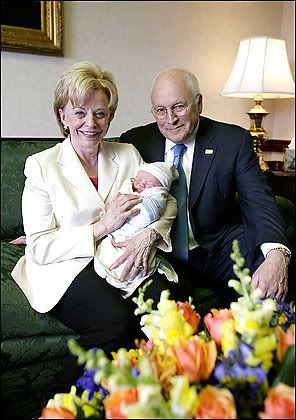
As posted here on Feminist Law Profs, Mary Cheney and her partner Heather Poe welcomed their new son Samuel David into the world on May 23. The White House promptly issued a photo of Grandparents Vice-President Dick and Lynne Cheney nestling baby Samuel. Bridget Crawford and Amanda Kissel point out that both of Samuel’s parents are conspicuously absent from the photo. Perhaps to cushion the insult, it did identify Ms. Cheney and Ms. Poe by name in a caption.Here’s the irony. As the VP and his family enjoy the blessings of Samuel’s arrival, the Senate is scheduled next week to consider Bush nominee Leslie Southwick to fill a Fifth Circuit vacancy. But in 2001, as a member of the Mississippi Court of Appeals, Southwick joined a concurrence in S.B. v. L.W. 793 So. 2d 656 (Miss. App. Ct. 2001), arguing that women who “choose . . . the homosexual lifestyle” are less qualified for parenthood than heterosexual parents. It read:

I do recognize that any adult may choose any activity in which to engage; however, I also am aware that such person is not thereby relieved of the consequences of his or her choice. It is a basic tenet that an individual’s exercise of freedom will not also provide an escape of the consequences flowing from the free exercise of such a choice. As with the present situation, the mother may view her decision to participate in a homosexual relationship as an exertion of her perceived right to do so. However, her choice is of significant consequence . . in that her rights to custody of her child may be significantly impacted.

The irony doesn’t end there. The effort by Republicans to attract African-American voters includes a PR promise to make the party “more diverse than ever before.” Yet in 1998, Southwick agreed in Richmond v. Mississippi Dep’t of Human Services, 1998 Miss. App. LEXIS 637 (Miss. App. Ct. 1998), rev’d 745 So. 2d 254 (Miss. 1999), to reinstate a social worker who was discharged for referring to an African-American co-worker at a top level executive meeting as a “good ole n*****.” The state hearing officer spun the remark as something one might call a “teacher’s pet.” Ugh. But the majority, including Southwick, bought it. To them, the slur “was not motivated out of racial hatred or racial animosity directed toward a particular co-worker or toward blacks in general,” and created no workplace unrest other than offending the African-American colleague who was called a “n*****.”

Hat tip – Imus.

Two dissenters rebuked the majority for ignoring the “inherent offensive[ness]” of the slur, and for suggesting that racist remarks warrant discipline only if they trigger “a near race riot.” Southwick’s hefty record favoring business interests in employment cases makes the racial undertones of Richmond‘s worker-friendly outcome all the more salient.

There’s more. The Alliance for Justice surveyed 70 cases that came before Southwick involving Batson claims against racially discriminatory peremptory strikes. In 54 out of 59 cases involving allegations that prosecutors discriminated against African-American jurors, Southwick voted to uphold the conviction. In 10 cases, defendants alleged that prosecutors prevented them from using peremptories to exclude White jurors and an Asian-American juror. Southwick rejected the defendant’s claim in every case. Whatever his difficulty in spotting prosecutorial bias against African-American jurors, it seems to disappear when a defendant is accused of bias towards Whites.

So this is the President’s best bet to fill a Fifth Circuit vacancy – a jurisdiction that covers Texas, Louisiana and Mississippi and has the greatest percentage of non-White residents among all federal circuits. Really? Of 19 judges who sit on that court, including those on senior status, 3 identify as Hispanic, 1 is African-American. None of the 4 are women. Really? This is the nominee who reflects the Party’s mission “to better include everyone of all backgrounds” into the American fold?

A coalition of organizations paying more than lip service to that goal say Southwick is certainly not the best nominee: The NAACP, the National Gay & Lesbian Task Force, the National Council of Jewish Women, People for the American Way, the Leadership Conference on Civil Rights, the Congressional Black Caucus, Lambda Legal, Mississippi’s Magnolia Bar Association, the Human Rights Campaign, the National Gay & Lesbian Task Force, the National Employment Lawyers Association, the Society of American Law Teachers, and the Alliance for Justice. Thanks to their efforts, the Judiciary Committee yesterday postponed its meeting on the nomination. But when they gather next week, every Republican on the Committee is expected to vote in Southwick’s favor. The vote among Democrats is unclear.

Perhaps the President misses the irony of an appointment that belies even the most strained commitment to genuine family values and equality. Then again, maybe his commitment runs only as deep as the caption to a photo-op.

–Kathleen A. Bergin

Share
Posted in Feminism and Law, Legal Profession | Comments Off on Bush’s Big Irony . . .

Linda Christine Fentiman, “The New”Fetal Protection”: The Wrong Answer to the Crisis of Inadequate Health Care for Women and Children”

Here is the abstract:

This article examines recent”fetal protection”efforts, which demonize, disenfranchise, and punish pregnant women. These actions erase the bright line of birth which has historically distinguished children from fetuses, and include criminal prosecutions of pregnant women, civil commitments of pregnant women who use alcohol and other drugs, and fetal”guardianship”proceedings. The article critiques the ostensible rationale of fetal protection – that by treating the”unborn”as children, the government will support the birth and life of healthier children – and suggests that the real goal of fetal protection is to limit abortion rights and the ability of women to participate equally in the workplace.

But even if the goal of fetal protection was actually to ensure the birth of healthy children, the means chosen are insufficient, discriminatory, and counter-productive. Fetal protection initiatives are insufficient because they focus only on one narrow aspect of risk to fetal and child health, ignoring exposures in the environment and workplace which place many fetuses and children at risk. The new fetal protection is discriminatory. Fetal protection proponents overlook the risks created by the use of assisted reproductive technology, used primarily by wealthier women, and largely ignore the risks posed by alcohol and tobacco use, which is much more widespread than the use of illicit drugs. Instead, fetal protection efforts fall disproportionately at poor women and women of color. Fetal protection efforts are counter-productive, discouraging pregnant women who are using alcohol and other drugs from speaking candidly to their physicians. Most importantly, fetal protection initiatives fail to address the systemic problems of domestic violence, poverty, and lack of access to health care which make it difficult for pregnant women with substance abuse problems to overcome their drug addiction. The article shows how government could achieve the goal of bringing healthy children into the world, by implementing a comprehensive public health strategy to promote women’s and children’s health across the lifespan, not just during the few months when women are pregnant.

Downloadable here.

Share
Posted in Feminism and Law, Feminist Legal Scholarship, Reproductive Rights, Women's Health | Comments Off on Linda Christine Fentiman, “The New”Fetal Protection”: The Wrong Answer to the Crisis of Inadequate Health Care for Women and Children”

Politics As Usual: He’s A “Stud” While She “Works The Pole.”

This is a photograph of possible ’08 Presidential candidate Fred Thompson with his spouse, Jeri Kehn:

AaaaSee also. The New York Post has referred to Kehn as Thompson’s “Babe Wife.” This article also observed:

“Kehn scored a coup in convincing Thompson, who had won the nickname “The Tennessee Stud” during his D.C. bachelorhood, to meet her at the altar.”

A Boston Herald columnist, Margery Eagan, had this reaction to the photo:

Flashed around the country Thursday was yet another full cleavage shot of Fred Thompson’s child wife looking almost as well-endowed as Alex Rodriguez’s stripper/pole-dancer girlfriend.“That was quite a dress,”said one GOP analyst, breathless.

MSNBC’s Imus replacement commentator, former Republican Congressional Representative Joe Scarborough, recently had this on air exchange about Kehn:

SCARBOROUGH: Have you seen Fred Thompson’s wife?
CRAWFORD: Oh, yeah.
SCARBOROUGH: You think she thinks she works the pole?
CRAWFORD: That’s what a Hollywood career will do for you, I guess.
SCARBOROUGH: What do you mean?
CRAWFORD: You get wives like that.
SCARBOROUGH: I mean, look at that guy. God bless him, I love his voice. But I mean, you know. He ain’t Robert Redford in”Butch Cassidy and the Sundance Kid.”
CRAWFORD: Well I would like to see him back into politics because I think he’s a lousy actor.

You can watch the video here.

According to this USA Today article:

Video of MSNBC’s Joe Scarborough bantering on the cable news network Friday about whether Fred Thompson’s wife “works the pole” is sparking criticism of Scarborough from the right, left and in between.

A spokesman for the news network said this afternoon, though, that the comment has been taken out of context and that it is “irresponsible” to suggest Scarborough was employing sexual innuendo. “Works the pole” could have been a reference to poles that some strippers use in their acts. MSNBC says it was a reference to an exercise routine that a growing number of women are performing.

As both an actor and politician, I have to assume Thompson understands the importance of his public image, and that of his wife. Kehn is described in the NY Post article linked above as “a former Senate staffer and Republican National Committee mouthpiece” and “a sassy political pro who could help his cause in the White House.” It is difficult to divine what, if anything, her style of dress says about Thompson’s perceptions of the current electoral zeitgeist. Is Kehn willing to be publicly portrayed as a “pole worker” to burnish Thompson’s reputation as a “stud,” or did the media coverage turn out differently than they expected? If Thompson didn’t anticipate this kind of reaction, his political instincts probably aren’t all that good.

–Ann Bartow

Share
Posted in Feminism and Politics, Sexism in the Media | Comments Off on Politics As Usual: He’s A “Stud” While She “Works The Pole.”

Protecting Gay, Lesbian and Gender Variant Teens

In my new book, Dude, You’re a Fag:   Masculinity and Sexuality in High School, I document the rampant homophobic teasing that permeates high school students’ daily lives.   California is one of the few states to take a proactive legislative approach to this problem. The legislature passed the groundbreaking Assembly Bill 537, The California School Safety and Violence Prevention Act, in 2000.   This bill prohibits discrimination in schools based on perceived or actual sexual or gender identities.  

At the school I studied, “River” High, students invoked this law several times in order to defend themselves.   I watched as the president of the school’s Gay/Straight Alliance encouraged a club member to lodge a complaint with the school administration about the homophobic taunting directed at him, using AB 537 for protection.   Other students used the law to challenge River High’s policy that girls wear lavender graduation robes and boys wear black.   One brave student even requested that the school provide transgender-safe restrooms by citing this bill.

Sadly, despite the protections of AB 537, one of my respondents, Ricky, dropped out of River High.   He did so due in large part due to the homophobic teasing he suffered there, in spite of his repeated entreaties to the administration to protect him. Once these laws are passed, teachers and administrators need to be trained to enforce them.

The California legislature is not alone in having passed such a law.   The District of Columbia, Maine, Minnesota and New Jersey have all enacted laws that prohibit harassment and/or discrimination based on sexual orientation and gender identity in school.   Several other states – Connecticut, Massachusetts, Vermont, Washington and Wisconsin – have passed laws that prohibit harassment and discrimination based on sexual orientation in school, but fail to protected alternative gender expressions.   These laws need to include gender expression, as alternative gender practices trigger much of the homophobic or sexually based teasing in adolescence.   As of the writing of my book, 20 states had no provisions protecting gay, lesbian, bisexual, transgendered, or other non-normatively gendered students.  

-C.J. Pascoe

Guest blogger C.J. Pascoe is a sociologist at the Institute for the Study of Social Change at the University of California Berkeley.   Her book, Dude, You’re a Fag: Masculinity and Sexuality in High School was recently published by the University of California Press.   She is currently investigating youth cybercultures with the Digital Youth Project.

Share
Posted in Feminism and Law, Guest Blogger | Comments Off on Protecting Gay, Lesbian and Gender Variant Teens

On the National Security and Homeland Security Presidential Directive

In response to the National Security and Homeland Security Presidential Directive, signed on May 9, 2007:

The directives addressing continuity of the federal government in the event of an occurrence that would effectively preclude normal operation of the three branches of government updates directives and policies that were first promulgated during the Cold War.   With the threat of nuclear attack becoming a perceived reality after the Soviets obtained the atomic bomb (accelerated but not caused by traitorous Americans) and then the hydrogen bomb, the spectre of a destroyed Washington and a country where essential communications aand venues for government administration being wiped out became both an operational possibility and the gist for quite a few movies and TV dramas.

From the 1950s on, the federal government planned for the dispersal, voluntary or forced, of the three branches of government.   Fort Ritchie, in West Virginia, became an alternative White House although this was kept from the public for some time (I visited the facility during my tour as an Army Intelligence officer in the late 60s). Other sites were developed, largely on military bases. Elaborate communications networks were prepared to take over when needed from the presumably impotent normal channels.

As with all major contingency plans, this one was modified from time to time.   The latest incarnation reflects the redirected threat posed by terrorists who may not be part of the forces of a sovereign nation.   In other words, it’s one more response to 9/11.

Activation of the plan requires a disaster of almost cosmic proportions so that by itself it imperils no aspect of constitutional government.   Whether in the event of a massive dislocation of the federal government, the constitutional blueprint could still be read, much less followed, is currently the question for novelists, screenwriters and doomsayers. The Presidential directive is not an example of unconstitutional lawmaking by the Chief Executive-it is well within his Article II powers and reflects the will of Congress.

-Ralph Michael Stein    

Share
Posted in Uncategorized | Comments Off on On the National Security and Homeland Security Presidential Directive

FeministLawProfs Theme Song?

This post at salon.com suggests that “If there’s one thing professional wrestlers, relief pitchers and politicians have in common, it’s knowing that a well-chosen theme song can say more about who you are and what you believe in than a thousand speeches.”   Therefore Hillary Clinton asks people to help choose her campaign theme song (here).  

Senator Clinton’s theme song campaign may be wacky and odd, but we aren’t totally humorless (at least most of the time).   So imagine that feministlawprofs had a theme song.   What would it be?  

Here are some possibilities.   Vote for your favorite.

A Womans Worth (Alicia Keys)
Bells for Her (Tori Amos)
Born to Fight (Tracy Chapman)
Defying Gravity (Wicked Soundtrack)
Dicen Que Soy (India)
Electra Woman and Dyna Girl Theme (Kroftt Supershow)
Everyday People (Sly and the Family Stone)
Everything is Everything (Lauryn Hill)
Fanfare for the Common Man (Aaron Copland)
Fifth Symphony, First Movement (Beethoven)
I Am Woman, Hear Me Roar (Helen Reddy)
I Cram to Understand U (MC Lyte)
Its a Hard Knock Life (Annie Soundtrack)
I’ve Got to Use My Imagination (Gladys Knight)
I Will Survive (Gloria Gaynor)
Just a Girl (No Doubt)
Kuff (Shelly Thunder)
Ladies First (Queen Latifah)
Me Myself and I (De La Soul)
Mission Impossible Theme
More Than a Woman (Bee Gees)
No Woman No Cry (Bob Marley)
Paper Thin (MC Lyte)
Preamble (Schoolhouse Rock)
Rock the Boat (Hues Corporation)
Sisters Are Doin It For Themselves (Annie Lennox and Aretha Franklin)
Something to Talk About (Bonnie Raitt)
Soul Sister (Mary Black)
Survivor (Destiny’s Child)
We’re All In This Together (High School Musical Soundtrack)
   
pollcode.com free polls

Hat tip: Horace Anderson        

-Bridget Crawford and Amanda Kissel

Share
Posted in Bloggenpheffer | Comments Off on FeministLawProfs Theme Song?

“Writing for Their Rights”

From On the Media:

In Gwalior, India, women with no journalistic training, and often no education, are writing about their grievances in the newspaper Mahila Paksh. New Delhi-based reporter Mridu Khullar says their reporting has led to extraordinary changes.

Read more. or listen to the story, here.

Via Alfa King Memories, via the 39th Carnival of Feminists.

Share
Posted in Feminism and Politics, Sexism in the Media, Sisters In Other Nations | Comments Off on “Writing for Their Rights”

The 39th Carnival of Feminists

The original feminists’ carnival! Lots of good links and reading at Laurelin in the Rain.

Share
Posted in Carnival time! | Comments Off on The 39th Carnival of Feminists

Male Attorney More Effective As Female Online

Over at Madisonian Theory, Fred Yen notes:

Today’s law.com has a interesting story about law firms conducting investigations to enforce clients’ IP rights on the Internet. It describes how a Covington and Burling lawyer impersonated a”flirtatious 27 year old female programmer”in chat rooms to identify software pirates and have them arrested. The rest of the story discusses online IP enforcement as a major growth area for law firms as clients spend significant resources to stop the sale of infringing goods. …

The referenced article starts out:

On the Internet, no one knows if you’re a dog. Or a well-tailored lawyer in the London office of Covington & Burling. That fact has guided Peter Anaman’s entire career over the last seven years. The 33-year-old British-trained attorney is the head of Covington’s Internet monitoring and investigation unit, and he uses multiple online personas to nail bad guys: sellers of counterfeit goods and pirated software, hackers, phishers, you name it. …

The article doesn’t explain how many of Anaman’s “multiple online personas” claim to be female, but notes that he “managed to infiltrate [a software infringement] ring in a matter of months by pretending to be a flirtatious 27-year-old female programmer who complained a lot about her boss in online chat rooms.” Perhaps it amuses Anaman that the folks he sent to prison erroneously believe they were betrayed by a women. Or maybe he correctly deduced that his targets would assume a woman was powerless and harmless, and easily let their guards down around her. I think Fred Yen is correct that using subterfuge to identify infringers is potentially unethical or illegal.

–Ann Bartow

Share
Posted in Feminism and Law, Legal Profession | Comments Off on Male Attorney More Effective As Female Online

Buy Thicker Curtains.

And keep them closed. And don’t go outdoors, because Google now offers “street view.”

On a related note, I overheard two college students talking about why they change clothing in the bathroom stall of the women’s locker room at the University’s PE building. The reason was not shyness or insecurity about their bodies. The reason was that they are afraid somebody will surreptitiously snap photographs of them while they are undressed, and then distribute the pictures. Apparently they know someone this happened to.

–Ann Bartow

Share
Posted in Academia, Feminism and Technology | Comments Off on Buy Thicker Curtains.

Where’s (Either) Mommy?

Samuel David Cheney

On Wednesday, May 23, 2007, Mary Cheney and her partner of 15 years, Heather Poe,  welcomed their son,  Samuel David Cheney, into their lives.   Ms. Cheney and Ms. Poe are notably absent from  an official  White House photo (above) taken shortly after the baby’s birth.   The White House website caption, though, recognizes  both Ms. Cheney and Ms. Poe as parents:

Vice President Dick Cheney and his wife, Lynne Cheney, welcomed their sixth grandchild, Samuel David Cheney, Wednesday, May 23, 2007. He weighed 8 lbs., 6 oz and was born at 9:46 a.m. at Sibley Hospital in Washington, D.C. His parents are the Cheneys’ daughter Mary, and her partner, Heather Poe.

Under  Virginia law, Ms. Poe seems to have no formal legal ties to her son.   Equality Virginia reports here that, “[w]hile there are no specific Virginia laws addressing the custody and adoption rights of gays and lesbians, Virginia courts have routinely discriminated against gays and lesbians by finding that the parent’s status as gay or lesbian is not in the ‘best interests’ of the child.”

-Bridget Crawford and Amanda Kissel

Share
Posted in Feminism and Law, Feminism and Politics | Comments Off on Where’s (Either) Mommy?

CFP: Exploring Key Concepts in Feminist Legal Theory – The Family

The Centre for Law, Ethics and Society, Keele University and the Feminism and Legal Theory Project, Emory University (headed by FeministLawProf Martha Fineman) have issued this CFP for a workshop to be held September 7-8, 2007 at Emory University in Atlanta:

This is to announce the fifth and final session in a series of five comparative law and culture workshops….This series of cross-legal cultural sessions were designed to focus on issues of interest to feminist and critical scholars from both jurisdictions and addressed four general topics:

  • Changing conceptions of the state, governance, and citizenship relations;
  • The role and importance of race and ethnicity in the two national contexts and their implications for feminist work;
  • Feminism and post-colonialism – their meaning and importance; and
  • The family as a key concept, its different and evolving meaning.

Organized around a particular problem or concept as a focal point, the workshops objectives are to interrogate points of conflict, consistency and contradiction in feminist legal theory and method in the two national contexts. In this last session, the subject under consideration is”the family.” We are interested in papers addressing its different and evolving meanings and the associated implications for law revision and reform. Key questions include:

  • Is the (Western) family a shared institution or are there important differences in how it is understood in the two jurisdictions?
  • To what extent are changes in behavior and attitude about family and intimacy reflected in changes in the laws in each jurisdiction?
  • What economic factors affect the formation, maintenance and/or dissolution of the family under each legal system?
  • What legal and cultural factors and values inform our understanding of the family?
  • What is the role of the state in regard to the family?
  • Can or should we move beyond the family?
  • Can one have personal autonomy within the current structure?
  • Is there transformative potential in alternative family forms?
  • Is the family performative rather than structural?
  • What would a feminist image of family look like?

Proposals should be sent by June 11, 2007 to Martha LA Fineman (mfineman(at)law.emory.edu) and Nancy Stafford (nstaffo(at)law.emory.edu). Working papers will be due August 20, 2007.

The website of the Feminism and Legal Theory Project is here.

-Bridget Crawford

Share
Posted in Call for Papers or Participation | Comments Off on CFP: Exploring Key Concepts in Feminist Legal Theory – The Family

Gender and the “Fag” Discourse

Front CoverToday the University of California Press released a new book by C.J. Pascoe, Dude, You’re a Fag Masculinity and Sexuality in High School.   Dr. Pascoe is a Postdoctoral Scholar with the Digital Youth Project at Berkeley’s Institute for the Study of Social Change.  
From the book’s webpage:

High school and the difficult terrain of sexuality and gender identity are brilliantly explored in this smart, incisive ethnography. Based on eighteen months of fieldwork in a racially diverse working-class high school, Dude, You’re a Fag sheds new light on masculinity both as a field of meaning and as a set of social practices. C. J. Pascoe’s unorthodox approach analyzes masculinity as not only a gendered process but also a sexual one. She demonstrates how the “specter of the fag” becomes a disciplinary mechanism for regulating heterosexual as well as homosexual boys and how the “fag discourse” is as much tied to gender as it is to sexuality.

-Bridget Crawford
Share
Posted in Feminism and Culture, Sociolinguistics | Comments Off on Gender and the “Fag” Discourse

Second Carnival of Radical Feminists

carnival.jpg

The First Carnival of Radical Feminists is a ridiculously difficult act to follow, because Heart did such a fantastic job with it. It is a great resource, and I hope this one will be at least somewhat useful as well. My approach has been to separate the material by broad (yes, bad pun) subject designations, which I have done imperfectly in places, due to overlapping issues. Also I can’t really do some of the linked posts justice by describing them, so in many cases all you have to work with is post titles. I hope you will not be put off by a lack of enthusiastic adverbs or exclamation points, and check them out. You won’t agree with everything you see at these links, but I think you will learn things and be made to think.
crones413.jpg

Blogularity:

As both a lawyer and an academic, I love a good argument. Unfortunately, a lot of the time, the blogosphere is not a particularly productive place to have one. Joseph Kugelmass of The Kugelmass Episodes has a post called “On Pitilessness” that does a nice job of articulating the problematic nature of flame wars. Here is an excerpt:

The cost of a flame war is not something we know, for the following reason: the tendency of flame wars to produce a lot of links back and forth, and a lot of enthusiastic comments, makes them look terrific. However, we have no idea how many people decide they will never write a comment, or decide not to start a blog, or decide not to weigh in on their own blogs on a given subject. If that decision is based on trouble refuting well-made counter-arguments, so be it. But if it’s based on verbal abuse? Where is our triumph then?

Angry Black Bitch noted in a recent post entitled “Weekend Review“:

… the internets lost their motherfucking mind last week, thus this bitch had to do a little technical correction (wink).

As a matter of fact everything lost its motherfucking mind Friday so this bitch had to shake the dust off of the merciless rod of correction and re-establish my authority!

Lawd, why can’t people just act right?

Blink. …

Finally, Twisty Faster wrote recently about the difficulties of moderating blog comments in “Define this” at I Blame The Patriarchy.

Politics:

Several bloggers have written posts about Malalai Joya: For example, see Heart’s posts here, here, here and here. More information from Sonali Kolhatkar at WIMN’s Voices.

At BlogHer, Carmen Van Kerckhove makes some interesting observations about the way the mainstream media discusses race in its coverage of Barack Obama’s presidential bid in her post “Michelle Obama, feminism and the strong black woman“.

Maia at Touchingly Naive blogged about pre-pubescent virgin worship in Nepal in Royal Kumari: The Living Goddess.

Women’s Health:

Watch a video entitled “Happy Weekend?” by Liz Spikol at The Trouble With Spikol, to hear Liz talk about mental illness.

Read “Bones To Pick, and Preserve” at Our Bodies, Our Blog, which notes:

In a recent commentary at Women’s eNews, Judy Norsigian and Heather Stephenson of Our Bodies Ourselves caution women about buying into the hype surrounding a new, once-a-year, injectable medication for osteoporosis.

While it might be a worthwhile option for women of a certain age or women with certain risk factors, most women should think long and hard before rushing out to get the bone density screenings needed to determine if you might benefit from the drug.

Although the drug companies don’t really want you to hear it, medications for postmenopausal osteoporosis have many potentially serious side effects, which Norsigian and Stephenson outline in detail.

Read Richard Leader’s essay at Adonis Mirror entitled “The Left, HPV and Cancer.” It is very thought-provoking. He writes:

… Where was the male Left, when it came to cervixes, a decade ago? Where were we on HPV and cervical cancer before there was a”cure?”

That answer can, ironically, be found in Merck’s own commercials for Gardasil. They feature one nubile woman after another proclaiming that she had only just heard about HPV, how it can cause cancer, and how absolutely terrified she was for that one brief second before the pharmaceutical industry heroically came to her rescue.

This terror is new. …

… Inflicting cervical cancer upon someone was never a consideration of men. HPV strains that did not burden a male with unsightly warts were deemed not worth testing for by the medical establishment; out of sight, out of mind. There were no marches. Penises were never called”the original cancer sticks.”No man ever curtailed his sexual behavior on account of it, admitting that even condoms not might prevent its transmission.

And yet that same generation of Leftist men, cure in hand, now accuses religious fundamentalists of murderous indifference.

It is only now that women can be saved:and pockets can be lined:that women are allowed to fear HPV and the very worst of its effects. Indeed, they are even encouraged to fear it. Before, it was merely part of heterosexual life for women, an uncommon yet ordinary consequence of all we ordained as”natural.” Bad luck, or the Will of God, cancer was seen as outside the domain of male control. …

Note that the ACLU released a report entitled “Religious Refusals and Reproductive Rights: Accessing Birth Control at the Pharmacy.”

Read La Doctorita’s post, “sins and virtues in medical education, part 1: pathologizing” at Unconventional Beauty and be glad she is joining the medical profession.

Read “Feminist Mama Files: A Vegan Mama” at The Red Thread for thoughts about veganism.

Read “not very exciting but perhaps useful” at One Jewish Dyke, because it is indeed useful information.

Racism:

Priscilla Huang authored a thoughtful post, Family Values: Made In America?” at The RH blog.

Books you’re likely to be hearing from soon” by Amy at Feminist Reprise offers useful book recommendations and commentary.

A linkeriffic twofer is provided by Ms. Jared at Sinister Girl: What I’m Reading… and What I’m Thinking…

It’s quite a bit longer than a blog post, but some of you may be interested in Leti Volpp’s article, “Divesting Citizenship: On Asian American History and the Loss of Citizenship Through Marriage.”

Also check out Alicia Banks’ column at Eloquent Fury, “The Timeless Martin Luther King Jr., On His “Letter From A Birmingham Jail.”

Feminist Theory:

Great thought-provoking links include:

Twisty’s post “XX” at I Blame the Patriarchy.

Witchy-Woo’s post, “I’m Kinda Loving…” at Well I’ll Go To The Foot Of My Stairs.

Bizarre Defense: The Fashion Industry Made Me Do It,” by Belle Lettre at Law and Letters.

Beauty Myths and Punk Rock Chicks” by La Doctorita at Unconventional Beauty.

PorNOgraphy” by Ms. Amy at Scorpio Risen.

Motherhood: Patriarchal Institution” at Sazz’s Blog.

Friday Feminism: More Laws On Our Bodies” at Unapologetically Female.

Porn and the Cathartic Relationship…” at Sparkle*Matrix.

When Dead White Men Were Actually Dead White Women, and other historical things that interest me” by Anna at Feminists Don’t Bake Bread.

Feminist Collective” at Gorgon Poison.

A couple of recent legal theory articles that might be of interest include:

Toward A Third Wave Feminist Legal Theory: Young Women, Pornography, and the Praxis of Pleasure” by Bridget Crawford.

Toward a Feminist Theory of the Rural” By Lisa R. Pruitt.

Confronting Conventional Thinking: The Heuristics Problem in Feminist Legal Theory” by Nancy Levit.

The summer issue of Girlistic Magazine, on the topic of “Feminism & Marriage” is now available for free downloading here.

I also want to again plug the very useful Topics in Feminism section of the Stanford Encyclopedia of Philosophy.

Internet Harassment:

At Den of the Biting Beaver, read “a bit of an explanation” to learn why Biting Beaver stopped blogging.

Read this WaPo article to learn about what happened to 18 year old Allison Stokke. Here is an excerpt:

A fan on a Cal football message board posted a picture of the attractive, athletic pole vaulter. A popular sports blogger in New York found the picture and posted it on his site. Dozens of other bloggers picked up the same image and spread it. Within days, hundreds of thousands of Internet users had searched for Stokke’s picture and leered.

The wave of attention has steamrolled Stokke and her family in Newport Beach, Calif. She is recognized — and stared at — in coffee shops. She locks her doors and tries not to leave the house alone. Her father, Allan Stokke, comes home from his job as a lawyer and searches the Internet. He reads message boards and tries to pick out potential stalkers.

“We’re keeping a watchful eye,” Allan Stokke said. “We have to be smart and deal with it the best we can. It’s not something that you can just make go away.”

On May 8, blogger Matt Ufford received Stokke’s picture in an e-mail from one of his readers, and he reacted to Stokke’s image on instinct. She was hot. She was 18. Readers of Ufford’s WithLeather.com — a sports blog heavy on comedy, opinion and sometimes sex — would love her. …

(NB: Twisty blogged about the situation here at I Blame the Patriarchy)

Update: While it does not diminish Allison Stokke’s suffering in any way, this information about her father Allan at Feministing is fairly discouraging.

Amananta’s post “We Told You So” at Screaming Into The Void talks about sexism in online gaming. It’s part of a series she has been running that makes me laugh even as it makes me cringe, because she is such a wonderful writer and observer of human behavior.

Violence:

I mightily applaud everyone who is drawing attention to the DeAnza rape allegations situation and pressing for a criminal investigation. See, for example, Marcella’s topical post at Abyss2hope, Echidne’s post at Echidne of the Snakes, and Twisty’s post at I Blame The Patriarchy. Radical feminist blogs are doing a terrific job of discussing the case without blaming the victim, which is sometimes harder than one might think, or so it often seems.

Other violence related posts include:

honor killings redux” by La Doctorita at Unconventional Beauty.

Heart’s post “Dorothy Stang, Confronter of Male Power” at Women’s Space/The Margins.

From the testimony of Lola Cristeta Alcober, Tacloban City, Leyte” at LABAN! Fight For Comfort Women.

I can’t get away from disturbing images” by Charliegrrl at Blog of Feminist Activism Against Porn.

The Smoking Gun has a copy of the indictment filed against a porn producer who sometimes goes by the name of “Max Hardcore.” The website notes: “A copy of the indictment, which was filed in Tampa, Florida and unsealed yesterday, can be found below. As described in the DOJ release, [Max Hardcore] … is a “nationally-known director, producer, and star of films featuring acts such as anal penetration, urination, insertion of an entire hand into a vagina or anus, vomiting, and severe violence” towards female performers.”

Finally, Our Vaunted Feminist Humorlessness Is Challenged By:

The Girl Detective’s post entitled “we have enough, apparently.”

Hermione’s post “Red Riding Hood: the real story” at Cronespace.

Mad Kane’s Humor Blog post: “Keeping Abreast Of Bras.”

See also this Cat and Girl.

radfeminism.jpg

Let me know about any needed additions, subtractions or corrections. Thanks to everyone who nominated posts, and especially to Heart for her powerful and relentless feminism, and for founding the Carnival.

–Ann Bartow

Share
Posted in Carnival time!, Uncategorized | 15 Comments

Anita Bernstein, “Tort Theory, Microfinance, and Gender Equality Convergent in Pecuniary Reparations”

Here is the abstract:

Governments around the world have undertaken reparations programs following historically recent experiences of serious human rights violations. This chapter uses tort theory to defend monetary payments as a constituent of national repair. It argues that paying money to victims comports with feminism too.

Once accepted in principle, this measure raises a new question: What is the best way to convey pecuniary reparations in transitional settings? With due heed for the reality that circumstances always vary from country to country, the chapter argues for”microfinance”(as distinguished from”microcredit”) as the preferred mode for transitional governments designing new national reparations programs. The chapter works with, while also trying to deepen, a conventional wisdom that microfinance advances the social and economic status of women.

The article can be downloaded here.

Share
Posted in Feminism and Politics, Feminist Legal Scholarship, Sisters In Other Nations | Comments Off on Anita Bernstein, “Tort Theory, Microfinance, and Gender Equality Convergent in Pecuniary Reparations”

Let’s Talk About Salaries

As previously blogged about here, the Supreme Court’s terrible decision last week in the pay discrimination case should lead to major reform regarding publicly disclosing salary information.   Susan Reed has taken up the cause in an editorial in the New York Times today.   She concludes:

Requiring companies to post salaries would give employers and employees a chance to begin discussing wages as responsible adults instead of as king and supplicant, or owner and beggar. It would help employees to better understand what their jobs are worth, and it would encourage their bosses to see how much more loyalty and productivity they could get from their workers in the absence of secret salary negotiations. In the end, fewer employees might file discrimination complaints, and if they did, at least they’d be able to gather enough evidence to meet the deadline.

Congress needs to take up this cause immediately and end the “last taboo.”

– David S. Cohen

Share
Posted in Feminism and Law | Comments Off on Let’s Talk About Salaries

Soccer Harassment Rules Expanded, Thanks To Mills College

The Women’s Sports Foundation News reports:

Thanks to the combined efforts of the Mills College Soccer Team, Athletic Department, Legal Counsel, College Senior Officers, and President Holmgren, the National Collegiate Athletic Association (NCAA) has approved a soccer rule change that will help to foster a harassment-free environment for all student-athletes.

For the past five months, Mills College has been working to change a NCAA soccer ejection rule that listed “abusive, threatening or obscene language, behavior or conduct” and did not include specific language referring to harassment. …

  • Mills College Athletic Director and Head Soccer Coach advocated vigorously for the following ejection rule change with the NCAA: “engages in hostile or abusive language or harassment that refers to race, religion, sex, sexual orientation or national origin, or other abusive, threatening or obscene language, behavior or conduct.”
  • The NCAA Rules Committee, NCAA Legal approved the rule proposal, and it was finally made official by the NCAA Playing Rules Oversight Panel on March 12, 2007.
  • The NCAA reports the rule change here (scroll to the very end) with little fanfare perhaps, but still, it’s official.

    –Ann Bartow

    Share
    Posted in Feminism and Culture, Sociolinguistics | Comments Off on Soccer Harassment Rules Expanded, Thanks To Mills College

    Elizabeth Foyster, “Marital Violence: An English Family History, 1660-1857”

    marital+violence.jpg

    From the books’ webpage:

    This book exposes the ‘hidden’ history of marital violence and explores its place in English family life between the Restoration and the mid-nineteenth century. In a time before divorce was easily available and when husbands were popularly believed to have the right to beat their wives, Elizabeth Foyster examines the variety of ways in which women, men and children responded to marital violence. For contemporaries this was an issue that raised central questions about family life: the extent of men’s authority over other family members, the limitations of married women’s property rights, the different roles of mothers and fathers in the upbringing of their children, and the problems of access to divorce and child custody. Opinion about the legitimacy of marital violence continued to be divided, but by the nineteenth century the basis of ideas about what was intolerable or cruel violence had changed significantly. This accessible study will be invaluable reading for anyone interested in gender studies, feminism, social history and family history.

    A detailed review of this book by Marjorie Levine-Clark is available via the Legal History Blog.

    Share
    Posted in Feminist Legal History | Comments Off on Elizabeth Foyster, “Marital Violence: An English Family History, 1660-1857”

    Market Forces and “Nymphet”

    nymphet.jpg

    nymphet1.gif

    nymphet2.jpg

    U.S. manga publisher Seven Seas has decided to delay release of (or possibly cancel) the first volume of Kaworu Watashiya’s Nymphet. Nymphet “features an elementary-school girl fruitlessly attempting to seduce her adult teacher. Although the series contains no overt nudity or sexual content, it nonetheless trades heavily on lolicon (“Lolita complex”) innuendo and imagery for its humor, in such a way as to make controversy all but inevitable.” Here is an excerpt of the recent public statement from Seven Seas president Jason DeAngelis:

    In Japan, NYMPHET is a highly popular and successful manga written and drawn by a female creator for an older teen male audience. It is published in Futubasha’s weekly seinen magazine COMIC HIGH. It is not considered pornographic by any means, and Japanese would be shocked to hear this sort of accusation about what they consider to be a mainstream property. In fact, it is so mainstream that it has been turned into an anime program which will be broadcast on Japanese TV starting this July. My personal stance on this title is, if it’s good enough for the Japanese, then it’s good enough for us. I had the opportunity to live in Japan for six years, and so I understand and appreciate their cultural nuances and wacky and often bizarre sense of humor. Based on the angry debates that I have seen online, however, there are people who do not appreciate this sort of material, and while it may be appropriate in Japan, they feel that it is inappropriate for our culture.

    Although I do not agree with that point of view, I realize that this issue must be addressed, instead of ignored. As a policy, we at Seven Seas do not believe in altering or”censoring”manga artwork or content, so that approach, which has been taken in the past by others, is out of the question. Instead, despite the fact that we have already received thousands of orders on this title, I have decided to delay its release and to have an open dialogue with the large book chains and other vendors. …

    This site reports that Seven Seas has now decided not to publish an American version of Nymphet at all. Note that apparently no government entity has intervened in any way. Via Journalista and Manstream Comics.

    –Ann Bartow

    Cross-posted at Prawfsblawg, where I am guesting for a couple of weeks.

    Share
    Posted in Feminism and Culture, Sexism in the Media | Comments Off on Market Forces and “Nymphet”

    DeAnza Update

    Here’s an SFgate column about the rescuers, and here is an SFgate column about the DA’s refusal to prosecute.
    Share
    Posted in Acts of Violence, Feminism and Law | Comments Off on DeAnza Update

    There Was An Arrest, But Will There Be Justice?

    From ABC News:

    ‘Most Wanted Accused Child Pornographer/Rapist’ Arrested in China: Former Deputy Allegedly Raped His Daughter, Posted the Video Online

    By PIERRE THOMAS, JACK DATE and THERESA COOK

    Kenneth John Freeman, described by the U.S. Marshals Service as “one of the world’s most notorious accused child molesters,” was arrested in Hong Kong Monday, the U.S. Marshals Service announced.

    But notorious hardly begins to describe what Freeman is accused of.

    Officials allege Freeman raped his then 10-year-old daughter, videotaped the scenes and posted them online in what they say became “one of the most widely downloaded child pornography videos” in recent history.

    Freeman, a former deputy sheriff from Benton County in Washington, was arrested yesterday in Hong Kong after being tracked for weeks by federal marshals and immigration and customs agents. Authorities said Freeman, a body builder, tried to escape, injuring four officers in the process.

    Freeman faces multiple counts of child rape in the first degree, plus federal charges of manufacturing, possessing and distributing child pornography. The U.S. Marshals say Freeman missed a court appearance in March 2006, and hadn’t been seen since. Authorities believe he was living in the city of Suzhou, China, and might have been working for a U.S.-based company there. Freeman has been on the U.S. Marshals’ 15 Most Wanted Fugitives list.

    In December 2006, Freeman’s daughter Kylie — his alleged victim — appeared on the show “America’s Most Wanted” to tell her story. Now in high school, Kylie has become an advocate against child sexual abuse. Officials say her story, clues gathered during their investigation and tips to the National Center for Missing and Exploited Children helped put the puzzle together.

    I applaud Kylie’s courage. I deeply regret the extreme likelihood that the video of her rape will be circulating on the Internet for the rest of her life.

    –Ann Bartow

    Share
    Posted in Acts of Violence, Feminism and Technology, Sexism in the Media | Comments Off on There Was An Arrest, But Will There Be Justice?

    Inherent Racism in the Mainstream Use of “Ghetto”

    Writing in the Boston Globe last month, reporter Vanessa Jones described “The Ghetto Culture Machine: What Goes Wrong When Stereotypes Become Part of the Mainstream:”

    College and high school students throw “ghetto parties,” at which white kids in blackface wear diamonds around their necks and grills on their teeth. Comedian Michael Richards utters a racial epithet on a comedy stage after some black men heckle him. Radio personality Don Imus calls the black members of Rutgers University’s women’s basketball team “nappy-headed ho’s.”

    The incidents seem disconnected, but in the mind of writer Cora Daniels, they exemplify a change that has slowly engulfed mainstream culture. In her new book, “Ghettonation,” she calls these acts “ghetto.” The word first described sections of European cities where Jews were forced to live, and became defined as neighborhoods where people of color reside because of social or economic hardships. But Daniels says it has broken away from those original meanings to become a mindset.

    “Ghetto is no longer where you live — it’s how you live,” she explains during an interview. “It’s a mindset that embraces and celebrates the worst….Behavior that shouldn’t be acceptable has become acceptable and commonplace.”

    ….

    When [Northeastern University Professor of Music and African-American Studies Emmet] Price brought up the subject of ghetto parties in his Northeastern classroom, he says his white students reacted by saying, “So what? ” They considered ghetto parties no more harmful than toga parties, says Price. Graves believes the students’ inability to understand the inherent racism reflects the fact that many whites believe the problems of race were solved in the 1960s and 1970s.

    Cora Daniels says in the Globe article that the term “ghetto” is “a word that in this country is associated with poor communities of color [used] to now describe something that’s broken up and beaten down.” I myself first heard the term used this way by a student who critiqued the use of plastic knives and forks (as opposed to stainless? silver?) at a Law School social event as “ghetto.”

    Inherent racism is an understatement. We are so, so far from understanding how deeply racism is rooted in our culture.

    -Bridget Crawford

    Share
    Posted in Sociolinguistics | Comments Off on Inherent Racism in the Mainstream Use of “Ghetto”

    Mothers, Daughters and Sisters

    On Memorial Day weekend, CBS devoted its news show 60 Minutes to a story about Iowa soldiers in Iraq entitled Fathers, Sons and Brothers. Reporter Scott Pelley has followed the 1st Battalion of the 133rd Infantry of the Iowa National Guard since the soldiers learned of their deployment in July 2005. Although scheduled to come home this spring, the 1st Battalion is still serving in Iraq, having had its tour of duty extended an extra 125 days.

    No doubt, it is an honor to be featured by 60 Minutes, one of the country’s preeminent news shows. These soldiers deserve the honor and then some. Since arriving in Iraq, the Iowa Guard has run over 300 missions and covered 2.5 million miles. Two have been killed in action and 25 wounded.

    But Fathers, Sons and Brothers – how offensive. My sister, a Navy Reservist from Iowa, and thousands of other Mothers, Daughters and Sisters are serving in the military. Like her, many of them are in Iraq. Like her, they’ve left behind husbands, children, elderly parents and siblings, and in doing so have ripped the very fabric of their families and communities apart.

    According to the report,”the men of the 1st Battalion”drew one of the most critical missions in the war: escorting the convoys that deliver supplies to the American troops. The men and women of the U.S. military serve critical missions all around the world. Before deployment, my sister assisted in humanitarian efforts with Navy and Marine units in Africa, providing essential medical supplies and services to far-flung villages from Togo to Senegal. Today, she provides logistical support for the construction of hospitals, schools and other essential infrastructure in and around Baghdad, and her female colleagues in Iraq serve as electricians, medics, engineers and truck drivers.

    Nearly 350,000 women are serving in the U.S. military, which is about 15 percent of active duty personnel. Ten percent of American troops in Iraq are women. Eighty female soldiers have been killed in Iraq. Yet the only woman mentioned in the 60 Minutes story was by way of a passing reference to a member of an”unusual”husband and wife team.

    It’s a shame that CBS’s report was so gender-biased, because otherwise it was an in-depth, heartfelt look at the lives of soldiers in Iraq and their families, which laid bare the devastating effects of the Bush Administration’s troop-surge, stop-loss policies. If 60 Minutes were to focus on the effects of deployment on women soldiers, it would find equivalent hardships along with equivalent strength, wisdom, good humor, leadership and esprit de corps. And yes, they would find the same level of disillusionment and frustration with this war.

    Just as Lysistrata convened a meeting of all of the women of Greece to plot an end to the Peloponnesian Wars over 2,000 years ago, greater recognition and empowerment of women worldwide may be our best hope for a future liberated from warfare.

    –Sandi Zellmer

    Share
    Posted in Feminism and Politics, Sexism in the Media | Comments Off on Mothers, Daughters and Sisters

    The United States Social Forum: The Greatest Conference You May Never Hear About

    Ever heard of the United States Social Forum?   It’s scheduled to take place  from June 27-July 1 in Atlanta, Georgia.   From that organization’s FAQ page:

    What is the World Social Forum anyway?

    Under the banner of ‘Another World is Possible,’ tens of thousands of community organizers, trade unionists, students/youth, NGO representatives, elected officials and social movements gather for a weeklong conference filled with dialogues, workshops, debates, marches, rallies, and cultural events. The WSF was created to provide an open platform to discuss alternatives to the economic plans created by multi-national corporations and the governments at the World Economic Forum. These plans often result in strategies that suppress workers and human rights, and undermine national and Indigenous sovereignty. The Forum has since become an annual event, hosting up to 100,000 people each year.

    The U.S. Social Forum describes its focus on six “key movement building moments to learn the lessons.”

    These six struggles – Gulf Coast Reconstruction in the Post-Katrina Era; War, Militarism and the Prison Industrial Complex; Indigenous Voices: From the Heart of Mother Earth; Immigrant and Migrant Rights in a Global Society; Liberating Gender and Sexuality: Integrating Gender and Sexual Justice Across Our Movements; and Workers’ Rights in the Global Economy – are not the only important issues facing the movement today. They are deeply interconnected and related to all the crises in our communities within today’s reality of globalization and repressive neoliberal policies – growing poverty; multiple oppressions rooted in class, race, nationality, gender, sexuality, ability, and age; environmental destruction; and increasing militarism. Through workshops, presentations, performances, and debates during the U.S. Social Forum we will explore all these critical issues and their interrelationships.

    The USSF has “third-wave feminism” written all over it.   In fact, the Third Wave Foundation has a special fund for scholarships (info here) for the conference.   But it seems like very few people have heard of the United States Social Forum, and it hasn’t gotten much attention from scholars or the press.  

    -Bridget Crawford and Amanda Kissel

    Share
    Posted in Upcoming Conferences | Comments Off on The United States Social Forum: The Greatest Conference You May Never Hear About

    Reproductive Rights and Pride

    On the role of lesbians in the pro-choice movement, FeministLawProf Pamela Bridgewater wrote in “Transforming Silence: The Personal, Political, and Pedagogical Prism of Abortion Narrative:”
    [W]hile straight women tend to question the lesbian presence in the reproductive rights movement, I have never heard a woman being escorted into the clinic complain about who is making sure she makes it safely inside….[L]esbians who support and defend reproductive freedom recognize that it is not only women who conceive from having made a conscious decision to engage in reproductive sex who have abortions.   Lesbians who engage exclusively in nonreproductive lesbian sex, like all women and girls, are vulnerable to rape, molestation, incest, and other forms of sexual violence that may result in conception.   Abortion is a lesbian issue because abortion is a woman issue.

    NARAL-NY is embracing the connections between queer issues and reproductive-rights concerns by having  information tables at several of the New York-area Pride Parades (the Brooklyn Pride Parade on Saturday, June 9; the Long Island Pride Parade on Sunday, June 10; the Rockland Pride Parade on Sunday, June 10).   NARAL’s goal is to spread awareness about New York State’s Reproductive  Health and Privacy Act  and support pride at the same time.   Anyone interested in volunteering can sign up here.

    -Bridget Crawford and Amanda Kissel

    Share
    Posted in Feminism and Politics, Reproductive Rights | Comments Off on Reproductive Rights and Pride

    Introducing Guest Co-Blogger Amanda Kissel

    AmandaThis summer, I will be co-blogging occasionally with Amanda Kissel.   Amanda is  a 2L at Pace Law School.   She graduated from The George Washington University in 2005 with a BA in Women’s Studies.   She is an active member of Pace’s Women’s Association of Law Students.   Amanda is a self-described “radical feminist who strives to bring feminism back into the forefront of young women’s minds and has no patience for people who say that the feminist movement is over.”   Amanda believes “in the importance of women embracing their sexuality as a means of empowerment and  is also especially interested in how the media portrays and affects women.”   Welcome to the blogosphere, Amanda!

     – Bridget Crawford

    Share
    Posted in Guest Blogger | 2 Comments

    Women’s Equality Amendment “Still Not Likely”

    A headline in this week’s ABA Journal eReport labels the Women’s Equality Amendment, previously blogged here, as “Still Not Likely.”  In the article, Nate Persily at the University of Pennsylvania Law School says,”Most of the guarantees people thought an ERA would grant have come to pass because of judicial decree.”   Feminist Law Prof Deborah Rhode says that the proposed amendment, “would be more a catalyst than a source of change,” and that “[i]t’s not going to adequately address fundamental inequalities that exist, but to the extent that it exposes  sexist underpinnings and sex-based inequalities that remain, it serves as an important political event.”

    I doubt that this amendment will withstand the political process.  

    -Bridget Crawford

    Share
    Posted in Feminism and Law | Comments Off on Women’s Equality Amendment “Still Not Likely”

    Blogging Your Court Case Is A Very Bad Idea!

    Froomkin nails this, so let me free ride off his trenchant analysis:

    The mind boggles.

    Blogger unmasked, court case upended: As Ivy League-educated pediatrician Robert P. Lindeman sat on the stand in Suffolk Superior Court this month, defending himself in a malpractice suit involving the death of a 12-year-old patient, the opposing counsel startled him with a question. Was Lindeman Flea?

    Flea, jurors in the case didn’t know, was the screen name for a blogger who had written often and at length about a trial remarkably similar to the one that was going on in the courtroom that day.

    In his blog, Flea had ridiculed the plaintiff’s case and the plaintiff’s lawyer. He had revealed the defense strategy. He had accused members of the jury of dozing.

    With the jury looking on in puzzlement, Lindeman admitted that he was, in fact, Flea.

    So, here’s a little tip for anyone who finds themselves involved in a lawsuit: don’t blog about the case (or, at least, have every posting approved by your lawyer). And if you do have a blog, maybe you should mention this fact to your lawyer…

    P.S. I’m sure someone in the blogosphere will try to spin this case as some sort of attack on bloggers’ inherent right to anonymity. It isn’t.

    So now if Froomkin sues me for copyright infringement for lifting his entire post, don’t expect me to live blog the proceedings!

    –Ann Bartow

    Share
    Posted in Blog Administration, Legal Profession | Comments Off on Blogging Your Court Case Is A Very Bad Idea!

    “Race and Races: Cases and Resources for a Diverse America”

    From the FLP mailbox:

    race.jpgJuan Perea, Richard Delgado, Angela Harris, Jean Stefancic, and Stephanie Wildman are pleased to announce the June publication of the Second Edition of Race and Races: Cases and Resources for a Diverse America available from West. The text will be available for use in Fall 2007 classes.This best-selling casebook presents critical perspectives on race and racism. Updates the first edition with new material on the treatment of Muslims and Arabs in post-9/11 America. Provides expanded treatment of Japanese-American internment, Jewish Americans, and native Hawaiians in the U.S.

    The Second Edition includes new cases such as Grutter and Virginia v. Black, current statistics, and enhanced coverage of voting. It also features rich historical treatment of major racial groups in the United States: African Americans, Indians, Latinos/Latinas, Asian Americans, and Whites. Contains chapters exploring implications of enslavement, conquest, colonization, and immigration, as well as on equality, education, freedom of expression, family and sexuality, stereotyping, and crime.

    Review Copy:
    In June, West will be automatically sending a complimentary review copy to full-time professors teaching Race Law. Please email west_lawschool@thomson.com if you have any questions, and refer to ISBN 978-0314-14998-5.

    Share
    Posted in Law Teaching, Recommended Books | Comments Off on “Race and Races: Cases and Resources for a Diverse America”

    Judith Butler on Hannah Arendt

    At the London Review of Books website, in an essay entitled “I merely belong to them.”

    Share
    Posted in Feminism and Culture, Sociolinguistics | Comments Off on Judith Butler on Hannah Arendt

    Score One For Difference Feminism As A Study Of Immigration Courts Finds: “One of the most significant factors determining whether a judge would be likely to approve asylum petitions was sex, the study found. Female immigration judges grant asylum at a 44 percent higher rate than their male colleagues.”

    The study, by law profs Jaya Ramji-Nogales, Philip Schrag and Andrew Schoenholtz is accessible here. Below is the abstract:

    This study analyzes databases of merits decisions from all four levels of the asylum adjudication process: 133,000 decisions by 884 asylum officers over a seven year period; 140,000 decisions of 225 immigration judges over a four-and-a-half year period; 126,000 decisions of the Board of Immigration Appeals over six years; and 4215 decisions of the U.S. Courts of Appeal during 2004 and 2005. The analysis reveals significant disparities in grant rates, even when different adjudicators in the same office each considered large numbers of applications from nationals of the same country. In many cases, the most important moment in an asylum case is the instant in which a clerk randomly assigns an application to a particular asylum officer or immigration judge.

    Using cross-tabulations based on public biographies, the paper also explores correlations between sociological characteristics of individual immigration judges and their grant rates. The cross tabulations show that the chance of winning asylum was strongly affected by whether or not the applicant had legal representation, by the gender of the immigration judge, and by the immigration judge’s work experience prior to appointment.

    In their conclusion, the authors do not recommend enforced quota systems for asylum adjudicators, but they do make recommendations for more comprehensive training, more effective and independent appellate review, and other reforms that would further professionalize the adjudication system.

    A NYT account of the study is accessible here.

    Share
    Posted in Academia, Law Schools, Legal Profession | Comments Off on Score One For Difference Feminism As A Study Of Immigration Courts Finds: “One of the most significant factors determining whether a judge would be likely to approve asylum petitions was sex, the study found. Female immigration judges grant asylum at a 44 percent higher rate than their male colleagues.”

    Complicated International Child Custody Case

    I don’t know anything at all about the specifics or merits of this case, but Heart at Women’s Space/The Margins has been blogging about it and doing other sorts of activism as well. Read her post and see if you want to help too.

    –Ann Bartow

    Share
    Posted in Feminism and Law, Feminism and Politics, Sisters In Other Nations | Comments Off on Complicated International Child Custody Case

    Magic Date Ball

    magicdateball.jpg

    It’s an actual product:

    From the Manufacturer
    MAGIC 8 BALL DATE BALL This Magic 8 Ball has just the answers you need to advise you in dating matters! Ask any question at all and you’ll learn what you need to know about that special date. The classic game with an answer for everything about love, romance and dating

    Product Description
    Looking for a great icebreaker for your first date? We have just the solution you need with the Magic 8 Ball Date Ball. This Magic 8 Ball has just the answers you need to advise you in dating matters! Ask any question at all and you’ll learn what you need to know about that special date. This timeless classic is fun to play alone or at a party. Ask a question, then turn the ball to read the answer. Answers are related to love, romance and dating.

    It’s pink, so is it intended for use by women?

    • Signs point to yes.
    • Yes.
    • Reply hazy, try again.
    • Without a doubt.
    • My sources say no.
    • As I see it, yes.
    • You may rely on it.
    • Concentrate and ask again.
    • Outlook not so good.
    • It is decidedly so.
    • Better not tell you now.
    • Very doubtful.
    • Yes – definitely.
    • It is certain.
    • Cannot predict now.
    • Most likely.
    • Ask again later.
    • My reply is no.
    • Outlook good.
    • Don’t count on it.
    Share
    Posted in Bloggenpheffer | Comments Off on Magic Date Ball

    Oh, Crud.

    Diane is ending the Dees Diversion, and though I completely support her decision, I’m taking it pretty hard. She is smart, ardently and brilliantly feminist, and doesn’t take issue based disagreement personally. In other words, she is far too rare! But, I know all too well what she means when she writes:

    I am tired, not so much of the hoardes of ignorant conservatives in the blogosphere, but of the hoardes of so-called liberals who do not support women’s rights, LGBT rights and the liberation of non-humans, and the liberals who are not interested in looking at facts and making rational arguments.

    She will continue to write for the MoJo Blog and started a new blog about women’s tennis, I’m happy to report. Best wishes, Diane, and thanks for all the great blogging and sisterhood. Y’all stay in touch, hear?

    –Ann Bartow

    Share
    Posted in Blog Administration, Feminist Blogs Of Interest | Comments Off on Oh, Crud.

    “Desperate Iraqi Refugees Turn to Sex Trade in Syria”

    The NYT reports:

    … Even in central Damascus, men freely talk of being approached by pimps trawling for customers outside juice shops and shawarma sandwich stalls, and of women walking up to passing men, an act unthinkable in Arab culture, and asking in Iraqi-accented Arabic if the men would like to”have a cup of tea.”

    By day the road that leads from Damascus to the historic convent at Saidnaya is often choked with Christian and Muslim pilgrims hoping for one of the miracles attributed to a portrait of the Virgin Mary at the convent. But as any Damascene taxi driver can tell you, the Maraba section of this fabled pilgrim road is fast becoming better known for its brisk trade in Iraqi prostitutes.

    Many of these women and girls, including some barely in their teens, are recent refugees. Some are tricked or forced into prostitution, but most say they have no other means of supporting their families. As a group they represent one of the most visible symptoms of an Iraqi refugee crisis that has exploded in Syria in recent months.

    According to the United Nations high commissioner for refugees, about 1.2 million Iraqi refugees now live in Syria; the Syrian government puts the figure even higher.

    Given the deteriorating economic situation of those refugees, a United Nations report found last year, many girls and women in”severe need”turn to prostitution, in secret or even with the knowledge or involvement of family members. In many cases, the report added,”the head of the family brings clients to the house.”…

    Read the entire depressing article here.

    Share
    Posted in Sisters In Other Nations, Women's Health | Comments Off on “Desperate Iraqi Refugees Turn to Sex Trade in Syria”