How Do Law Schools Teach Their Teachers?

The December 4, 2007 edition of the Chronicle of Higher Education reported on a forthcoming book by the Carnegie Foundation for the Advancement of Teaching.   The book, The Formation of Scholars: Rethinking Doctoral Education for the Twenty-First Century, “take[s] stock of the current state of doctoral education and how it has responded to, or ignored, the challenges of the 21st century,”   according to the Chronicle (full article available here; subscription required).   The study revists some of its findings made in an earlier report:

In his 1990 book Scholarship Reconsidered: Priorities of the Professoriate, Ernest L. Boyer, who was then president of the Carnegie Foundation for the Advancement of Teaching, analyzed the balance between teaching and research in the scholarly endeavors of that era. His conclusion that the university rewarded research at the expense of teaching set in motion a series of reforms that sought to re-emphasize teaching as an integral component of scholarship.

Seventeen years later, the Carnegie Foundation has again found academe lacking. This time, however, higher education’s most prominent advocates for teaching and teaching reform say that the research has been overlooked.

I couldn’t help but read this and ask, how well do law faculties balance teaching and research?   In law schools, do we emphasize research (“scholarship” in law school-speak) over teaching?   Where do service and collegiality fit in?   The faculty appointments process can be revealing.   What do we communicate in our evaluations of candidates?   Do we read their work carefully?   Do we review their teaching evaluations (if  any)  carefully?   Do we “count” their professional service?   What impresses us?   What does not?   When we speak on behalf of a particular candidate and praise her or his teaching (or scholarship or service), do we inappropriately prioritize teaching (or scholarship or service)?   What message does that send to existing colleagues who do (or do not) prioritize teaching (or scholarship or service)?   What do we communicate in the appointments to our potential future colleagues?   Once the new colleagues  actually join our ranks, what do we communicate to them, whether explicitly or implicitly, about the relative importance of teaching, scholarship and service?

Every law school has its own unique culture that assigns these commitments relative weights.   According to popular stereotype, the more highly-ranked the school is, the more likely that scholarship will be valued over teaching or service.   Admittedly, stereotypes do not necessarily reflect reality – a particular school’s relative emphasis does not necessarily bear a relationship to its so-called prestige level.   And at any particular school at any particular time, the three-dimensional pendulum may swing more in one (or two or three) different directions.

Disclaimers aside, then, can we generalize about the legal academy’s relative valuation of teaching, scholarship and service?   One possible way of getting at this question is to ask what law schools teach the law teachers of the future.   Several law schools, such as NYU, to name one, offer a for-credit course that I call, “Who Wants to be a Law Professor?”   I myself took such a course way back in 1995 at the University of Pennsylvania Law School.   We read and discussed scholarly works with their  professor-authors.   The professor-authors  explained to our class of  12 or so  “professor-wannabes” how they had moved from an idea to a completed article, where they published and why, what they thought made scholarship “good” or “bad,” and how to break into law teaching.   Over and over, my classmates and I were told to write, write, write because  no law faculty would be impressed by a candidate who had “merely” worked in a prestigious law firm, obtained an important clerkship, or done great public-interest work.   One had to sacrifice personal and family time as necessary to make legal scholarship one’s main hobby outside of law practice, or else risk not getting  a law teaching job.  

Anecdotally, it seems to me that in recent years  fellowships and other “law-professor-to-be” programs are more common than the “Who Wants to be a Law Professor?” class.    (Paul Caron lists some of the fellowships and other programs here at the TaxProfBlog.)   Columbia’s Associates-in-Law program, to name one, regularly mints “market-ready” professors-to-be.   At their best, fellowship programs provide young lawyers with a supportive academic atmosphere for research, writing and possibly first forays into teaching, as well.   They are advised formally and informally on how to navigate the AALS Faculty Appointments Register, how to give a job talk, how to handle campus interviews and how to structure and produce a high-quality law review article.   I have met dozens of alumni of these programs.   They are polished; they can rattle off their “ideal course package;” they have written descriptions of their scholarly agenda; they tell us within the first one minute of their job talks that they will proceed in four parts and they do.  

I am  at the (relative) beginning of a  career aimed at  the trifecta:   strong scholar, strong teaching and a strong (read: service-oriented) membership in the legal profession.   Some of us are “better” at one or more of these, by personality, training or proclivity.   Some of us may arrive (or lose sight of the importance) of one sooner than the other.   I suggest, though, that whatever our school’s rank, we as law professors need to communicate to each other and to our future colleagues that  all three  – teaching, scholarship and service –  are important.   Let’s expand the syllabus for “Who Wants to be a Law Professor?”   Let’s  value excellence in all three areas.    

-Bridget Crawford

Share
Posted in Academia | Comments Off on How Do Law Schools Teach Their Teachers?

Frontline’s “Sex Slaves”

Website here. It aired in February of 2006. Overview: “How five women from the struggling countries of Eastern Europe were tricked into sexual slavery, beaten by traffickers and pimps, forced to work to turn a profit — and finally escaped. Plus, a convicted Ukrainian sex trafficker talks about the multibillion dollar sex trade business, and why he sold an acquaintance for $1,000.” Can’t find a link to the entire program but the transcript is here.

Share
Posted in Acts of Violence, Feminism and Law, Sisters In Other Nations | Comments Off on Frontline’s “Sex Slaves”

As One Might Have Expected By Now…

The SCSC has scrubbed its website to obfuscate the names of the “secondary bar passers.”

Meanwhile, Jim Chen has another post about this scandal here. Below is an excerpt:

There really are two South Carolinas. In one, good people urge their children to follow the example set by Charles Townes and Louis Wright, and even better people work and give so that other people’s children can in fact fulfill their ambitions. In the other, bad people make clandestine phone calls to cover their children’s failure on the bar exam, and even worse people pervert the institutions of state government into instruments of corruption. I know which South Carolina is worth living in, worth fighting for, worth defending with our lives and sacred honor.

–Ann Bartow

Share
Posted in Legal Profession | Comments Off on As One Might Have Expected By Now…

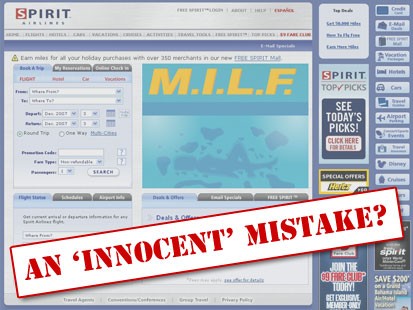
Avoid Spirit Airlines

Here’s why. And, see also. Gee, what island is that exactly? The one that looks like a reclining woman?

Share
Posted in Feminism and Culture, Sexism in the Media, Sociolinguistics | Comments Off on Avoid Spirit Airlines

Still More Humorless Feminism

Via Sparkle*Matrix, who is doing Goddess work on this one. Can’t bring myself to copy the picture, sorry.

–Ann Bartow

Share
Posted in Feminism and Culture | Comments Off on Still More Humorless Feminism

No Kidding.

“Silence is Golden, But Only for Women”

Share
Posted in Feminism and Culture, Sociolinguistics | Comments Off on No Kidding.

The Hosiery Industry Wants Us To Wear Panty Hose Again

So we can probably look forward to more “fashion news reporting” like this:

… Katie Couric has been one of the most stalwart and high-profile bare-leggers, bringing her tanned gams into living rooms every day with the TV news. But the sight of bare legs is so repulsive to some that a forum has emerged on Stockingshq.com, a website for stockings fans, dedicated to persuading the chipper news anchor to wear pantyhose. Fundraisers, bribes and beatings are a few of the strategies discussed. One man lamented that he’d been forced to switch to Fox, where the legs are rarely naked.

About 70% of the impassioned commenters on Stockingshq.com are male, according to site founder David Bradwell. Their push for hose is about making “ladies” look sexy. …

Via Feministdracona.net, to whom I say: Do good work and the only people who will care what you are wearing are jerks. Also, the wearing of pantsuits is often a useful feminism signifier, depending on the culture of the law firm.

–Ann Bartow

one size chafes all

Share
Posted in Feminism and Culture, Sociolinguistics | Comments Off on The Hosiery Industry Wants Us To Wear Panty Hose Again

What To Make Of This?

Every once in a while I visit Overheard In Law School. So far, to my great relief, I haven’t read anything familiar there, meaning as far as I can tell, none of the embarrasing comments were mine. But there’s always next semester I fear! Anyway, the posts are often funny, but sometimes I wonder if I would have thought that if I had heard them in context. And others are just sort of cringe inducing, highlighting the same heteronormative, jocular sexism that I remember hating in law school. Here are some examples of what I mean:

*Law School Grad (waiting for bar results): oh good, i was hoping for bar results before i left, but luckily i got an ad for butt plugs so i’ll still be able to be f***ed in the ass!

*Torts Professor: Party A agrees to have ‘intimate relations’ with party B for $20. Party B knowingly gives party A a counterfeit $20 bill. Is there harm? I mean, Party A is stiffed.

*Re: Bonkowski v. Arlan’s Department Store
Torts Prof: Defendants may, in this case, possibly be held liable for a tort if “one holds her down while the other one fingers her.”

*Now the defendants have heard that their medication is causing praipism. That’s like in the Viagra and cialis commercials when they say,”If you’ve had an erection for more than four hours…”This is a serious condition. Any man knows how hard it would be to try to pee standing on your head.

*Criminal Law prof: “You can still consent to have a good wrestle with your buddy on the floor … assuming guys still do that.”

*Torts professor: “Sex for money is prostitution… so the only harm is if you got stiffed.”

*Crim Professor: Vagina, Vagina, Vagina, Vagina, Vagina, Vagina! Are you over it yet?
(pause)
Crim Professor: Oh shit, this class is recorded for iLecture.

*Crim Law Prof: Marijuana is a gateway drug!? Listen, breast milk is the real gateway drug, okay?

*Contracts Prof: “Contracts aren’t masturbation; two people are required for a valid contract.”

*Eccentric Torts professor to frightened 1L class, while on a tangent about rape: Eccentric Torts professor: “Because it’s so utterly dull to go through the game of romance, am I right guys? All men know that candy is dandy, but liquor is quicker.”

*Prof: You can never unilaterally f#ck your spouse….oh wait, somehow I have three children running around so maybe it is possible.

Do the students and law profs who see their words above high five each other for being so clever? I don’t know what the point of that blog is, or how accurate or honest the posts are. For all the accusations of censoriousness thrown at feminists in legal academia, “Overheard” sure makes it seem like people feel free to say whatever they like, effect on the audience be damned.

–Ann Bartow

Share
Posted in Academia, Law Schools, Law Teaching, Sociolinguistics | Comments Off on What To Make Of This?

Interview With Hillary Clinton by “Our Bodies, Our Selves”

From the FLP mailbox:

Hi —

I’m writing to let you know that Our Bodies Ourselves (OBOS) has published an interview with Sen. Hillary Clinton about her health care plan, along with the transcript and audio of an in-depth interview with Clinton’s legislative director, Laurie Rubiner. All of the links are available here.

In addition, the audio of the interview with Rubiner is posted at Odeo.For the interview with Clinton, OBOS submitted a number of questions about women’s health and health care policy. Read Clinton’s responses to some of the questions we asked.

In the follow-up phone interview, Rubiner fielded more specific policy questions from Judy Norsigian, OBOS executive director; Cindy Pearson, executive director of the National Women’s Health Network; Maureen Corry, executive director of Childbirth Connection; and Byllye Avery, founder of the National Black Women’s Health Project, now called the Black Women’s Health Imperative. The transcript is available here.

Share
Posted in Feminist Blogs Of Interest, Uncategorized | Comments Off on Interview With Hillary Clinton by “Our Bodies, Our Selves”

“Columbia is . . . trying to make me an example to intimidate other women from seeking justice.”

That’s a quote by Economics Prof Graciela Chichilnisky in this WaPo article about her discrimination suit against Columbia University. Via Josie Brown, with thanks.

Share
Posted in Academia, Feminism and Law, Feminists in Academia | Comments Off on “Columbia is . . . trying to make me an example to intimidate other women from seeking justice.”

Do You Suppose Hello Kitty “Shoulder Massagers” Are Legal In Alabama?

NYT article about them here. Previous post about stupid ass anti-vibrator law in Alabama here.

–Ann Bartow

Share
Posted in Feminism and Law | Comments Off on Do You Suppose Hello Kitty “Shoulder Massagers” Are Legal In Alabama?

Good “Feminist Reader” at Feministing

Access it here.

Share
Posted in Feminist Blogs Of Interest | Comments Off on Good “Feminist Reader” at Feministing

Kudos to Cory Booker

Not all of his constituents were pleased when Newark Mayor Cory Booker permitted the rainbow flag to fly above City Hall in June, 2007 in recognition of Gay Pride Month.    Responding to  criticism,  Booker said:

There’s a lot of silent pain in the city of Newark, and perpetrators of this pain : those who promote the bigotry and the alienation : must be confronted.

The quote appears in this article in the New York Times with the headline, “In a Progressive State, a City That’s tough on Gays.”

Kudos to Cory Booker for his clear stance against bigotry.      

-Bridget Crawford

Share
Posted in LGBT Rights | Comments Off on Kudos to Cory Booker

New Blog: SCBlackPress.com

Check it out here. Via Not Very Bright.

Share
Posted in Race and Racism | Comments Off on New Blog: SCBlackPress.com

SC Supreme Court “not off the hook”

New article about the SC Bar scandal here. It notes:

… In reversing the grades, the court apparently violated its own order in March banning re-grading after the scores were released by the S.C. Board of Law Examiners, which administers the test. Willful violation of a Supreme Court order is grounds for discipline, under the court’s own rules.

Erica Moeser, president of the National Conference of Bar Examiners, told The State in a recent interview she couldn’t recall a similar situation in any other state in her 13 years leading the organization. …

It includes these words from Feminist Law Prof Deborah Rhode:

Deborah Rhode, director of Stanford Law School’s Center on Ethics, said an outside review of the Supreme Court’s handling of the bar exam matter is needed.”Certainly, you’ve got the appearance of bias.”

“This is a classic illustration that you ought not to have ethical complaints against that body being resolved by that body,”said Rhode, who reviewed the Supreme Court’s statement on the issue at the request of The State.

“The problem,”she said,”is not that people are consciously acting to further their professional or personal concerns. It’s one of tunnel vision.”

–Ann Bartow

Update: Jim Chen says:

If an investigation comes to pass, hell indeed will have frozen over, and a squadron of pigs, presumably escaping Carolina’s barbecue pits, will fly in formation from Rock Hill to Hilton Head.

I promise I will salute.

Share
Posted in Legal Profession | Comments Off on SC Supreme Court “not off the hook”

“Choices, Consequences, Constraints,” an essay about academia and motherhood that may floor you.

It did me. Read it here at Scatterplot. Via Crooked Timber, where I seem to find a lot of good stuff lately. You might want to avoid the comments thread though – chock full of angry, backlashing men.

–Ann Bartow

Share
Posted in Academia, Feminism and Politics | Comments Off on “Choices, Consequences, Constraints,” an essay about academia and motherhood that may floor you.

“Sex and the College Girl” Circa 1957

From The Atlantic Monthly, via Crooked Timber. Below is an excerpt:

… Since so many of us are going to college, a great many of our decisions about our lives have been and are being made on the campuses, and our behavior in college is inevitably in for some comment. Two criticisms rise above the rest: people in college are promiscuous, for one thing, and, for another, they are getting married and having children too early. These are interesting observations because they contradict each other. The phenomena of pinning, going steady, and being monogamous-minded do not suggest sexual promiscuity. Quite the contrary:they are symptoms of our inclination to play it safe.

Promiscuity, on the other hand, demands a certain amount of nerve. It might be misdirected nerve, or neurotic nerve, or a nerve born of defiance or ignorance or of an intellectual disregard of social mores, but that’s what it takes. Sleeping around is a risky business, emotionally, physically, and morally, and this is no light undertaking. I have never really understood why it is considered to be so easy for girls to say yes, particularly to four different men over a period of two weeks. On the other hand, it is very easy to go steady. Everybody is doing it. During my first two weeks at Smith I felt rather like a display in a shop window. Boys from Amherst, Yale, Williams, and Dartmouth swarmed over the campus in groups, looking over the new freshmen for one girl that they could tie up for the next eight Saturday nights, the spring prom, and a house party in July. What a feeling of safety not to have to worry about a date for months ahead! A boy might even get around to falling in love at some point, and that would solve the problem of marriage too. … [Emphasis added.]

Share
Posted in Feminism and Culture, Uncategorized | Comments Off on “Sex and the College Girl” Circa 1957

“India’s ‘pink’ vigilante women”

From the BBC:

They wear pink saris and go after corrupt officials and boorish men with sticks and axes.

The several hundred vigilante women of India’s northern Uttar Pradesh state’s Banda area proudly call themselves the “gulabi gang” (pink gang), striking fear in the hearts of wrongdoers and earning the grudging respect of officials.

The pink women of Banda shun political parties and NGOs because, in the words of their feisty leader, Sampat Pal Devi, “they are always looking for kickbacks when they offer to fund us”.

Two years after they gave themselves a name and an attire, the women in pink have thrashed men who have abandoned or beaten their wives and unearthed corruption in the distribution of grain to the poor.

They have also stormed a police station and attacked a policeman after they took in an untouchable man and refused to register a case.

Read the rest here.

Share
Posted in Feminism and Politics, Sisters In Other Nations | Comments Off on “India’s ‘pink’ vigilante women”

Jasmin Darznik,”Veiled Bestsellers”

In this review essay, Darznik reviews:

Soft Weapons: Autobiography in Transit, By Gillian Whitlock, Chicago: The University of Chicago Press, 2007, 216 pp., $20.00, paperback, and Let Me Tell You Where I Have Been: New Writing By Women of the Iranian Diaspora, Edited by Persis M. Karim, Fayetteville: University of Arkansas Press, 2006, 428 pp., $24.95, paperback.

Here is an excerpt:

… Whitlock’s central question could be phrased thus: Who exactly is getting to speak autobiographically on behalf of the people of the Middle East? This question also permeates most readings of Iranian-American literature. The phenomenal success of Reading Lolita in Tehran, followed by a spate of bestsellers such as Funny in Farsi, Lipstick Jihad, and Persepolis, marks a period of unprecedented interest in writing by Iranian immigrant women. This writing has not been without its critics, some of the most vocal of whom have been Iranian-American academics who doubt the legitimacy of Western-educated Iranian immigrants to speak to the experience of”real”Iranians.

It all makes for a tendency to conflate a great number of memoirs and to judge them according to their political import and commercial success rather than according to their literary quality, which seems to have been abandoned as a meaningful category for scholarly inquiry. Ironically, such readings only tend to re-inscribe the importance already conferred by best-seller status. At this point, Azar Nafisi has so many virulent critics that you might get the impression she is the only Iranian woman writer in the world.

Let Me Tell You Where I Have Been, Persis Karim’s anthology of writing by women of the Iranian diaspora, in many respects provides an answer to those who doubt the usefulness of autobiography or the relevance of Iranian immigrant literature. One of its chief values is its juxtaposition of Iranian-American blockbusters (she includes excerpts from Lipstick Jihad and other bestsellers) with writing by new and emerging Iranian women writers in the West. By including poetry and fiction, Karim also manages to present a more complex cross-section of Iranian American literature than the proliferation of Iranian memoirs in the last several years suggests. …

–Ann Bartow

Share
Posted in Recommended Books, Sisters In Other Nations | Comments Off on Jasmin Darznik,”Veiled Bestsellers”

“Truly Bad Movie Meme,” ctd.

OK, Ann has tagged me for the Truly Bad Movie Meme, and I am ready to rise (sink?) to the occasion.   I just watched 12 Monkeys on DVD last night, and that was probably bad enough to qualify, but I think I have a few worse ones.   For me, the movies that make the grade are the ones that I couldn’t even bear to sit all the way through (so if they miraculously became marvelous half way through, I confess I never found out).

One   of these is Northfork.   Being from Montana, I was initially intrigued by the background plot, which is the building of the Hungry Horse Dam, and its flooding of a town, not far from where I grew up.   But, alas, while a great movie could have been made from that premise, I found Northfork simply pretentious and, worse, dull.   After a while, I just could not stand the sight of the four weird angels that kept appearing in what I guess was supposed to be a dreamlike way.

But Dogville was also a real dog of a movie, probably more so.   Again, I may be influenced by my Montana roots, but how could a movie  be based in the Rocky Mountains and not only fail to show the stunning beauty of that setting (at least the cinematography in Northfork was hauntingly beautiful), but actually fail to use any real setting at all?   There were just chalk outlines on the ground, and the actors pretended to turn knobs and open doors that were not there.   I kept hoping that this was a weird introduction and that a real movie would soon begin, but  sadly it did not.

Wow… I have to say that when I initially discovered Ann had tagged me, I felt the vaguely sinking sensation I got as a kid receiving a chain letter.   But griping about bad movies is strangely cathartic.   Thanks, Ann!   (And thanks to my husband for reminding me of these awful movies.)   I tag Paul Caron.

Caitlin Borgmann

Share
Posted in Bloggenpheffer | Comments Off on “Truly Bad Movie Meme,” ctd.

Obama, Gender Essentialism and Presidential Politics

“Feminist Pitch by a Democrat Named Obama.”   That’s the headline of this article from today’s New York Times.   Here’s an excerpt, describing Senator Obama’s pitch to women in early-voting states:

The breakthrough nature of Senator Hillary Rodham Clinton’s presidential candidacy has a powerful appeal for many women * * * The politics are complex; even as rival campaigns seek to peel away women’s votes from Mrs. Clinton, they are often careful to acknowledge and pay tribute to the broader significance of her candidacy….[Obama made] the case that the candidate’s sex is not, and should not, be the deciding factor. Women, he said,”can look at a whole series of issues and know, ‘You know what? This guy’s going to fight for us, partly due to biography.’ Because I know what it’s like to be raised by a single mom who’s trying to work and go to school and raise two kids at the same time, doesn’t have any support from the father. These are issues I’m passionate about.”

Moreover, he argued, his leadership offers the best prospects for delivering on that agenda. * * *

Kate Michelman, a senior adviser to the Edwards campaign and a longtime abortion rights leader, said she told women that Mrs. Clinton’s candidacy was historic and exciting, and that”we have spent a long time and traveled a long road to get to this point.”But she added,”That doesn’t bring us to the place where gender becomes the only thing or even the most important factor determining our decision.”  

This week the Obama campaign held a wave of house parties focused on women in early voting states; Mrs. Obama bluntly told 700 women activists linked by conference call Wednesday night,”We need you guys.”

Huh?   I agree with Michelman that gender is not the most important factor in a Presidential election.   The days of unqualified gender essentialism are long past (if they ever existed at all).   But Michelle Obama should know better.   Figure of speech or not, candidates and their spouses should not refer to women as “guys.”  

Hat tip: Darren Rosenblum.

-Bridget Crawford

Share
Posted in Feminism and Politics, Sociolinguistics | Comments Off on Obama, Gender Essentialism and Presidential Politics

“Hillary Hatred Finds Its Misogynistic Voice”

At Newhouse News Service, Jonathan Tilove writes:

In the coming months, America will decide whether to elect its first female president. And amid a techno-media landscape where the wall between private vitriol and public debate has been reduced to rubble, Sen. Hillary Clinton is facing an onslaught of open misogynistic expression.

Step lightly through that thickly settled province of the Web you could call anti-Hillaryland and you are soon knee-deep in “bitch,” “slut,” “skank,” “whore” and, ultimately, what may be the most toxic four-letter word in the English language.

We have never been here before.

No woman has run quite the same gantlet. And of course, no man.

Thanks to several thousand years of phallocentric history, there is no comparable vocabulary of degradation for men, no equivalently rich trove of synonyms for a sexually sullied male. As for the word beginning with C? No single term for a man reduces him to his genitals to such devastating effect.

In times past, this coarser conversation would have remained mostly personal and subterranean. But now we have a blogosphere, where no holds are barred and vituperative speech is prized. We have social networking sites like Facebook and MySpace, with their limitless ability to make the personal public.

There are no rules. And so far there is little recognition in the political and media mainstream of the teeming misogyny only a mouseclick away. …


Facebook, popular with high school and college students, has dozens of anti-Hillary groups, many of which take great, sweaty delight in heaping abuse on Clinton as a woman, imagining her reduced to a subservient role, and visiting violence upon her.

One is “Hillary Clinton: Stop Running for President and Make Me a Sandwich,” with more than 23,000 members and 2,200 “wall posts” : Internet graffiti in which discussants have fantasized about Clinton being raped by a donkey.

Eschewing the slightest wit or subtlety, some high school boys in Olathe, Kan., created “Punch her in the c—!!”. With about 200 members, this group features the discussion topics “Why we hate Hillary Clinton,” “Why you REALLY hate Hillary Clinton” and “What will we do if Hillary becomes president,” which drew two replies : “death” and “shooter in the cooter?”

Another Facebook group, more temperate in tone and with about 13,000 members, is “Life’s a bitch, why vote for one? Anti-Hillary ’08.” Like several other anti-Clinton sites, this one promotes a T-shirt: “Hillary for President. She Puts the C— in Country.” …

Via The Garance, who writes: “I sometimes wonder if we haven’t all massively underestimated what a major shift it would be to have a female president : or even female major party nominee : and the sort of backlash that could go along with it.” Possibly, but I don’t think too many female law professors didn’t see this coming.

–Ann Bartow

Share
Posted in Feminism and Politics, Feminism and Technology, Sexism in the Media | Comments Off on “Hillary Hatred Finds Its Misogynistic Voice”

Jingling All The Way

So I did the “Jingle All The Way 5k” this morning, with bells on, to mixed reviews. Missed my goal of breaking 31 minutes by 40 seconds, but there is always next time. The start of the race was disorganized and delayed, and an idiotic “oldies” radio station serenaded us with Rolling Stones songs rather than holiday tunes, which seemed very strange, and the choice of “Brown Sugar” especially peeved me off. But then some marching bands struck up “Jingle Bells” and a small and very welcome endorphin rush kicked in.

I lost a little time just getting up to the starting line after the gun went off, but otherwise the first mile was quite magical. This was because we runners were the opening feature of the annual Carolina Carillon Holiday Parade, and Gervais Street was lined with thousands of spectators who clapped and cheered us on, which felt terrific. Since that part of the route was downhill I maintained a healthy pace, and did so wearing a big smile. That’s probably the closest I’ll ever come to feeling like a professional athlete, and it was really awesome.

Then I got to Mile 2. What goes down must generally come up, in road race world, but before I even got to the foot of Greene Street a runner just ahead of me fell to the ground in the grips of a seizure. She was wearing a “seizure bracelet,” which was very smart. A group of us stopped, and since I don’t know much about first aid and none of us had a cell phone, I volunteered to sprint to the next intersection and ask a police officer to call an ambulance. Frustratingly, I was delayed in this by a train at a railroad crossing. When the train finally passed a faster runner than me got to the next police car, and help for the fallen runner was thankfully on the way. Out of a sense of fear and urgency my heart was already racing by the time I started the mile long beastly uphill climb of Mile 2, and I had to really slow down to catch my breath. Never had to actually drop it to a walk, though, which I feel proud about. Pausing here to send out positive thoughts to that runner, and great appreciation to everybody who stopped to offer assistance. Anywhere you go in Columbia, South Carolina, there will always be a large number of warm hearted, helpful people.

Mile 3 (mostly level and then mercifully downhill) passed quickly, and I even had enough energy to pass a few folks right before the finish line, which was sort of fiendishly fun, except that somebody behind me had the same idea and took me at the very end. That smarted! Had some delicious bananas afterwards, and got to say hello to some friends. Not a perfect race, but on balance a good way to spend part of the morning.

–Ann Bartow

Share
Posted in Bloggenpheffer | Comments Off on Jingling All The Way

Cows : Milk :: Women : Sex?

Who will buy a cow if the milk is free?”   These are the words that a man (age 60+) spoke in my presence about the plans of a younger woman (age 20+) to live with her boyfriend without getting engaged or married.   The words made me nauseous.

Women are not like cows.   Sex is not like milk.

Viewed in an historic context, marriage has been the legally- and socially-sanctioned means by which women exchange access to their bodies for physical and/or economic security.   As the cow analogy goes, then, a man has no interest in protecting (i.e., marrying) a woman from whom he receives “free” (i.e., non-marital) sex.   This construction of sex as a bargained-for exchange is not only a relic of the past.   It has its contemporary supporters, too.   In Hard Bargains: The Politics of Sex (1998), self-identified feminists Linda Hirschman and Jane Larson suggest that “by forcing the stronger player to bargain with the weaker for an explicit consent, we begin to ensure mutuality as a condition for all adult sexual exchanges.”   Viewed this way, sex is a commodity that may be more or less “mutual,” depending on the relative strength of the parties’ bargaining positions.   Let the market do what it may.

Catharine MacKinnon has described women’s sexuality as “that which is most one’s own, yet most taken away.”   On a macro level, MacKinnon has it right.   When we we are bombarded by billboards and advertisements displaying women’s undressed and distressed bodies, women’s sexuality is expropriated from a human being into commerce and titillation.   Even if a particular woman in an advertisement consents to such portrayal (or at least gets a “good deal” as the result of a bargained-for exchange), the woman’s undressed and distressed body becomes the (usually unrealistic) standard for what is arousing to men.   Women try to emulate these bodies.   We claim we “like” these bodies, too.   We think they are “sexy,” too.

I make a tentative and contextual modification to MacKinnon’s analysis.   In my view, in relationships of near-as-possible economic and emotional parity, sex can fall on any point on a continuum from unilateral giving to unilateral taking.   For some of us, our experiences cluster in the middle.   For some of us, our experiences do not.   But in the relationships I describe, sex occurs rarely at one extreme, the precise midpoint or even a fixed point at all.   It is something we give.   It is something we take.

Sex is not like milk.   Women are not like cows.

-Bridget Crawford

Share
Posted in Sociolinguistics | Comments Off on Cows : Milk :: Women : Sex?

Details, details

Bitch, PhD noted:

… I just feel so much better about my feminism now that I know that Details doesn’t approve of breast implants. Whew.

The article, if you’re bored shitless and don’t have anything else to read, is here. I have no idea if it’s hilarious or wrath-inducing, because I can’t be bothered to read some wanking article from Details about breasts. But hey, if you’re so inclined, there’s the click.

(P.S. to A. from DETAILS Magazine: actually, we bitches don’t care what you think of our bodies. Sorry about that. Go buy yourself something nice and feel better, honey.)

Stupidly, I did read the article. Its starts out with this paragraph:

Boobs are busting out all over. In the year since the Food and Drug Administration approved the use of silicone breast implants (do breasts go under Food or Drugs?), one million shiny new über-boobs have overflowed welcoming bras like rising dough foaming over bread pans, or strained provocatively against satin blouses and wet T-shirts, pert nipples on red alert. An estimated 500,000 American women have joined the approximately 4.5 million who already had chest extensions, waving good-bye to their S-class-driving nip-and-tuckers with a joyful “Thanks for the mammaries!”

And it actually gets worse from there. A bit later the author describes himself as a feminist man. Which isn’t the descriptor I was thinking of by a mile. Then when it doesn’t seem like he could possibly say anything dumber or more degrading to women, he closes with this sentence:

You could say über-boobs are Western Civ’s equivalent of. . . a burka.

Yep, he analogized “über-boobs” to “a burka,” because in his deeply disturbing world view, women who wear either are “obediently conforming to some caricature of beauty fantasized by traveling-salesman types.” Which I think is inaccurate analysis at best, unlike saying that Details magazine is the intellectual equivalent of the National Enquirer after several birds have been pooping on it.

–Ann Bartow

Share
Posted in Sexism in the Media | Comments Off on Details, details

Does Title IX Hurt Women?

The Chronicle of Higher Education interviewed Eileen McDonagh and Laura Pappano, authors of the new book Playing With the Boys: Why Separate Is Not Equal in Sports   (Oxford University Press, 2008).   According to the authors, Title IX “has created a sex-segregated structure for athletic competition that is separate and unequal. The result is a system of playing and competing that reinforces the idea that women are physically inferior to men.”   Ms. Pappano said:

We don’t want to diminish the importance of Title IX, but what we’re saying is it’s time to look again at it. We need to re-examine the structure of the way sports are organized in this country, and we need to press for some cultural changes, but we also need to look at the legislation itself. And the difficult thing is that it’s been taboo to question Title IX if you are a feminist, if you support women’s sports because it’s been so under fire. And yet the reality is that Title IX has created some limitations, and we’re bumping up against them.

The full Chronicle interview is here  (registration required).

Earlier this week at  the  Title IX blog, Feminist Law Prof Erin Buzuvis says of the book, “I…agree with the authors that the presumption that girls shouldn’t or can’t play with boys is demeaning and ensures the second-class status of women’s sports (and women, in general).”   (The full Title IX blog post is here.)

-Bridget Crawford

Share
Posted in Feminism and Law | Comments Off on Does Title IX Hurt Women?

Hey MSM, can you please stop referencing her “secret life as an Internet porn performer” now?

She’s dead. Her body has been recovered. This article notes:

Police insisted that Sander’s Internet activity had no connection to her disappearance. “The issue of the Internet and the spinoff of that has been literally crippling our investigation,” Boren said.

So enough already.

–Ann Bartow

Share
Posted in Sexism in the Media, Sociolinguistics | Comments Off on Hey MSM, can you please stop referencing her “secret life as an Internet porn performer” now?

“Jane Austen Must Die!”

That’s the title of a column by Jennifer Armstrong exhorting women to demand more from literature, television and movies than yet another Austen-like story. Here is an excerpt:

… God knows we’ve progressed in so many ways, but even though women are the clear majority of readers, we still, apparently, allegedly, don’t like our female protagonists to have faults — any of real consequence, anyway. Honest memoirs about real women’s real sexual adventures (like Cindy Guidry’s forthcoming The Last Single Woman in America ) are dinged as “tawdry” in some reviews. Meanwhile zaftig-narrator-confronts-minor-problems books have pretty much formed their own subgenre of chicklit because, of course, overweight = relatable flaw that women can handle. If you’re wondering why Sex and the City continues its stranglehold on the entire female population of America — we have — it’s simply because it’s one of the few major pop-culture touchstones that come close to depicting stuff we’ve actually gone through, even though it still makes a lot of us squeamish to admit it. And if those still wildly unrealistic Manolo-wearing, movie star-dating, dirty-talking girls are the closest our culture can stand to get to our reality, we haven’t come very far at all, baby. …

Share
Posted in Feminism and Culture, Sociolinguistics | Comments Off on “Jane Austen Must Die!”

Sometimes I Hate YouTube

Like when I see clips like this. Watch through to the end to understand what role YouTube itself may have had in the making of the video.

Share
Posted in Feminism and Culture | Comments Off on Sometimes I Hate YouTube

A Rumination About The Genders of Food

In the form of this Cat and Girl strip. Via the f word.

Share
Posted in Feminism and Culture, Sociolinguistics | Comments Off on A Rumination About The Genders of Food

Campus Interview Mistakes to Avoid

During faculty recruitment season, candidates trade information about schools’ hiring practices.   Active faculty members trade information on candidates with internal and national colleagues.   Here is some gathered advice for candidates about the campus interview.   Very little of this counsel is new, but much of it remains unheeded.

1.   Contact your recommenders.    When we call your references, it’s not a good sign if they are surprised to hear you are on the job market.

2.   Do Your Homework.   Do some research on the faculty members you will meet during your campus visit.   True, the school cannot always tell you ahead of time; schedules change the day of the interview.   But when you have advance notice and then you ask an established faculty member with over 20 published law review articles, “So, what is your area?” you have not done your homework.      

3. Have Some Theory, Any Theory.   During your job talk, crunching cases is not enough.   There is no need to declare undying loyalty to a particular school of thought (law and economics, feminist legal theory, etc.), but show some awareness of how your work fits into a larger theoretical and methodological  framework.

4. What Not to Say to the Associate Dean.   When meeting with the Dean or the Associate Dean, it is not a good idea to ask, “How many days a week do I have to come to campus?”   Even at a school that very much emphasizes scholarship, this is not the way to start the relationship.   Hold your tongue until get the offer, and even then, keep your eyes and ears open, but your mouth shut.   During your first year of teaching, figure out what well-regarded untenured colleagues do and act accordingly.  

5. Support for Scholarship.   It is completely appropriate to ask about a school’s support for scholarship, but try to get at it in a way that is more creative than, “What kind of support  does the  school provide for scholarship?”  

6.   Course Package.   Do not say that you are willing to teach a course that you really aren’t.   If you get the job, you and your new colleagues shortly will be miserable — you because you are unhappy, your colleagues because your unhappiness will emerge in one form or another.  

7.   Connections.    If you are more than mere acquaintences with a member of the school’s faculty or administration, there is no need to mention it repeatedly during your visit.

8. Geographic Preferences.   If you really, really want to be in the place where the school is, say so.   If you are neutral, don’t gush falsely about your life-long desire to live in that place.  

9.   Why You Want to Teach.   Be careful of the question, “Why do you want to go into law teaching?”   Outside the top tier schools, it is not uncommon for members of a particular school’s faculty to have different views on the relative importance of teaching and scholarship.   If you are talking to someone who has not written an article in  10 years, you may not want to start your answer by describing your yen to think and write in solitude.  

10.   The Students Count.   If a school asks you to meet with students during your campus call-backs, remember that the students may or may not have much interviewing experience.   Be prepared to take up some slack, but don’t drone on about yourself.   Ask the students what they think and like and do.   They are our future colleagues, too.  

-Bridget Crawford

Share
Posted in Law Teaching | Comments Off on Campus Interview Mistakes to Avoid

Ha!

This. Via Orly Lobel.

UPDATE: See also.

Share
Posted in Academia, Bloggenpheffer | Comments Off on Ha!

The Misery Maker is Dead

Henry Hyde died today.   The AP story says nothing about the millions of women he harmed since 1976 with the Hyde Amendment.   Unfortunate for poor women throughout the country, the Hyde Amendment won’t die with him.

– David S. Cohen

Share
Posted in Reproductive Rights | Comments Off on The Misery Maker is Dead

The “Truly bad movie meme”

The rules of the meme are here. And here is where I got tagged with it! I used to watch a lot of movies and I’ve seen some real stinkers, including everything in the Pokemon genre:

I have reason to believe I wouldn’t like the recently released Beowulf much, so I probably won’t see it, making it ineligible for meme purposes, so I’m going to go with Fatal Attraction for its creepiness and ridiculous sterotyping of women. I agree with Susan Faludi that it is a quintessential “Backlash” movie.

I tag Kathleen Bergin and Josie Brown, Caitlin Borgmann, Al Brophy, Erin Buzuvis, Bridget Crawford, Michael Froomkin, Jared Greer, Liz Losh, Nancy McClernan, KC Sheehan, and Dr. Violet Socks.

Share
Posted in Bloggenpheffer | Comments Off on The “Truly bad movie meme”

All Too Rare Judicial Decency

After Contra Costa Superior Court Judge Barbara Zuniga postponed a hearing on four defense motions in the same case, she explained that she needed”a lot more time”to get ready. Three weeks later, when Zuniga again had to postpone a hearing on the case, she offered this explanation:

  1. COURT APOLOGIZES TO COUNSEL.
  2. COURT NEEDS TO PUT THIS OVER ONE MORE TIME.
  3. COURT JUST RETURNED FROM A CONFERENCE IN PHILADELPHIA. HOWEVER, LUGGAGE WITH MOTION PAPERS AND COURT’S NOTES STAYED IN PHILADELPHIA.
  4. LUGGAGE WAS DELIVERED TOO LATE FOR COURT TO COMPLETE TENTATIVE.
  5. MOTION CONTINUED TO NOVEMBER 21, 2007.

Via Legal Pad.

Share
Posted in Bloggenpheffer, Legal Profession | Comments Off on All Too Rare Judicial Decency

Today, Lambda Legal is proud to annouce the launch of “Of Counsel On Campus”

From the FLP mailbox:
Of Counsel On Campus is a bimonthly eNewsletter offering special insight for the busy law student who cares about equality. Of Cousel On Campus is an off-shoot of our eNewsletter Of Counsel, directed towards lawyers and the broader legal community. The current issue of Of Counsel On Campus focuses on “Don’t Ask Don’t Tell” and other antigay policies maintained by the military over the past thirty years.

We have been making the case for equality for more than 30 years in state and federal courts, as well as the court of public opinion, and can provide the accurate and concise information you need about the civil rights of gay, lesbian, bisexual, transgender people and those with HIV. In every issue, you’ll find analysis of Lambda Legal’s groundbreaking litigation, reflections on strategy and tactics by Lambda Legal Attorneys, and much, much more. Encourage your readers to sign up! Of Counsel On Campus and Of Counsel.

Share
Posted in LGBT Rights | Comments Off on Today, Lambda Legal is proud to annouce the launch of “Of Counsel On Campus”

A Gesture For Unflipping Someone Off

From here, where the author notes:

When the light turned green, the car ahead of me just sat there. I gave it a good five seconds (i.e., 0.5 seconds) and then blasted my horn. “What did you do that for?” asked my wife. “The light is still red.” So it was. I hadn’t noticed the righthand turn light. So, how do I apologize to the driver ahead of me? We lack a gesture by which we beg forgiveness. I propose the following:

Share
Posted in Bloggenpheffer, Sociolinguistics | Comments Off on A Gesture For Unflipping Someone Off

More About Anonymous Online Bullying

This ABC News article provides a lot of detail about the Myspace “hoax” that contributed to the suicide of 13 year old Megan Meier. Unlike previous accounts, it names the woman who tormented Megan in the guise of a teenaged boy. In one section the article notes:

Last week the board of aldermen in the Meiers’ hometown, Dardenne Prairie, Mo., passed a law making Internet bullying a misdemeanor in the town.

I haven’t seen the text of the law but I expect it will be hard to enforce, assuming it is even constitutional as drafted. In my opinion it makes more sense to limit anonymity than content, but neither is easy or cost free. You can learn a lot more about “cyberbullying” here.

–Ann Bartow

Update: NYT story on the same topic here.

Share
Posted in Acts of Violence, Feminism and Technology | Comments Off on More About Anonymous Online Bullying

Cover-up of Women Soldiers’ Deaths

On March 8, 2007, Amy Goodman of Democracy Now! broadcast the testimony of former Abu Ghraib commander Col. Janis Karpinski as she responded to my questioning at a January 2006 war crimes commission in New York. Karpinski said American women soldiers in Iraq who had to go outside to use the latrine at night were raped by male soldiers. They stopped drinking water after 4:00 in the afternoon to avoid having to urinate. But in the 120-degree heat, some died of dehydration. Then, Lt. Gen. Ricardo Sanchez ordered that dehydration not be listed as the cause of death. See my article, “Military Hides Cause of Women Soldiers’ Deaths,” … for more details on this shocking cover-up.

–Marjorie Cohn

Share
Posted in Acts of Violence, Feminism and Politics | Comments Off on Cover-up of Women Soldiers’ Deaths

“The Rocky Road To The Ivory Tower”

Ann Farmer provides an overview of the law school hiring trend toward disproportionately steering women to nontenure-track positions here. Via Ms.JD.

Share
Posted in Academia, Law Schools, Law Teaching | Comments Off on “The Rocky Road To The Ivory Tower”

Today is “International Women Human Rights Defenders Day”

It’s part of a “16 Days of Activism Against Gender Violence campaign that you can learn more about here.

Share
Posted in Acts of Violence, Women's Health | Comments Off on Today is “International Women Human Rights Defenders Day”

Political Correctness is not an Interesting Lens; Feminism Is

This blog has been named (here) as one of the “ABA Journal Blawg 100,” meaning one of the top 100 law blogs.   The ABA article describes Feminist Law Professors as “A blog created for community-building among professors. Contributors note legal developments affecting women and ponder where to draw the lines of political correctness.”

I agree with the first sentence (see Ann’s inaugural “About This Blog” post), but not the second.   I don’t see any of our contributors (and we always welcome more) drawing lines of political correctness.   What am I missing here?

-Bridget Crawford

Share
Posted in Blog Administration | Comments Off on Political Correctness is not an Interesting Lens; Feminism Is

“In a focus group carried out by toy manufacturer Martin Yaffe, where children were invited to put this year’s top Christmas toys through their paces, seven out of 10 girls chose to play with toys designed for boys over the girls’ alternatives.”

That’s the first sentence of this interesting post which references this press release, which states in part:

As the countdown to Christmas begins, research reveals that shoppers opting for traditional presents of dolls for girls and skateboards for boys could be wide of the mark this year, according toy manufacturer Martin Yaffe. It claimed that about 70 per cent of girls under six admit that boys’ toys are what they really want.

Martin Yaffe carried out a focus group, during which children were invited to put this year’s top Christmas toys through their paces and seven out of 10 girls chose to play with toys designed for boys over the girls’ alternatives.

Bob the Builder emerged as the top character for this Christmas, outshining traditional girls’ favourites such as Barbie and Bratz. The Bob the Builder Snaptrax set with working car wash and dryer was an instant hit, prompting 55 per cent of parents at the group to consider buying the toy for their daughters when it hits the shelves this month.

Other boys’ toys popular with girls in the group included a remote-control version of Scrambler, the quad bike from the Bob the Builder TV series, and a new range of colourful characters and vehicles called Oddbodz from the Born to Play range, which can be dismantled and rebuilt into different figures and creations.

Of course the reported survey results must be taken with a grain of salt, given the purveyor of the preferred toys conducted the survey, but it would be great to see independent research on this, because it seems intuitively correct to me. My friends and I played with Barbies a lot as children, but we did this by building things for her such as furniture, camping equipment, transportation devices and amusement park rides out of boxes and tape and string and whatever else we had, and by taking her on adventures around the house and out of doors. She wore the same outfit for weeks on end and I don’t remember ever attending to her hair.

–Ann Bartow

Share
Posted in Feminism and Culture | Comments Off on “In a focus group carried out by toy manufacturer Martin Yaffe, where children were invited to put this year’s top Christmas toys through their paces, seven out of 10 girls chose to play with toys designed for boys over the girls’ alternatives.”

Carnival of Radical Feminists

Here, by Pippa at One Salford Feminist.

Share
Posted in Carnival time!, Feminist Blogs Of Interest | Comments Off on Carnival of Radical Feminists

Sex and the Presidential Candidates

Women’s Enews notes:

Democrats

  • Joe Biden supports “age-appropriate” and comprehensive sex education but the Delaware senator has also voted to fund abstinence programs.
  • Hillary Clinton has favored abstinence-plus for a decade. In 1996 as first lady she helped launch the teen pregnancy campaign, which has a goal of reducing teen pregnancy by one-third by 2015 through comprehensive education and awareness. Ten years later, as New York senator, she introduced the Prevention First Act, which would have allocated $100 million for family planning services in an effort to curb teen pregnancy.
  • Chris Dodd’s Web site says the Connecticut senator is “appalled” by the Bush administration’s abstinence-only programs.
  • John Edwards promotes comprehensive sex education according to his Web site. The former North Carolina senator’s campaign did not return phone calls.
  • Mike Gravel, former senator from Alaska, said he favored comprehensive sex education in a questionnaire he returned to the Washington-based Human Rights Campaign, a civil rights group.
  • Ohio Rep. Dennis Kucinich is the only presidential candidate who is a co-sponsor of the Responsible Education About Life Act that emphasizes comprehensive programs.
  • Illinois Sen. Barack Obama introduced the Communities of Color Teen Pregnancy Prevention Act of 2007 in Illinois. He respects abstinence as a choice but also advocates age-appropriate comprehensive sex education.
  • New Mexico Gov. Bill Richardson favors abstinence-plus.

Republicans

  • Rudi Giuliani, the only Republican candidate still waffling about his pro-choice stance, avoids the topic. He talks about increasing adoptions and decreasing abortions but is mum on sex education. As New York City mayor for eight years, he presided over a major free condom distribution campaign that included public schools. A campaign spokesperson says Giuliani’s stance can be compared to what he says about education in general: “The enforcer of standards should . . . be the parent.”
  • John McCain promotes abstinence-only programs but the Arizona senator has previously promoted comprehensive sex education.
  • Mitt Romney promoted abstinence education in Massachusetts classrooms as governor of that state from 2003 to 2007. Romney mentioned this in the May South Carolina debates to show his credentials as a “clear and consistent conservative.” Alex Burgos, a campaign staffer, said Romney believes schools should “promote abstinence as part of their health curriculum and teach that marriage comes before babies.” Romney, however, checked a box saying he supported comprehensive sex education in a 2002 Planned Parenthood candidate survey.
  • Fred Thompson, former Tennessee senator, backs abstinence education.
  • Duncan Hunter, California representative, favors “equal emphasis” on abstinence. He wants to give abstinence the same amount of teaching as the dangers of sexually transmitted diseases.
  • Mike Huckabee favors abstinence-only and opposes abstinence-plus. In response to a question asking whether his religious beliefs would allow him to support AIDS prevention in Africa that might include contraception, the Arkansas governor compared it with domestic violence and said compromising on either issue is not an option. “We don’t say that a little domestic violence is OK, just cut it down a little, just don’t hit quite as hard,” says the former Arkansas governor. “We say it’s wrong.”
  • Ron Paul, the Texas representative, favors abstinence-only programs.
  • Tom Tancredo, the Colorado representative, favors abstinence-only programs.
Share
Posted in Feminism and Politics | Comments Off on Sex and the Presidential Candidates

For the first time, the Wonder Woman “ongoing writer” will be female – meet Gail Simone

NYT story here. I wonder if she will wear bracelets like this while she writes.

Share
Posted in Feminism and Culture, Firsts | Comments Off on For the first time, the Wonder Woman “ongoing writer” will be female – meet Gail Simone

“Norman Mailer wins bad sex award”

And not because he is dead, either, although that can’t have helped matters any. It’s for the “explicit rendition of the incestuous encounter” between Hitler’s parents, as follows:

… Mailer, who died of renal failure last month at 84, was one of several candidates for the annual Bad Sex in Fiction Award, which aims to highlight crude and tasteless descriptions of sex in modern novels. …

… The excerpt is taken from one of Mailer’s last works, “The Castle in the Forest,” a fictionalized exploration of Hitler’s family, narrated by a demon. In the passage, the demon describes the moment Adolf is conceived, as Klara embraces Alois, a man the novel says was her uncle, “with an avidity that could come only from the Evil One.” …

Share
Posted in Bloggenpheffer, Feminism and Culture, Sociolinguistics | Comments Off on “Norman Mailer wins bad sex award”

“The anonymity provided by new technology limits a victim from responding in a way that may ordinarily stop a peer’s aggressive behavior or influence the probability of future acts, which provides an advantage to the perpetrator…”

Article about online bullying   of and by teenagers here.

Share
Posted in Acts of Violence, Feminism and Technology | Comments Off on “The anonymity provided by new technology limits a victim from responding in a way that may ordinarily stop a peer’s aggressive behavior or influence the probability of future acts, which provides an advantage to the perpetrator…”

“Spanish researchers found that after four weeks of drinking two glasses of wine per day, women showed lower levels of certain inflammatory substances in their blood.”

Full (and robust, with hints of oak and undertones of lemon) story here.

Picture by Judi Bagnato.

Share
Posted in Women's Health | Comments Off on “Spanish researchers found that after four weeks of drinking two glasses of wine per day, women showed lower levels of certain inflammatory substances in their blood.”

Cripes Those Folks At The Yale Information Society Project Are Clueless, Or Something.

Via Concurring Opinions we learn that the Yale Information Society Project is hosting a Symposium on Reputation Economies in Cyberspace. Already notable for excluding women from its conferences, despite the fact that women are the majority of Internet users, the organizers managed to put together a list of 20 speakers, of which 16 seem to be male. This despite the obvious raft of gender issues related to this topic, see e.g. this, this, this and this just for starters. I’d like to say this was unbelievable, but unfortunately, it certainly isn’t. The few women they have speaking are absolutely fantastic, but sheesh, four panels, four women, one female speaker per panel – could that be any more tokenizing? And yes, I realize there is one female moderator, but if we add her to the count we have to add the three male moderators too, creating a ratio of 23 men to 5 women participating, or about 17%.

–Ann Bartow

Update: Maybe they would start to “get it” if they read this?

Share
Posted in Academia, Law Schools | Comments Off on Cripes Those Folks At The Yale Information Society Project Are Clueless, Or Something.