
/cloudfront-us-east-1.images.arcpublishing.com/bostonglobe/X4LHDGOTYUMHW5WIVAZSC327EE.jpg)
image source: BOHN, John GLOBE STAFF/The Boston Globe
Rest in peace and power, Professor Guinier. You will be missed.
The New York Times obituary is here.
Harvard’s notice is here.

image source: BOHN, John GLOBE STAFF/The Boston Globe
Rest in peace and power, Professor Guinier. You will be missed.
The New York Times obituary is here.
Harvard’s notice is here.
 I just finished reading Billie Jean King’s memoir (written with Johnette Howard and Maryanne Vollers), All In. It’s a fantastic read for anyone interested in sports, second-wave feminism, Title IX, LGBT rights, social change (or several or all). The last few chapters, devoted mostly to her post-tennis life, won’t appeal to everyone, but they are what law professors might call “bring down” chapters–explaining how everything in the book (her life!) leads up to her current views on social change/social justice and current projects.
Billie Jean King is someone who lives her values. I had tears rolling down my eyes by the end of the book, which she ends this way:
It’s been a lovely, sometimes lonely, often soul-shaking, ultimately gratifying ride. It’s been full of sparks and recrimination. But I came through it.
I am free.
Amen and thank you, Billie Jean King.
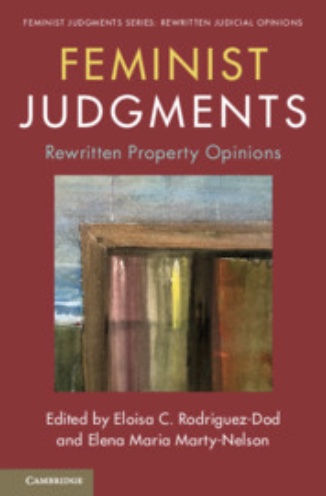
Eloisa C. Rodriguez-Dod (FIU) and Elena Maria Marty-Nelson (Nova Southeastern) have edited a wonderful collection of Feminist Judgments: Rewritten Property Opinions (Cambridge U Press 2021).
For anyone interested in teaching with feminist judgments, Linda Berger, Kathy Stanchi and I have some ideas here.
Faculty whose libraries subscribe to the Cambridge Core already have digital access to all of the Feminist Judgments books, so assigning a chapter or two to students is a (copyright-hassle-free) great option.
Among the contributors to this fabulous volume are Hannah Brenner Johnson, Lolita Buckner Inniss, Dan Burk, Andrea B. Carroll, Richard Chused, Phyliss Craig-Taylor, Olympia Duhart, Angela Fernandez, Alexandra Flynn, Jill Fraley, Brian Frye, Jon Garon, Erika George, Marc-Tiroc Gonzalez, Lindsey Gufstason, Carrie A. Hagan, Hannah Haksgaard, Taja-Nia Henderson, Berta Hernandez-Truyol, Meghan Hottel-Cox, Susan Etta Keller, Diane Klein, Stevie Leahy, Stacy Leeds, Donna Litman, Guadalupe Luna, Julia D. Mahoney, Elena Maria Marty-Nelson, Kali Murray, Meredith Render, Eloisa Rodgriguez-Dod, Stephanie M. Stern, Natasha N. Varyani, Pamela A. Wilkins, Danaya C. Wright, and Lua Kamal Yuille.
Check it out!
Via the podcast Nova, this news of a program in the Loire-Atlantique region of France to make menstrual products available for free in 141 middle schools:
Après une expérimentation de plusieurs mois dans quelques établissements, la mesure est étendue sur toute la Loire-Atlantique.
D’après le département, en France, 1,7 millions de filles et de femmes sont touchées par la précarité menstruelle et doivent trouver des alternatives. Ces alternatives ne sont pas toujours bonnes, et peuvent avoir de graves répercussions sociales et sanitaires telles que l’absentéisme ou la mise en danger de la santé.
C’est pour ces multiples raisons que 141 collèges publics comme privés bénéficient de cette mesure. Normalement, deux distributeurs seront installés dans chaque établissement.
En plus de cela, les filles de 6ème auront un kit des premières règles constitué de tampons et de serviettes avec un guide pédagogique. Et les garçons de 6ème auront aussi un livret informatif pour mettre fin au tabou autour des règles.
Le conseil régional des Pays de la Loire travaille aussi sur ce projet, mais pour les lycées.
The regional government is sponsoring a similar program for high schools.
H/T Mary Anne Case.
Emily Gold Waldman (Pace), Naomi Cahn (UVA) and I have just posted to SSRN three working papers on menopause and the law. We had so much to say that we needed three articles to do it! Here they are:
Contextualizing Menopause and the Law, forthcoming in the Harvard Journal of Law & Gender – an analysis of menopause in the broader context of the socio-legal treatment of pregnancy, breastfeeding, and menstruation, arguing that the law should move beyond individual one-off accommodations for “abnormal” manifestations of these conditions and instead recognize the broad spectrum of what can be considered “normal” experiences
Working Through Menopause, forthcoming in the Washington University Law Review – situates menopause in U.S. equality jurisprudence broadly and suggests a place for menopause in employment law in particular. We articulate a normative vision for menopause equity in the workplace and suggests possible pathways for achieving it.
Managing and Monitoring the Menopausal Body, forthcoming in the University of Chicago Legal Forum – a look at menopause hormone therapy, menopause apps and other digital technologies, with a critique of “menopause capitalism.” We define (and critique) that as the marketing and selling of menopause-related products through messages that celebrate autonomy, community, or femininity by businesses that are, at their core, commercial enterprises.
Each article in the trio has one of our names first, second, third, reflecting the joint efforts.
We would be glad for any and all feedback!
Please use the comments to post your tributes to Gloria Watkins (aka bell hooks) here. We’ll aggregate all of the comments into a single post after December 30, 2021.
May she rest in peace and power.
Photo of Gloria Watkins Writer bell hooks. Liza Matthews bell hooks Institute
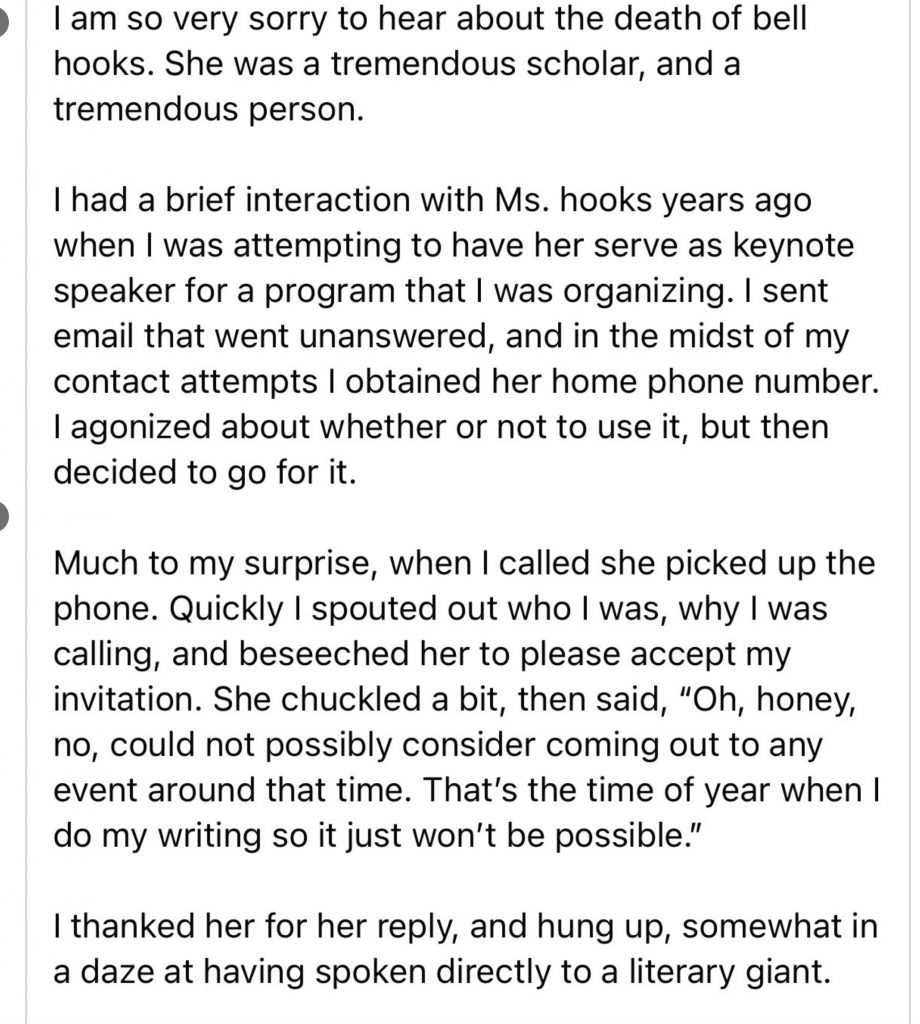
bell hooks, a literary giant, has passed on. In the single, brief interaction that I had with her, she reminded me of what it takes to achieve such greatness.
Watch out for legislation coming in 2022. The Denver Post has a story here.
From Nicole P. Dyszlewski, Raquel Gabriel, Suzy Harrington-Steppen, Anna Russell and Genevieve Tung:
We are pleased to invite you to contribute a proposal for a new book, Integrating Doctrine & Diversity: Inclusion and Equity Beyond the First Year to be published by Carolina Academic Press. This work will build on the foundations established in our previous project, Integrating Doctrine & Diversity: Inclusion and Equity in the Law School Classroom, published earlier this year.
This new title will present case studies, teaching strategies, and personal reflections centered on how law faculty can engage with diversity, equity, and social justice topics in the upper-level JD curriculum. While we seek to present a wide spectrum of subjects, we intend to emphasize widely taught courses, including Evidence, Professional Responsibility, Criminal Procedure, Administrative Law (and/or courses with a substantial administrative component, such as Environmental Law), Tax, and Business Organizations. We also welcome submissions focused on upper-level experiential course work and Academic Success.
Each chapter will feature contributions from multiple authors. Each chapter will also have a selected annotated bibliography of additional resources, written by a law librarian, specific to each subject.
Format:
If you are interested in contributing, please email a statement of interest and a one paragraph summary of your piece to Genevieve Tung at gtung@law.upenn.edu. The deadline for proposal submissions is December 1, 2021.
Completed contributions must be no longer than 3500 words. The final manuscript will be prepared using The Bluebook, 21st ed. and The Chicago Manual of Style, 17th ed.
First drafts due: June 30, 2022
Final drafts due: Nov. 30, 2022
Publication: Spring 2023
Contact:
Please direct any questions to a member of the editorial team:
Nicole P. Dyszlewski, ndyszlewski@rwu.edu
Raquel Gabriel, raquel.gabriel@law.cuny.edu
Suzy Harrington-Steppen, sharrington-steppen@rwu.edu
Anna Russell, Anna_Russell@LB9.uscourts.gov
Genevieve Tung, gtung@law.upenn.edu
123-32
The Office of Governor Gretchen Whitmer’s announcement is here.
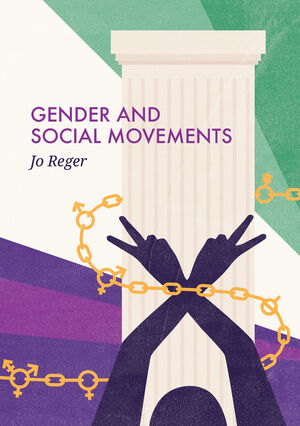 Jo Reger (Department of Sociology, Anthropology, Social Work and Criminal Justice, Oakland University) has published a new book called Gender and Social Movements (Wiley 2021). Here is the publisher’s description:
How does gender influence social movements? How do social movements deal with gender?
In Gender and Social Movements, Jo Reger takes a comprehensive look at the ways in which people organize around gender issues and how gender shapes social movements. Here gender is more than an individual quality, it is a part of the very foundation of social movements, shaping how they recruit, mobilize and articulate their strategies, tactics and identities. Moving past the gender binary, Reger explores how movements can shift understandings of gender and how backlash and countermovements can often follow gendered movement successes. Adopting both an intersectional and global lens, the book introduces readers to the idea that gender as a form of societal power is integral in all efforts for social change.
With a critical overview across different types of movements and gender activism, such as the women’s liberation, #Metoo and transgender rights movements, this book offers a solid foundation for those seeking to understand how gender and social movements interact.
Here is a list of women-owned book stores, if you’d like to order through one of them.
On Thursday, November 18, 2022, 10-11:30 a.m. [that’s evening time on Wednesday, November 17, 2022 on the east coast in the US and Canada; time zone converter here], the Australia National University College of Law will be holding a celebratory webinar in honor of Dissonance and Distrust: Women in the Legal Profession (Oxford 1996), a path-breaking work by Margaret Thornton.

Here is a description of the program:
In 1996 Margaret Thornton’s landmark book Dissonance and Distrust was published. This webinar is a celebration of the book’s insights and its continuing relevance and resonance for study of women in the legal profession today. The seminar brings together Emerita Professor Mary-Jane Mossman for her opening address, followed by three Australian speakers, each taking one of the key themes in Dissonance and Distrust: Associate Professor Heather Roberts (ANU College of Law) on the Legal Profession and the Judiciary, Dr Susan Bartie (University of Tasmania) on the Legal Academy, and Associate Professor Ann Genovese (Melbourne Law School) on Critical Feminist Legal Theory. The event will close with a response from Professor Thornton and questions from the audience.
About Dissonance and Distrust
In Dissonance and Distrust: Women in the Legal Profession (Oxford 1996), Margaret Thornton provides a compelling theoretical account of the continuing resistance to the participation of women as legal professionals, despite their increased presence in law schools and in some areas of legal practice. She suggests that women are still ‘fringe-dwellers in the jurisprudential community’ (Thornton 1996: 3-4) and will remain so until it is recognised that the issue is not simply one of women being ‘let in’ to the profession in equal numbers to men, but also involves posing fundamental questions about the character and constitution of law as it is taught and practised.
About Margaret Thornton
Emerita Professor Margaret Thornton is a socio-legal and feminist scholar whose work on the legal academy and the legal profession is internationally recognised. She is regularly invited to participate in international projects.
She has published extensively in the area of discrimination and the law. Her book The Liberal Promise (Oxford, 1990) remains the only critical study of discrimination law in Australia. Her book, Dissonance and Distrust (Oxford 1996) is the only study of women in the legal profession in Australia. It was translated into Mandarin and published in Beijing (Law Press, 2001).
Margaret also has a particular interest in the impact of the corporatisation of universities on the legal academy and has conducted research in the UK, Canada and New Zealand, as well as Australia. Publications from this research include Privatising the Public University: The Case of Law (Routledge, 2012). Her current ARC-funded research focuses on work/life balance in corporate law firms, particularly the gendered effects of globalisation, competition and technology.
More details and the registration link are here.
From the AP (here):
The Michigan Senate on Tuesday passed legislation that would eliminate the so-called “tampon tax” on menstrual products, sending it to Gov. Gretchen Whitmer who is expected to sign it into law.
Michigan would join over 20 other states that have either ended the sales tax on menstrual products or never had one…. * * *
Both chambers in the Republican-controlled Legislature have voted in the last month to approve lifting the tax, and now one of the bills is heading to Whitmer’s desk where it is expected to be signed into law. The Democratic governor has backed efforts to abolish the tax in Michigan.
Call for Book Chapters
Inheritance: Interdisciplinary Perspectives
Suzanne Lenon, Associate Professor, Dept. of Women & Gender Studies, University of Lethbridge, Canada
Daniel Monk, Professor, Department of Law, Birkbeck, University of London, UK
Abstract Submission Deadline: January 15, 2022
Inheritance catapults private intimacies into the public domain of law. Behind the seemingly strict legal formalism of inheritance, succession and probate law – writing wills/determining intestacy – lies a whole set of social, cultural, familial, and affective processes. It is this intersection of the social and the legal that interests us.
Inheritance is a topic of interest to a wide range of scholarly fields/inquiry. Historians of the distant and recent past have used wills to reveal and sometimes challenge assumptions about religious practice and the role of women. Philosophers have focused on the principle of testamentary freedom to question the notion of life and harm after death. And the centrality of will-writing in fiction has meant that many literary scholars know more about the subject than most lawyers. More critically, social historians, political theorists, critical race scholars and feminists have focused on inheritance as a site to address issues of nation-making, the creating and entrenching of classed, gendered and racial inequalities, and perpetuating biological models of race, white supremacy and patriarchy. In doing so they expose and trouble the violence underlying colloquial phrases such as ‘family money’, and the practices and protection of the legal industry of ‘estate planning’.
At the same time, other scholars point to inheritance – and particularly will-writing – as practices for sustaining existing religious, and other minority groups and for imagining and recognising new communities and relationships of care. All these scholars highlight the centrality of inheritance to shifting, contesting and queering understandings of ‘kinship’ and ‘family’. Scholarship here – most notably within the field of sexuality studies
Thinking about inheritance reveals the tenacity of existing power structures but also the essential and constant work of ‘private’ law to sustain them, and, consequently, the possibilities of alternatives. In foregrounding ‘generationality’, scholarship about inheritance provides a space to think about both the past and the future, of both society and the self.
We hope to explore these questions and more and in bringing together contributions from across disciplines our aim is to demonstrate the foundational place of inheritance in law and society. The following are suggestive only of the potential subjects of interest:
We welcome proposals that look beyond legal doctrinal analysis and adopt different approaches and understandings of ‘inheritance’ from diverse fields such as law, sociology, anthropology, history, political theory, feminism, critical race studies, socio- legal studies, queer studies, and law & literature.
We welcome contributions from both established and junior scholars (including PhD students).
To submit your chapter proposal, please send a 500-word abstract with title, short bio, and contact information to Suzanne Lenon (suzanne.lenon@uleth.ca) and Daniel Monk (d.monk@bbk.ac.uk) by January 15, 2022. Selected authors will be expected to submit a full paper (length 6000-8000 words) by July 15, 2022.
Please feel free to contact us if you would like to informally discuss a potential proposal. We are in conversation with an academic press regarding publication.
In a Journal of Women’s Health preprint, researchers at the University of Michigan have published the results of their study of exposure to volatile organic compounds (VOCs) in 25 users of tampons and menstrual pads.
Here is an excerpt from Ning Ding et al., Feminine Hygiene Products & Volatile Organic Compounds in Reproductive-Aged Women Across the Menstrual Cycle: A Longitudinal Pilot Study, J. Women’s Health (2021), DOI: 10.1089/jwh.2021.0153:
Volatile organic compounds (VOCs) include a wide variety of chemicals in many household products, including personal care products, paints, adhesives, gasoline, and building materials….VOC exposure has been associated with developmental, reproductive, neurologic, immunologic, and carcinogenic effects in animal models and humans. Several VOCs are listed on the Agency for Toxic Substances and Disease Registry (ATSDR)’s Substance Priority List due to their known or suspected toxicity and the potential threat to human health. ***
Vaginal and vulvar tissues are more permeable than exposed skin due to differences in tissue structure, occlusion, hydration, and susceptibility to friction. The mucosa of vaginal and vulvar epithelia have high permeability to contaminants given the absence of a keratinized stratum corneum and loosely packed skin layers. Arteries, blood vessels, and lymphatic vessels are abundant in the walls of the vagina, which allows for direct uptake of chemicals through peripheral circulation.
Given the toxicity of certain VOCs and the unique characteristics of the vaginal and vulvar tissues, potential VOC exposure through this exposure pathway should be minimized. ***
In the present study, we detected 36 VOCs in a small cohort of women, including hexane, n-nonane, hexanal, non- anal, benzene, toluene, p-isopropyltoluene, 2-butanone, and methyl isobutyl ketone. We did not observe significant longitudinal changes in urinary VOC concentrations across the menstrual cycles. Compared with women who used pads or liners during the period, tampon users had significantly higher 2-butanone and methyl isobutyl ketone concentrations. Higher n-nonane, benzene, and toluene estimated from menstrual products were associated with higher urinary concentrations in women. While our findings from this pilot study do not support the hypothesis that the use of menstrual products increases urinary VOC concentrations during the period, they do suggest that tampons may contribute to higher exposure to 2-butanone and methyl isobutyl ketone than sanitary pads. Future studies with repeated measurements and a larger sample size are warranted to confirm our results.
Upshot: There is a whole lot we don’t know about the safety of tampons and pads. Menstrual products are almost entirely unregulated by the federal government, as Emily Waldman and I explain in our forthcoming book, Menstruation Matters: Challenging Law’s Silence on Periods (NYU Press 2022). And state disclosure laws have been so watered down as to be largely ineffective.
The lack of knowledge about the long-term safety of menstrual products used close to highly-absorbent tissue or inside the human body should ring alarm bells. But it’s not clear that our legislators are listening.
In world news (here), the draft budget for 2022 in Italy still endorses gender discrimination in the form of the tampon tax, but decreases the VAT from 22% to 10%. Governments continue to generate money from the literal bodies of those who need these products to manage an involuntary biological process.
Prime Minister Mario Draghi’s cabinet on Tuesday passed a draft budget for 2022 worth some 23 billion euros (26.7 billion U.S. dollars), which would deliver expansionary measures including a sharp cut in income taxes.
The draft indicates the main policy framework the government intends to follow for next year, including the targeted budget balance and the projections for expenditure and revenue.
The budget aims at boosting Italy’s growth to 4.7 percent next year, according to the forecast provided by the Economy and Finance Ministry in late September. * * *
Overall, the government set aside some eight billion euros to implement the tax cut. The measure would be mainly devoted to decreasing the tax wedge, namely the difference between the total labor costs borne by an employer and the net take home pay of a single average worker.
Despite having partially reduced it recently, Italy still showed the fifth highest tax wedge — amounting to 46 percent of total labor costs — among the 37 countries belonging to the Organization for Economic Cooperation and Development (OECD) in 2020.
The cabinet approved a cut from 22 percent to 10 percent of the so-called tampon tax, meaning the value-added tax charged on feminine hygiene products such as tampons.
The draft budget also included stimulus measures to help the euro-zone’s third largest economy keep recovering from the impact of the coronavirus pandemic.
Read the full article here.
Journal of Feminist Scholarship
For Publication in Issue 21, Fall 2022
Issue Contact Email: Jeannette E. Riley (jen_riley@uri.edu) or Kathleen M. Torrens (kmtorrens@uri.edu)
Tipping point: “the critical point in a situation, process, or system beyond which a significant and often unstoppable effect or change takes place.” Merriam Webster.
An argument could be made that 2020 itself was a tipping point for the world, and it also could be seen to have contained numerous tipping points. This issue considers the former, 2020-2021 as a major global tipping point that thrust populations and subpopulations into unfamiliar behaviors, procedures, and situations and forced immense, sometimes irreversible changes on their lives. In particular, the issue calls for feminist responses and considerations of these tipping points and discussions of how COVID-19 shaped and influenced feminisms and feminist movement.
From the pandemic to global climate crises, massive employment and economic hardship, new definitions of work and health and safety, and, according to McKinsey’s Global Institute 2020, COVID-19’s “regressive effects on gender equality,” the transformations and adjustment to daily life across the globe would have been unimaginable in December 2019. Newspaper and magazine articles suggest critiques of and opportunities for feminism during this year. For example, “Don’t Call the Pandemic a Setback for Feminism,” published in Time (December 2020), asserts that Covid-19 has revealed “key fissures in white-feminist ideology” (i.e. “the ways in which mainstream feminism has not evolved beyond an empowering anthem for white women and those aspiring to their privilege”) ways that open the possibility for “mainstream feminism” to evolve and take into consideration the views of those in more marginalized communities. “The Coronavirus is a Disaster for Feminism,” in The Atlantic (March 2020) points out the detrimental impacts on women that the pandemic has had, but also argues that it has provided the opportunity to make visible women’s disproportionate performance of unpaid care work within the household. In a similar fashion, an opinion piece in The New York Times (December 2020), titled “Feminism Has Failed Women” argues that the changes brought to women’s lives by the pandemic “require a new feminism, one that understands that the politics of motherhood are inherently intersectional for the simple reason that while not all women have or want children, those who do come from every race, sexual orientation and socioeconomic background.” This new feminism, according to the author, would be “grounded in solidarity as opposed to ‘success.’” And, the African American Policy Forum has featured “Under the Blacklight: The Intersectional Vulnerabilities that COVID Lays Bare,” moderated by Kimberlé Crenshaw, examines the financial, social and political inequities that have impacted lives across the United States (https://www.aapf.org/ep1-utb).
For this special edition, we invite articles that contemplate the idea of “tipping points” and how feminisms, feminist theorizing, and feminist activism has responded – or not — to this period of time marked by the pandemic. Possible areas of investigation include but are not limited to:
Submissions are due March 1, 2022 at https://digitalcommons.uri.edu/cgi/submit.cgi?context=jfs Further information on formatting requirements can be accessed on the Journal of Feminist Scholarship website at https://digitalcommons.uri.edu/jfs/styleguide.html Any queries can be sent to jen_riley@uri.edu
In an essay just published by the Cornell Law Review Online, Professor Sital Kalantry explains how U.S. Supreme Court justices and U.S. Federal Court of Appeals judges misconstrue eugenics and make false analogies to foreign data to cast doubt on abortion decisions made by people in the United States.
This issue is important at this moment because the U.S. Supreme Court is deciding whether or not to hear a case about an Arkansas law prohibiting abortion on the basis of Down syndrome. Judges and advocates have argued that a state has a legitimate interest in enacting disability-selection, race-selection, and sex-selection bans because they are designed prevent eugenics.
In “Do Reason-Based Bans Prevent Eugenics?,” Kalantry argues that eugenics should not be conflated with personal and voluntary decisions of pregnant people and the argument that these individual decisions in the United States will eliminate groups of people is also empirically flawed.
Nancy B. Rapoport (UNLV) has posted to SSRN her essay from Denver Law Review Forum, Being a “First” – Over and Over Again. Here is an excerpt:
Being a non–founder “first” also means that people will compare your leadership style to those who came before you—and not always in the way that you might think. Often, new academic leaders are chosen for their ability to take an institution in a certain, previously defined direction. Maybe it’s the same direction in which the last leader also chose to go, or maybe there’s a new leader in place because the institution wants to change course. But people watching a new “first” begin her job tend to think, “oh, she does X or Y because she’s a woman,” not “oh, she does X or Y in a way different from her predecessor because they are different people (or because the institution needs to take a different tack).”
Part of being a “first,” then, is recognizing that people are learning who you are based only in part on you. In part, they’re learning who you are by learning who and what you’re not. You’re basically “not the guy who came before you.” You might not be that guy because that guy was good at certain tasks, and you’re good at different ones. You might not be that guy because the institution’s needs have changed. * * * *[B]eing a “first” as a dean or a provost involved meshing some stereotypically feminine approaches with some stereotypically masculine ones.
The full essay is available here.
Stealthing, the non-consensual removal of a condom, is a crime in several jurisdictions, including California. See here.
Last week, the Australia Capital Territory became the first jurisdiction in Australia to criminalize stealthing. Here is an excerpt of relevant press coverage:
The Australian Capital Territory (ACT) has become the first Australian jurisdiction to criminalise the act of stealthing – the non-consensual removal of a condom during sex.
The bill, introduced by Liberals leader Elizabeth Lee in April as an amendment to the Crimes Act, passed in the Legislative Assembly on Thursday with unanimous support.
The full story is here. More press coverage is here.
The bill was introduced by Elizabeth Lee, a leader of the Canberra Liberals. Ms. Lee said (here) that “We need to act proactively and send a clear message to the community that this behaviour is unacceptable, and a crime.”
A Monash University study conducted in 2018 found (here) that approximately 1/3 of all women who have sex with men and 1/5 of all men who have sex with men have been the victim of stealthing.
Wisconsin Journal of Law, Gender & Society
March 26th, 2022
We are pleased to announce the 2022 Wisconsin Journal of Law, Gender & Society symposium on “Sex as Crime: Addressing the Intersection of the Legal World and the Sex Industry.” Sex work is one of the most divisive professions in the United States. Traditionally, the United States has used a criminalization model for sex work, making the consensual buying and selling of sexual services illegal. While the sex work industry is diverse in practice and experience, this approach to the industry endangers all sex workers with higher rates of sexual, physical, and economic violence. Violence towards sex workers recently came to the public’s attention on March 16, 2021, after the Atlanta spa shooting, when a racially and sexually motivated man shot and killed massage parlor workers and customers. This tragedy, along with changing social attitudes towards sex work, has reinvigorated the conversation about the legal implications of criminalization and the proper regulation of sex work in the United States.
The virtual symposium will feature research and papers comparing a variety of legal issues and pitfalls and the implications of different legal models as possible solutions. The symposium seeks scholarship on sex workers and sex trafficking victims within the criminal justice system and broader legal context. The journal will prioritize articles that discuss the intersections of sex work with race and ethnicity, gender or gender identity, sexuality, social class, disability, and citizenship status, as well as any other diverse aspect of our society. This symposium seeks to foster a broad discussion about effective solutions for legal issues within the sex work industry.
Proposals should be submitted to Sarah Jones at spjones@wisc.edu and Tanja Skiljevic at skiljevic@wisc.edu no later than October 17, 2021. Submissions may be sent after that deadline but are not guaranteed review or consideration. Submissions may be a finished work or a proposed outline. The Wisconsin Journal of Law, Gender & Society will likely publish accepted unpublished submissions. The organizers will communicate their decisions no later than November 14, 2021. If chosen, authors of accepted submissions must commit to submitting a final rough draft of their work no later than February 1, 2022. Authors of accepted submissions must virtually attend and present their work at the symposium on March 26, 2022.
Additionally, the Journal is seeking individuals who are interested in speaking at the symposium about their legal or scholastic work without a publication agreement. The above deadlines apply similarly to speakers’ proposals. The Wisconsin Journal of Law, Gender, & Society welcomes individuals from all backgrounds to submit their research or scholastic work to be fairly and equitably considered. Please direct any inquiries to Sarah Jones, Symposium Editor (spjones@wisc.edu).
The University of San Francisco School of Law is located in one of the world’s most dynamic and progressive cities, which affords our community a global perspective and access to premier arts, culture, and centers of innovation. Part of a historic Jesuit institution, the Law School has a proud 109-year history of preparing its diverse graduates to be excellent and ethical attorneys who serve their clients and communities with integrity and in a socially responsible manner.
We are a diverse, socially responsible learning community centered on high-quality scholarship and academic rigor while sustained by a faith that works for justice. We are committed to recruiting and retaining BIPOC faculty to reflect our mission and practice.
The Law school is seeking entry-level and lateral applicants for one or more positions on our full-time faculty to begin in the fall of 2022. USF Law welcomes outstanding candidates in all fields and is particularly interested in candidates who expand the school’s expertise in the fields of critical race theory, intersectionality, race and the law. Other areas of particular interest include criminal procedure, criminal law, contracts, property, international law, tax, intellectual property, and commercial law. Applicants should demonstrate a record of professional excellence, strong classroom teaching skills, a commitment to service, and potential for success as a scholar and contributing member of a dynamic and diverse community.
Applications from traditionally underrepresented groups in the legal field and individuals whose background or interests will enhance our diversity are highly encouraged. Contact: Julia Dunbar, Sr. Director of Faculty & Academic Services, USF School of Law, 2130 Fulton Street, San Francisco, CA 94117. Email: jtdunbar@usfca.edu.
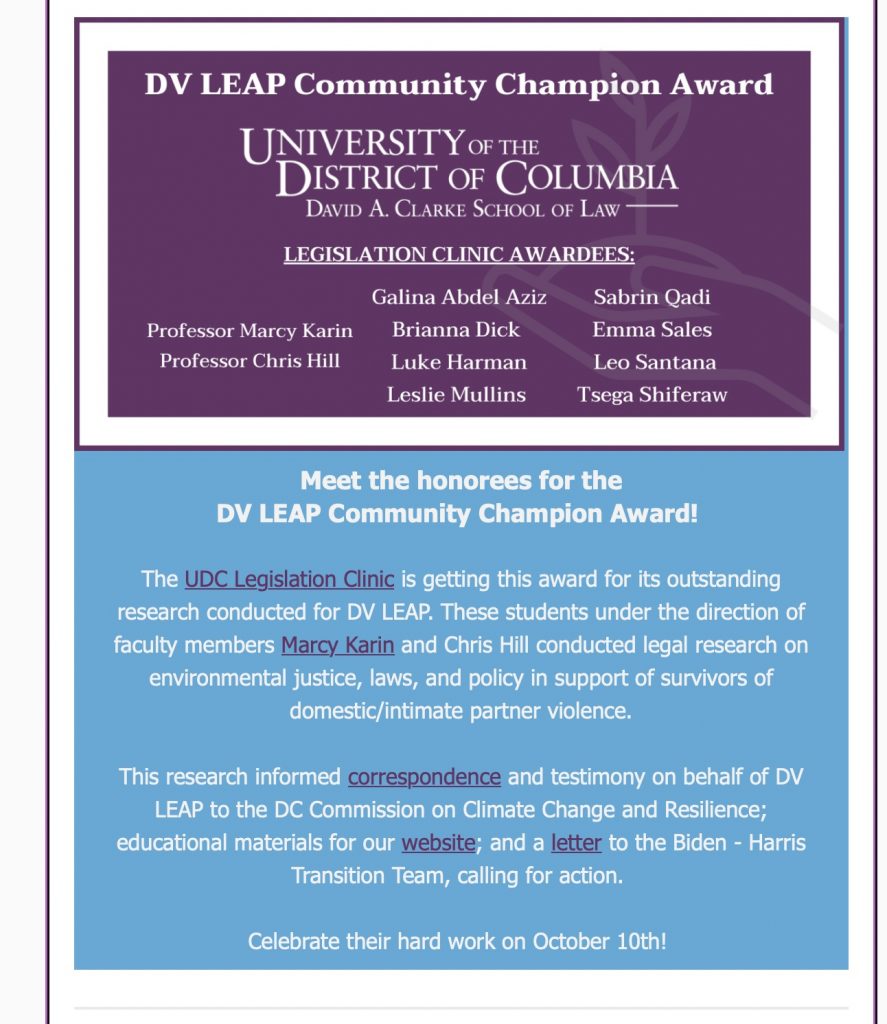
The Legislation Clinic at the University of District of Columbia David A. Clarke School of Law has been named as a “DV Leap Community Champion” for its research work on behalf of that organization, which is national leader in appellate advocacy on behalf of survivors.
Congratulations to Professor Marcy Karin and Professor Chris Hill and the students participants in the Legislation Clinic for their excellent work!
The Clinic will be honored at the organization’s “Tip the Scales of Justice” 2021 Tree Planting on October 10. More info here.
Summer 2020 included the tweetstorm publicizing the awful (and arguably unconstitutional, so say Emily Waldman and I) prohibitions on bar examinees bringing their own menstrual products to the exam.
In response, the menstrual underwear company Thinx offered to send a free pair of underwear to bar exam takers who would pay the shipping costs:
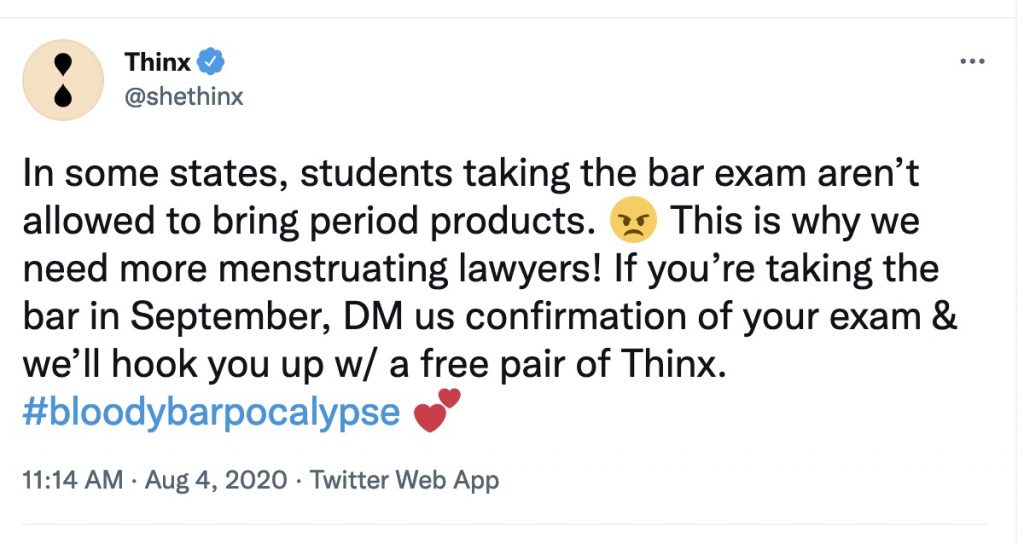
No doubt, these give-aways provided much relief to bar exam takers. At first take, the freebies also appear to be a welcome act of corporate “do-gooder-ism” — a nice way to help people in an unfair situation. I stand by that analysis.
But let’s also not forget that many corporate give-aways are designed to build brand loyalty, and thus are part of the system of menstrual capitalism. Consider this tweet by a bar examinee (whose name I have redacted for privacy; the tweeter’s identity isn’t relevant to the point):

No hate. The bar examinee is understandably supportive of the company that helped her out. And in doing the helping, Thinx acquired a loyal follower who “will never stop shouting out this amazing company.”
Along with brand loyalty, Thinx’s give-aways also generate free publicity for its products (smart move). The give-aways distract consumers from looking too closely at the company’s past. Recall that Thinx’s founder, Miki Agarwal, resigned amidst accusations that she sexually harassed employees, and then later made light of those accusations.
Companies like Thinx sell products by appealing to pro-feminist messages like body positivity and menstrual equity. Their give-aways to bar examinees and others are baked into the corporate profit model. Nothing wrong with that. Just maybe not every company that gives away products is as “feminist” as consumers might wish.
That’s why Victoria Haneman (Creighton) has suggested (here) looking at corporate structures, and B-corp status in particular, as a sorting mechanism. Her piece is worth a read.
Emory Law seeks to fill four faculty positions to begin in the 2022-23 academic year. Entry-level candidates are strongly encouraged to participate in the AALS Faculty Appointments Register. Lateral candidates should complete the online application which requires creating an account, uploading a resume or CV, and providing basic personal information. In addition, applicants should submit a cover letter, a current CV, a published or unpublished academic article, a brief research agenda, and an indication of teaching interests (if not listed on the CV) to the chair of the Faculty Appointments Committee: Fred Smith, at law.faculty.appointments@emory.edu. Applications will be considered on a rolling basis. The positions are as follows:
Assistant or Associate Professor- Criminal Law
The Emory University School of Law invites applications from entry-level or lateral candidates. The position is open to entry-level and lateral candidates for appointment at the rank of assistant professor (tenure track) or associate professor (tenure track). Candidates should be either new to law teaching or junior lateral candidates with no more than four years in a tenure-track position. The successful candidate should have a demonstrated record of exceptional scholarship and teaching in the area of criminal law along with an evident commitment to institutional service. This position requires the applicant to have obtained a J.D., Ph.D., or equivalent degree.
Assistant or Associate Professor- Environmental Law
Emory University School of Law seeks to fill a tenure-track position in environmental law. The position is open to entry-level and lateral candidates for appointment at the rank of assistant professor (tenure track) or associate professor (tenure track). Candidates should be either new to law teaching or junior lateral candidates with no more than four years in a tenure-track position. Candidates must have a J.D., Ph.D., or equivalent degree, and a distinguished academic record. Candidates should have a strong track record and/or show outstanding promise in research in environmental law (including, for example, land use, environmental justice, climate change, and natural resources) and the ability to teach the basic environmental law course and allied courses, especially property.
Assistant or Associate Professor- Tax Law
Emory University School of Law seeks to fill a position in tax law. The position is open to entry-level and lateral candidates for appointment at the rank of assistant professor (tenure track), associate professor (tenure track), or associate professor (with tenure). Candidates must have a J.D., Ph.D., or equivalent degree, and a distinguished academic record. Candidates should have a strong track record and/or show outstanding promise in research in tax law or related fields, and the ability to teach one or more tax courses.
Sam Nunn Chair of Professionalism and Ethics
Emory University School of Law seeks applications from distinguished scholars for the Sam Nunn Chair in Ethics and Professionalism. Candidates should have exceptional records in research, teaching, and service and have attained a J.D., Ph.D., or equivalent degree. Candidates should also currently hold a tenured academic appointment.
The subject-matter focus of the Sam Nunn Chair is intentionally broad. Under the terms of the endowment supporting the position, the Chair will have the support of the law school in hosting a conference on issues related to ethics and professionalism approximately every four years. Candidates for the position, however, need not focus centrally on these themes in their work.
The Chair may be of particular interest to scholars whose research examines ethics, professionalism, complex litigation, judging, dispute resolution, representation of corporate entities, implications of AI and big data for the profession and legal practice, and other related areas. Nevertheless, distinguished scholars with an interest in ethics and professionalism are encouraged to apply, regardless of their area of specialization. Previous chairholders include scholars in the fields of products liability, feminist theory, law and religion, family law, and federal housing policy.
Marc Spindelman (Ohio State) has posted to SSRN his essay Justice Gorsuch’s Choice: From Bostock v. Clayton County to Dobbs v. Jackson Women’s Health Organization, 13 ConLawNOW 11 (2021). Here is the abstract:
Informed speculation holds that the Supreme Court’s decision to hear and decide Dobbs v. Jackson Women’s Health Organization spells bad news for constitutional abortion rights. Recognizing both the stakes and the odds, this brief commentary engages Justice Neil Gorsuch’s majority opinion in Bostock v. Clayton County and the prospects that it opens up in Dobbs for a future for—not against—abortion rights. Bostock’s pro-gay and pro-trans sex discrimination rulings are built atop—and go out of their way to reaffirm—women’s statutorily-grounded economic and social rights, and hence women’s equal citizenship stature. Moreover, the final decision in the case emerges after judicial wrestling with rule of law concerns involving legal and social stability. In both of these respects, Bostock aligns with the controlling opinion in Planned Parenthood v. Casey, a decision that Justice Gorsuch, like other justices in Dobbs, might yet in principle reaffirm. After exploring some of Casey’s doctrinal implications and its example of judicial moderation, discussion turns to Casey’s often overlooked spiritual dimensions. Not only does Casey’s spiritual pluralism on the abortion right and its limits converge with important features of Bostock, but it also actively counsels a decision in Dobbs giving Casey and what it preserves of Roe a new lease on life as part of a larger effort to preserve the American public’s shared faith in a constitutional republic that everyone in Dobbs wishes to keep.
The full piece is available here.

Professor Marie-Amélie George
Professor Marie-Amélie George (Wake Forest) has been selected as the winner of the 2020-2021 Haub Law Emerging Scholar Award in Gender & Law for her paper Exploring Identity, 54 Fam. L. Q. (forthcoming 2021). Professor George is an Associate Professor; she teaches Civil Procedure, Family Law, Professional Development, and Public Interest Advocacy.
Professor George’s research focuses on LGBTQ rights, analyzing how and why laws have changed, as well as the ways that history can provide insight into current legal debates and contemporary normative questions. Her scholarship has explored a broad range of gender-related issues including conversion therapy bans, gay and lesbian parenting issues, the decriminalization of sodomy, and the advancement of trans rights. Her scholarship has appeared or is forthcoming in the Northwestern Law Review, Florida Law Review, Wisconsin Law Review, and Alabama Law Review, among others.
Read the full announcement here.
Congratulations, Professor George!

On Thursday, August 5, 2021, the Society for Menstrual Cycle Research (SMCR) will host an online mini-conference on menstruation and reproductive health. The program is a showcase of rapid-fire 5 minute oral presentation delivered by SMCR early career researchers, graduate students and activists.
Registration is free (here). The program is after the fold.
The Center on Applied Feminism at the University of Baltimore School of Law seeks paper proposals for the Thirteenth Annual Feminist Legal Theory Conference. We hope you will join us for this exciting conference on Friday, April 8, 2022. This year, we aim to capture, develop, and disseminate cutting edge theorizing around issues of gender equity and intersectionality.
We are in a tumultuous period of history in which we are grappling with a global health pandemic and sharp political polarization, while also experiencing flourishing movements for racial and gender justice. This is a time for innovation and creativity — for highlighting ideas that create a more just society. We want to explore how feminist legal theory is responding and growing during this time and bridging toward a future of greater gender and intersectional justice. Thus, we seek submissions of papers that have “big ideas” about issues related to feminist legal theory and other critical legal theories from a variety of substantive disciplines and perspectives. As always, the Center’s conference will serve as a forum for scholars, practitioners, and activists to share ideas about applied feminism, focusing on connections between theory and practice to effectuate social change. The conference will be open to the public and will feature a keynote speaker. Past keynote speakers have included Nobel Laureate Toni Morrison, Dr. Maya Angelou, and Gloria Steinem.
To submit a paper proposal, by Friday, October 29, 2021, please complete this form and include your 500 word abstract: https://forms.gle/L4rdht7te3WuRTtPA We will notify presenters of selected papers by early December. About half the presenter slots will be reserved for authors who commit to publishing in the annual symposium volume of the University of Baltimore Law Review. Thus, the form requests that you indicate if you interested in publishing in the University of Baltimore Law Review’s symposium issue. Authors who are interested in publishing in the Law Review will be strongly considered for publication. For all presenters, working drafts of papers will be due no later than March 18, 2022. Presenters are responsible for their own travel costs; the conference will provide a discounted hotel rate as well as meals.
We look forward to your submissions. If you have further questions, please contact Prof. Michele Gilman at mgilman@ubalt.edu. For additional information about the conference, please visit law.ubalt.edu/caf.
DePaul University College of Law invites applications from entry-level candidates for a tenure-track position expected to begin July 1, 2022. We welcome applications from qualified candidates across all areas and specializations, but we have particular interest in the areas of Constitutional Law, Criminal Law and Criminal Procedure, and Race, Inequality and the Law. DePaul College of Law is dedicated to fostering an equitable and inclusive academic community. We enthusiastically encourage applicants who would enrich the diversity of our community to apply.
All candidates must hold a J.D. or equivalent degree, possess excellent academic credentials, and demonstrate potential to be an outstanding scholar and teacher. Interested candidates should apply online at https://apply.interfolio.com/89265. Required materials include a cover letter, curriculum vitae, list of references, research statement, diverse learning environment statement, writing sample, and teaching evaluations (if available).
DePaul University College of Law is dedicated to excellence as Chicago’s law school, with its distinctive programs integrated throughout the city. Centered in the Loop — the heart of downtown Chicago, one of the world’s largest business and communication hubs — the College of Law is only a few blocks from the state and federal courts, bar associations, and the city’s historic legal and financial center. The law school is an integral part of DePaul University, a world-class institution of higher learning. DePaul Law is committed to improving the legal community by educating purpose-driven lawyers who will serve the public and legal profession in ways that enhance the broader community.
To learn more, please visit https://law.depaul.edu/.
DePaul University is an Equal Opportunity / Affirmative Action employer. All qualified applicants will receive consideration for employment without regard to race, color, ethnicity, religion, sex, sexual orientation, gender identity, national origin, age, marital status, physical or mental disability, protected veteran status, genetic information or any other legally protected status, in accordance with applicable federal, state and local EEO laws.
I have updated my “Information for Submitting to Specialty Law Reviews and Journals in Gender, Women & Sexuality.” The most recent version dated July 13, 2021 is here.
The guide is modeled after the chart prepared by Professor Allen Rostron and Professor Nancy Levit at the University of Missouri Kansas City School of Law, and after my Information for Submitting to Online Law Review Companions. It contains information about twenty-seven (27) U.S.-based law reviews and journals classified under the subject “Gender, Women and Sexuality and Law” by the Washington & Lee Law Journal Rankings (here) or that are broadly related to social justice and five (5) additional journals that contain the word “gender” in their title, but are not listed in the Washington & Lee Law Journal Rankings. Within each category (W&L-ranked journals, then non-ranked journals) journals are listed in the order of the “rank” of the school, if any (as determined by the most recent US News overall ranking, not because that system merits endorsement, but because it is convenient). Specifically, the chart derives from the journals’ websites the following information:
Corrections and updates are welcome.
Assistant/Associate/Full Professor (Tenure Track)
Position Description
University of Mississippi School of Law
Assistant/Associate/Full Professor (Tenure Track)
The University of Mississippi School of Law invites applications from entry-level and lateral candidates for multiple tenure-track faculty positions beginning August 2022. We welcome applications from outstanding candidates in all curricular areas, including (in no particular order) tax, employment law, health care law, disability rights, voting rights, real estate law, data privacy, civil procedure, bankruptcy, and business law (including foundational classes such as corporations and secured transactions). All applicants should have a distinguished academic background, and either great promise or a record of excellence in both scholarship and teaching.
Located among the rolling hills of Northern Mississippi, the University of Mississippi’s main campus is centered in Oxford, Miss., about 70 miles south of Memphis, Tenn. Oxford has been listed among the 20 Best Small Towns in America by Smithsonian Magazine. Oxford boasts great independent bookstores, excellent restaurants, and a vibrant arts community and is home to one of the best public school districts in the state of Mississippi.
The University of Mississippi encourages applications from candidates who would enhance the diversity of our community, including women and other gender identities, minorities, and LGBTQ+ candidates. As stated in our recently adopted strategic plan on diversity, equity, and inclusion: “The University of Mississippi School of Law is committed to creating an educational experience that affirms diversity, inclusion, and equity. We welcome the contributions of a diverse student body, faculty, and staff. Diversity, inclusion, and equity are vital to the education of our students and to the role we play in shaping the legal profession.” To read more about the University of Mississippi School of Law’s Diversity, Inclusion and Equity plan please visit the following link: https://law.olemiss.edu/about/diversity/strategic-plan-for-diversity-inclusion-and-equity/.
Contact: Professors Antonia Eliason and Richard Gershon
Co-Chairs, Faculty Appointments Committee,
University of Mississippi School of Law
481 Chucky Mullins Drive
University, MS 38677
aeliason@olemiss.edu igershon@olemiss.edu
Appointment: 9 Month Assignment Type: Tenure Track
J.D. from an accredited law school
To apply online go to:
https://careers.olemiss.edu/job/University-AssistantAssociateFull-Professor-MS-38677/765194600/
Please include the following when prompted during the application process:
a cover letter including a statement concerning preferred courses and a statement concerning the candidate’s research interests.
North Carolina Central University School of Law is seeking to hire a lateral professor at the Associate or Full rank to serve as the inaugural Intel Technology and Social Equity Endowed Chair. The person hired will be expected to teach two upper level technology law courses and one first year course. The areas of first-year course need include Contracts, Civil Procedure and Torts. The position will start July 1, 2022. Applicants should be willing and available to teach using in-person, remote, or hybrid formats, depending on the needs of the particular classes.
Applications will be considered until the position is filled. For priority consideration, please apply by July 1, 2021. Application materials should include a cover letter, CV, and the names and contact information of at least three references. Application materials and general inquiries should be submitted to April Dawson, Associate Dean of Technology and Innovation at adawson@nccu.edu.
North Carolina Central University School of Law was founded in 1939 to provide an opportunity for legal education to African Americans. The School of Law now provides this opportunity to a more diverse student body than any other in the nation, as it pertains to race and gender. This environment of diversity better prepares our students to effect positive change in the broader society. The student body consists of approximately 400 students and 31 full-time faculty members.
North Carolina Central University, an EEOC/AA employer, complies with the Immigration Reform and Control Act of 1986. All new employees must provide original documents verifying identity and employability within the first three (3) days of employment with the University. Accommodations for applicants who qualify under the Americans with Disabilities Act or Section 503 of the Rehabilitation Act of 1973, as amended, are available upon request.
Hiring Announcement
University of Detroit Mercy School of Law
Tenure-Track Faculty Positions for 2022-2023
University of Detroit Mercy School of Law is seeking two to three entry-level, tenure-track faculty for the 2022-2023 academic year. Our primary hiring needs are in the areas of Constitutional Law, Criminal Law, Business Law, and Legal Writing, though we welcome inquiries from interested candidates in other areas, including clinicians. Detroit Mercy Law has a unified tenure track regardless of one’s area of teaching focus and supports scholarship from all tenure-track faculty.
Candidates should have a Juris Doctor degree and send a current CV or resume, along with a cover letter expressing their interest and qualifications, to Prof. Erin R. Archerd, Chair of the Faculty Recruiting Committee, at archerer@udmercy.edu. Candidates may also submit additional materials such as research statements, prior publications, and teaching evaluations. Applications will be reviewed on a rolling basis, with initial, online interviews to begin in Summer 2021.
About Detroit Mercy Law
Led by our new Dean, Jelani Jefferson Exum, Detroit Mercy Law offers a curriculum that complements traditional theory- and doctrine-based course work with intensive practical learning. Students must complete at least one clinic, one upper-level writing course, one global perspectives course, and one course within our Law Firm Program, an innovative simulated law-firm practicum. Detroit Mercy Law also offers a Dual J.D. program with the University of Windsor in Ontario, Canada in which students earn both an American and a Canadian law degree in three years and gain a comprehensive understanding of two distinct legal systems.
Detroit offers a dynamic variety of culinary, cultural, entertainment, and sporting attractions. Detroit Mercy Law is located one block from the riverfront in Downtown Detroit, within walking distance of federal, state, and municipal courts, the region’s largest law firms, and major corporations such as General Motors, Quicken Loans, and Comerica Bank.
Michigan’s largest, most comprehensive private university, University of Detroit Mercy is an independent Catholic institution of higher education sponsored by the Religious Sisters of Mercy and Society of Jesus. We seek qualified candidates who will contribute to the University’s urban identity, social justice mission, commitment to diversity and inclusion, and tradition of scholarly excellence. University of Detroit Mercy is an Equal Opportunity Affirmative Action Employer with a diverse faculty and student body and welcomes persons of all backgrounds.
It is the policy of the University of Detroit Mercy to provide equal opportunity to all employees and applicants for employment. The University will not discriminate in employment on the grounds of race, color, religion, ancestry, national origin, age, sex, height, weight, marital status, sexual orientation, veteran status, medical condition or disability. This policy applies to all terms, conditions and privileges of employment including recruitment, hiring, placement, employee development, promotion, transfer, compensation, benefits, discipline and termination.
Seton Hall University School of Law welcomes applications for tenure-track positions to begin July 1, 2022. Candidates must have a J.D. or equivalent degree and a record of academic excellence. Candidates should demonstrate (i) scholarly promise, (ii) the ability or potential to be an outstanding teacher and mentor who can prepare students for the practice of law, and (iii) leadership in service toward building an equitable and diverse academic community.
We will consider entry-level and junior-lateral candidates in a variety of subject areas but are particularly interested in healthcare finance, civil procedure/complex litigation, contracts, employment, torts, and clinical education (criminal justice and entrepreneurship & community development).
Candidates should apply here. The following documents should be uploaded with your application: CV (with references), cover letter, scholarly agenda, and job talk paper (or abstract with expected date for completion of the draft).
These are certainly interesting times to teach and write about critical race theory. As CRT becomes the new political scapegoat, US law schools are (finally) beginning to explore how to teach students law while also teaching them about the racism (and misogyny and homophobia) embedded in the law.
The question, of course, is always how to integrate CRT. Standalone courses are great, but they reach only a handful of students. And law professors often feel like they cannot add lengthy critical scholarship readings to already overpacked doctrinal courses.
One answer to the dilemma is to use rewritten judicial opinions. The Feminist Judgments series offers opinions that look like “real” judicial opinions but include critical race reasoning (as well as other critical legal perspectives). These rewritten opinions are shorter than most scholarly articles and can be a quick and effective way to incorporate CRT into your class. Because they are relatively short, they can be assigned ahead of time along with the original opinion or can be read as part of an in-class exercise as described by Bridget Crawford in this book chapter.
Teaching sexual harassment law? Dean Angela Onwuachi-Willig’s rewritten opinion in Meritor Savings Bank v. Vinson uncovers the racial dynamics of sexual harassment that were obscured in the original opinion. Or maybe you are teaching employer appearance codes in your employment law class. Consider assigning Professor Wendy Greene’s rewrite of EEOC v. Catastrophe Management Solutions, in which she reveals the racism and misogyny underlying what US law considers professional or appropriate for the workplace.
Teaching battery in Torts and want to stimulate a critical discussion of the bias inherent in determinations of intent or damages? Consider Professor Alena Allen’s rewrite of Robinson v. Cutchin, in which she criticizes the argument that an African American woman subjected to an unwanted tubal ligation during her C-section had suffered “no additional physical pain, injury or illness.” Professor Allen’s opinion is the perfect vehicle to teach students about the dangers of an ahistorical approach to doctrine because it places the concept of informed consent in the context of the history of involuntary sterilization of poor African American women in the United States.
These are just a few examples. Others include Professor Marley Weiss’s rewrite of Ricci v. Distefano in the Employment Discrimination volume, Professor Jennifer Wriggins and Professor Sara Cressey’s rewrite of G.M.M. v. Kimpson in Torts, Professor David Brennen’s rewrite of Bob Jones University v. United States in the Tax volume, and Dean Browne Lewis’ rewrite of O’Neal v. Wilkes in the Trusts & Estates volume, and Professor Teri McMurtry-Chubb’s rewrite of Loving v. Virginia in the Supreme Court volume, to name just a few. Go to the Feminist Judgments website for resources about how to teach using alternative judgments.
The best part is that if your library subscribes to the electronic versions of the volumes on Cambridge Core, students and faculty can read and download individual opinions via their library websites with no extra charge. Right now, Cambridge University Press is running a promotion where readers can access free chapters and libraries (and others) can get a discount on purchases of volumes in the series.
If we are going to be criticized for teaching CRT anyway, we might as well run with it.
(cross-posted at Faculty Lounge here)
Marc Spindelman (Ohio State) has posted to SSRN his article Bostock‘s Paradox: Textualism, Legal Justice, and the Constitution, 69 Buffalo Law Review 553 (2021). Here is the abstract:
The Supreme Court’s opinion in Bostock v. Clayton County, Georgia—recognizing that anti-gay and anti-trans discrimination are forms of sex discrimination under Title VII of the 1964 Civil Rights Act—has already gained a steady reputation as a textualist statutory interpretation decision. The reality of the ruling is far more complicated than that. Bostock is a textualist decision, but, as the argument here shows, Bostock also offers a construction of Title VII’s sex discrimination rule that sounds in a rule-of-law norm of legal justice about LGBT equality that itself traces roots to the Supreme Court’s constitutional LGBT rights jurisprudence. Bostock’s rule-of-law norm of legal justice, which expands and diffuses constitutional norms of LGBT equality in new ways, does more than shape Bostock’s interpretation of Title VII. Through it, Bostock supplies state actors, including courts, with instruction on how to treat all claims of lesbian, gay, and now trans rights, whether they formally involve constitutional rights claims or, as in Bostock, do not. In Bostock’s wake, state actors must ordinarily treat LGBT persons just the same as their cisheterosexual counterparts, affording them the same benefits of established and new legal protections that cisheterosexuals receive.
The path to this larger picture proceeds through an account that explains Bostock both is—and is not—a textualist decision. The opinion’s textualist self-accounting, tracked in these pages, lacks normative justificatory punch on the central interpretive question raised by the claims it decides: whether Title VII’s sex discrimination ban covers anti-gay and anti-trans discrimination. A careful reading of Bostock shows the opinion both disparaging and then ultimately embracing “extratextual” reasons for choosing to read Title VII’s sex discrimination rule in the pro-gay and pro-trans directions that it does.
The most telling of these reasons, in a dramatic turn, abandons the majority’s textualist hunt, and reaches for a general, rule-of-law ideal of legal justice—a distinctive understanding of formal equality involving LGBT persons—that emerges from, and extends to new levels, the legal foundations of the U.S. Supreme Court’s pro-lesbian and pro-gay constitutional rights jurisprudence, whose pro-trans legal implications are expressly recognized by the Supreme Court in Bostock for the first time. Bostock’s announcement of the operations of legal justice in the case—a stylized extension of operative constitutional norms—has far-reaching implications for the interpretation of other statutes that may benefit LGBT persons, as well as other legal rules that, now or in the future, implicate LGBT rights.
Understanding how Bostock follows a line of justification found in the Supreme Court’s constitutional promises of equal dignity and respect for lesbian women, gay men, and trans people frames an account of what is legally misguided about the textualist approaches taken up by the Bostock dissents. These opinions, which indulge both anti-gay and anti-trans sentiments as touchstones for their own preferred choices for how to read Title VII’s sex discrimination ban, flout constitutional values that strip those choices of their own easy claims to legality. Having identified the legal flaws of the dissents’ textualist analytics, discussion turns to the most significant of the likely reasons why the Bostock majority opinion does not expressly avow the constitutional and rule-of-law grounds for its decision. No matter, the recognition of Bostock’s foundations in constitutionalism recasts the pressures the Supreme Court will face in future cases taking up questions that Bostock formally brackets, as well as other wonders about its own text’s meaning. With time, Bostock may prove to be an even bigger breakthrough for LGBT equality and rights under law than at first glance it seems.
The full article is available here.
UNIVERSITY OF CALIFORNIA AT DAVIS SCHOOL OF LAW invites applications from entry-level and experienced candidates for two positions to begin July 1, 2022. Our hiring needs are flexible, but we have especially strong needs in torts, civil procedure, intellectual property, evidence, and business law. We seek candidates with scholarly distinction or promise, as well as a commitment to excellence in teaching. Candidates must hold a J.D., Ph.D., or equivalent degree by the date of their application. All candidates must apply through the UC Recruit system at the following link: https://recruit.ucdavis.edu/JPF04244.
In addition, as part of their application, candidates must include a Statement of Contributions to Diversity. Information about the Statement can be found at http://academicaffairs.ucdavis.edu/diversity/equity_inclusion/diversity_statements_writing.html.
For full consideration, applicants should apply by Sept. 1, 2021, although we recommend that you submit your materials as soon as possible. Candidates must have a J.D. or equivalent degree. We require a cover letter, curriculum vitae, research agenda, teaching evaluations and/or transcripts, writing sample, and contact information for three (3) references at this time. Please note that we may require further documentation at a future date, including, but not limited to, letters of recommendation, which will be treated as confidential per University of California Policy and California state law.
Please direct questions to Professor Carlton Larson, Chair of the Faculty Appointments Committee, via email at facultyappointments@law.ucdavis.edu. Inquiries about visiting positions should be submitted to Senior Associate Dean for Academic Affairs Afra Afsharipour, also at facultyappointments@law.ucdavis.edu.
The University of California is an Equal Opportunity/Affirmative Action Employer. All qualified applicants will receive consideration for employment without regard to race, color, religion, sex, national origin, disability, age or protected veteran status. For the complete University of California nondiscrimination and affirmative action policy, see http://policy.ucop.edu/doc/4000376/NondiscrimAffirmAct.
Oregon HB 3294, the Menstrual Dignity Act, passed both houses of the state legislature and now heads to the governor’s desk for signature. The bill provides access to free menstrual products in schools.
There’s a short, easy-to-read description of the bill here.
GONZAGA UNIVERSITY SCHOOL OF LAW in Spokane, WA seeks applicants for up to three entry-level full-time tenure-track positions as Assistant Professor beginning in the Fall 2022. Our curricular needs include a variety of first-year, required, and elective courses, including Civil Procedure, Complex Litigation, and E-Discovery; Constitutional Law, Employment Discrimination, Federal Courts, Health Law, and Indian Law; Contracts, Antitrust, and other Business Law courses with an emphasis on Corporate Social Responsibility; and academic support or bar preparation courses taught in conjunction with doctrinal courses. Gonzaga Law embraces a unified faculty model, in which all faculty members are supported as scholars in all subject matter areas and have the opportunity to teach experiential, clinical, academic support, or bar preparation courses if desired. Candidates must demonstrate the ability to be an outstanding teacher, a commitment to service, and excellent scholarly potential, particularly in alignment with Gonzaga Law’s two academic Centers – the Center for Civil & Human Rights and the Center for Law, Ethics & Commerce. For Gonzaga University School of Law’s mission and diversity statements, please visit https://www.gonzaga.edu/school-of-law/about/mission-vision
To apply or view the complete position description, please visit our website at www.gonzaga.edu/jobs. To apply, please visit our website at www.gonzaga.edu/jobs. Applicants must complete an online application and electronically submit the following: (1) a cover letter, (2) a curriculum vitae, (3) a statement that includes evidence of teaching effectiveness and experience creating and maintaining an inclusive learning environment, and (4) a list of three references. Candidates may, at their option, also upload a research agenda and statement of teaching philosophy. Additionally, finalists will be asked to provide names and contact information for three professional references to provide confidential letters of recommendation. Inquiries about the position may be directed to the Chair of the Faculty Recruitment Committee, Professor Agnieszka McPeak, atlawfacultyhiring@gonzaga.edu; however, the applicant must apply directly to Gonzaga University, Office of Human Resources. The position closes on September 1, 2021 at midnight, PST. However, for priority consideration, please apply by July 22, 2021 at midnight, PST. For assistance with your online application, please contact Human Resources at 509-313-5996.
Beginning July 1st, 2022, Louisiana will no longer add sales tax to purchases of feminine hygiene products of diapers. The Legislature passed and the Governor signed legislation that eliminated the tax on these products in May.
Here’s the link to the legislation.
Bumping to the front for July 1, 2021 deadline.
Elisabeth Haub School of Law at Pace University
Gender & the Law Emerging Scholar Award: Call for Submissions
The Elisabeth Haub School of Law is pleased to announce the competition for its annual Gender & the Law Emerging Scholar Award. This paper competition is open to all full-time law professors (whether tenure-track or not — added for clarification) with five (5) or fewer years of full-time law teaching experience as of July 1, 2021. The deadline for submissions is July 1, 2021.
The purpose of the award is to encourage and recognize excellent legal scholarship related to gender and the law. The work chosen for the Gender & the Law Emerging Scholar Award should make a substantial contribution to legal literature and reflect original research and/or major developments in previously reported research.
Papers will be reviewed on a blind basis by a committee comprised of three members of the Haub Law faculty with expertise in this area: Bridget Crawford, Noa Ben-Asher and Emily Gold Waldman. The winner of the competition will be invited to present the paper to selected students and faculty at Haub Law (located in White Plains, NY) during the 2021-2022 academic year, with reasonable travel expenses paid.
ELIGIBILITY:
PUBLICATION COMMITMENTS/LIMITATIONS:
SUBMISSION:
Information on Emerging Scholar Award and the Elisabeth Haub School of Law
The Elisabeth Haub School of Law is pleased to host an annual paper competition for its Gender & the Law Emerging Scholar Award. The law school at Pace University is one of a small number of schools in the United States named after a woman, and we are proud of our school’s long-standing commitment to gender justice.
Since the establishment of the Women’s Justice Center in 1991, Haub Law has made gender justice a priority. Students have the ability to pursue a path to practice in Women, Gender & the Law, through which they develop skills and strategies for effective representation and advocacy for gender justice, regardless of what career they pursue. The Haub Law faculty includes nationally-recognized academic experts and advocates for gender justice. Our faculty teach, research and write about gender equality and justice as it relates to constitutional law, corporate law, criminal law, education, environmental law, estate planning, juvenile justice, legal theory, poverty, public health, social media, and taxation, to name just a few areas. An important hallmark of Haub Law is that in addition to our specialty classes that focus on gender, issues involving gender are also integrated into a wide range of other courses.
Prior Winners
2020 – Greer Donely, University of Pittsburgh School of Law, Contraceptive Equity: Curing the Sex Discrimination in the ACA’s Mandate, 71 Ala. L. Rev. 499 (2019).
About the Book
Following a global sharp decline in inter country adoption which has drawn a lot of attention to Africa, reproductive tourism with the use of assisted technologies is gradually on the increase and attention is gradually shifting to Africa as a viable location for reproductive tourism. Presently, many African countries are struggling to make reproductive health services available and accessible to all. The child and maternal mortality rate across several countries in Africa is still high. Health services is not treated as a fundamental right in many parts of Africa but rather treated as a socioeconomic right for which many governments have escaped liability. The United Nations adopted the Sustainable Development Goals while the African Union has set out aspirations for the desired Africa by 2063 (Agenda 2063). SDG 3 and Goal 3 of Aspiration 1 of the Agenda 2063 are both focused on ensuring healthy, well-nourished lives and promoting well-being for all ages. To achieve these goals, African States must work together to promote good health of all Africans and focus on infertility as a reproductive health challenge that requires attention just like other aspects of reproductive health. This book will focus on research into reproductive health, reproductive rights, assisted reproductive technologies and access to reproductive services across Africa. All chapters will be peer reviewed and subject to plagiarism check, using Turnitin.
Authors of chapters should propose innovative approaches to breaking barriers and advancing the right and access to reproductive health services in Africa, especially in times of emergencies.
Topics to Consider
Guidelines
1. Co-authorship to a maximum of three co-authors to a chapter is allowed.
2. The title of the chapter should reflect the content and should have a focus on Africa.
3. The chapter should be original and unpublished work. All chapters will be run through plagiarism check.
4. The minimum word limit is 4,000 words while the maximum limit is 8,000 words, including footnotes.
5. Each chapter should be accompanied by an abstract of not more than 250 words.
6. Each chapter should be accompanied by a short biography of the author(s) with a maximum of 150 words.
7. The submission should be accompanied by a title page specifying the name(s), institutional affiliation, designation and email of the author(s).
8. The citation format is the footnotes style. Footnotes should comply with OSCOLA, 4th edition (2012) which can be found here.
9. The body of the work should be in Times New Roman, size 12, 1.5 spacing with both sides of the margins justified. Footnotes should be in Times New Roman, size 10, single spacing, with both sides of the margins justified.
10. Do not use page headers, footers or borders.
11. The language of the document shall be UK English.
12. All submissions shall be in Microsoft Word document.
13. The publisher shall own the copyright of the book while authors retain copyright of their chapters.Timelines
Timelines
Submission
Abstracts should be submitted to ircrephealth@gmail.com by 30 June 2021. Early submission is however encouraged. Authors will be notified of the status of their abstracts by 15 July 2021.
All enquiries should be made to: Olanike Adelakun; olanike.adelakun@aun.edu.ng
The 2021 Summer Feminist Legal Theory Series kicked off one week ago with a panel discussion chaired by Martha Fineman (Emory), “Reflections on the History and Beginnings of Feminist Legal Theory.”
The final line-up of speakers for the remainder of the summer has now been announced:
Wednesday, June 16: Simultaneous “Half Baked Ideas” Sessions
Room 1 Speakers:
Room 2 Speakers:
Room 3 Speakers:
Room 4 Speakers:
Room 5 Speakers:
Room 6 Speakers:
Room 7 Speakers:
Room 8 Speakers:
Wednesday, June 30: Junior Scholar Paper Presentation
Presenter: Tugce Elliati-Kose (Trent), Inherently Traumatic, Invariably Victimizing: The Legal Construction of Subject Positions for Survivors of Sexual Violence
Commentator: Sally Goldfarb (Rutgers)
Wednesday, July 7: Junior Scholar Paper Presentation
Presenter: Laura Lane-Steele (Tulane), Adjudicating Identity
Commentator: Noa Ben-Asher (Pace)
Wednesday, July 21: Junior Scholar Paper Presentation
Presenter: Cristina Tilley (Iowa), The First Amendment and the Second Sex
Commentator: Shaakirrah Sanders (Idaho)
Wednesday, August 4: Reflections on the Present and Future of Feminist Legal Theory (panel discussion)
Chair and Moderator: Bridget Crawford (Pace)
Speakers:
If you’d like to attend any of the sessions this summer, pre-registration via this link is required via this link: https://pace.zoom.us/meeting/register/tJEtd-CppzwrGNbYzn62I0A–LEnl2jWTXRz Only those who are pre-registered will be admitted to the session via Zoom’s waiting room feature. There is no cost to attend. Preregistration is available to anyone with a verified academic email address.
All sessions will meet online via Zoom from 2:00pm-3:00pm Eastern/11am-12:00pm Pacific, starting June 2, 2021.
The series is co-sponsored by The U.S. Feminist Judgments Project, the Elisabeth Haub School of Law at Pace University, the William S. Boyd School of Law at the University of Nevada, Las Vegas, The Feminism and Legal Theory Project, The Vulnerability and the Human Condition Initiative, the Institute for Feminist Legal Studies at Osgoode, the Family Law Center at the University of Virginia School of Law, and the AALS Section on Women in Legal Education.
In March, the Santa Clara (California) County Board of Supervisors voted unanimously to stock half of all public restrooms in county facilities. News coverage here and here.
Students at Stanford are now calling on their University to follow suit. See coverage in the Stanford Daily here. With so many other colleges and universities already doing this, Stanford should fall in line, I expect.
From the University of Sydney, this news of a working group studying workplace menstrual leave policies:
[R]esearchers found in a forthcoming paper that 17 countries have implemented or are considering menstrual policies, with Australian businesses leading the way.
“Despite this progress, we are still failing to address menstruation at the policy level. This affects gender equality and could undermine Australia’s obligations to respect and protect women’s human rights. These policies could help make menstruation and menopause a normal part of workplace life,” Associate Professor Elizabeth Hill from the Department of Political Economy said.
The Victorian Women’s Trust introduced a menstrual leave policy in 2017, allowing employees to work from home or claim paid leave for menstruation or menopause. Organisations in the private sector including Future Super and Modibodi have since followed suit and introduced similar policies.
But some feminists argue that menstrual leave policies can push gender equality backwards.
“Menstrual leave can be a polarising issue for organisations and feminists alike. Many argue such policies can exacerbate gender discrimination and reinforce harmful stereotypes that women are physically weak and less capable while menstruating,” Professor Marian Baird from the University of Sydney Business School said.
“We shouldn’t write off a policy solution such as menstrual and menopause leave but it does need to be designed very carefully and in an inclusive way. Rather than dismissing the policy, we need to have a respectful and open debate about how women’s reproductive health needs can be accommodated in the workplace.”
The full news release is here.

image source: brittanica.com
Earlier this year Michoacán became the first state in Mexico to require schools to provide free menstrual products to students and to require menstruation-related education in schools.
The original legislative proposal is here (in Spanish). Additional news coverage is here (in Spanish), here (in Spanish) and here (in English).
In 2019, the city of Morón in Argentina also made menstrual products available at no charge to those who need them (see here) (in English).
As with similiar initiatives in other countries, funding and distribution are key to the success of these programs. I look forward to following the progress.
Erika Johanna Lara-Vargas has published El Impuesto de Valor Agregado (IVA) en los productos de gestión menstrual en Uruguay: políticas públicas “neutras” al género vs feminismo estatal, in Revista Límbica Vol. II Núm. 2 (2021), ISSN 2718-7241. Here’s the English-language abstract for Value Added Tax (VAT) on menstrual management products in Uruguay: “gender-neutral” public policies vs state feminism:
The Value Added Tax (VAT) establishes tax rates of 22% for goods and services in Uruguay, a minimum rate of 10% and tax exemptions. However, menstrual management products, as they are not included in the minimum rate or exemptions, pay 22% VAT, a tax that, due to the nature of the product, is discriminatory. This paper presents a review regarding the importance of state feminism in the formulation and implementation of public policies, including those wrongly called “gender-neutral”, such as VAT. It is proposed that, in order to achieve less patriarchal and androcentric legislations, which promotes equality as a right, it is necessary that states such as Uruguay structured themselves under state feminism and focus their efforts on the reformulation or repeal of those discriminatory laws, such as VAT on menstrual products. Likewise, measures aimed at gender equality must be formulated, such as the elimination of VAT on menstrual products, for the subsequent achievement of strategic measures that transform gender relations and address differential inequalities, such as free access to menstrual management products by all the menstruating people.
The full article is here (Spanish-language version only).
Linda McClain (BU) and Brittany Hacker (BU JD ’20) have posted to SSRN a working paper version of their chapter, Liberal Feminist Jurisprudence: Foundational, Enduring, Adaptive, in Oxford Handbook of Feminism and Law in the United States (Martha Chamallas, Deborah L. Brake & Verna L. Williams eds., Oxford University Press, forthcoming 2022). Here is the abstract:
Liberal feminism remains a significant strand of feminist jurisprudence in the U.S. Rooted in 19th and 20th century liberal and feminist political theory and women’s rights advocacy, it emphasizes autonomy, dignity, and equality. Liberal feminism’s focus remains to challenge unjust gender-based restrictions based on assumptions about men’s and women’s proper spheres and roles. Second wave liberal legal feminism, evident in Ruth Bader Ginsburg’s constitutional litigation, challenged pervasive sex-based discrimination in law and social institutions and shifted the Supreme Court’s interpretation of the Equal Protection Clause to a more skeptical review of gender-based classifications. Liberal feminists have developed robust conceptions of autonomy, liberty, privacy, and governmental obligations to promote gender equality, including in the family. Addressing internal feminist critiques, liberal feminism shows the capacity to evolve. Maintaining its focus on disrupting traditionally-conceived gender roles and fostering meaningful autonomy, it adopts more complex, nuanced discourse about sex, gender, and the gender binary and embraces new demands for inclusion and equality.
The full working paper is available here.
